The Staffordshire Moorlands Pan: a Roman souvenir of Hadrian's Wall
Famous find Made in the 2nd century AD · Found in 2003 See it on the timeline →
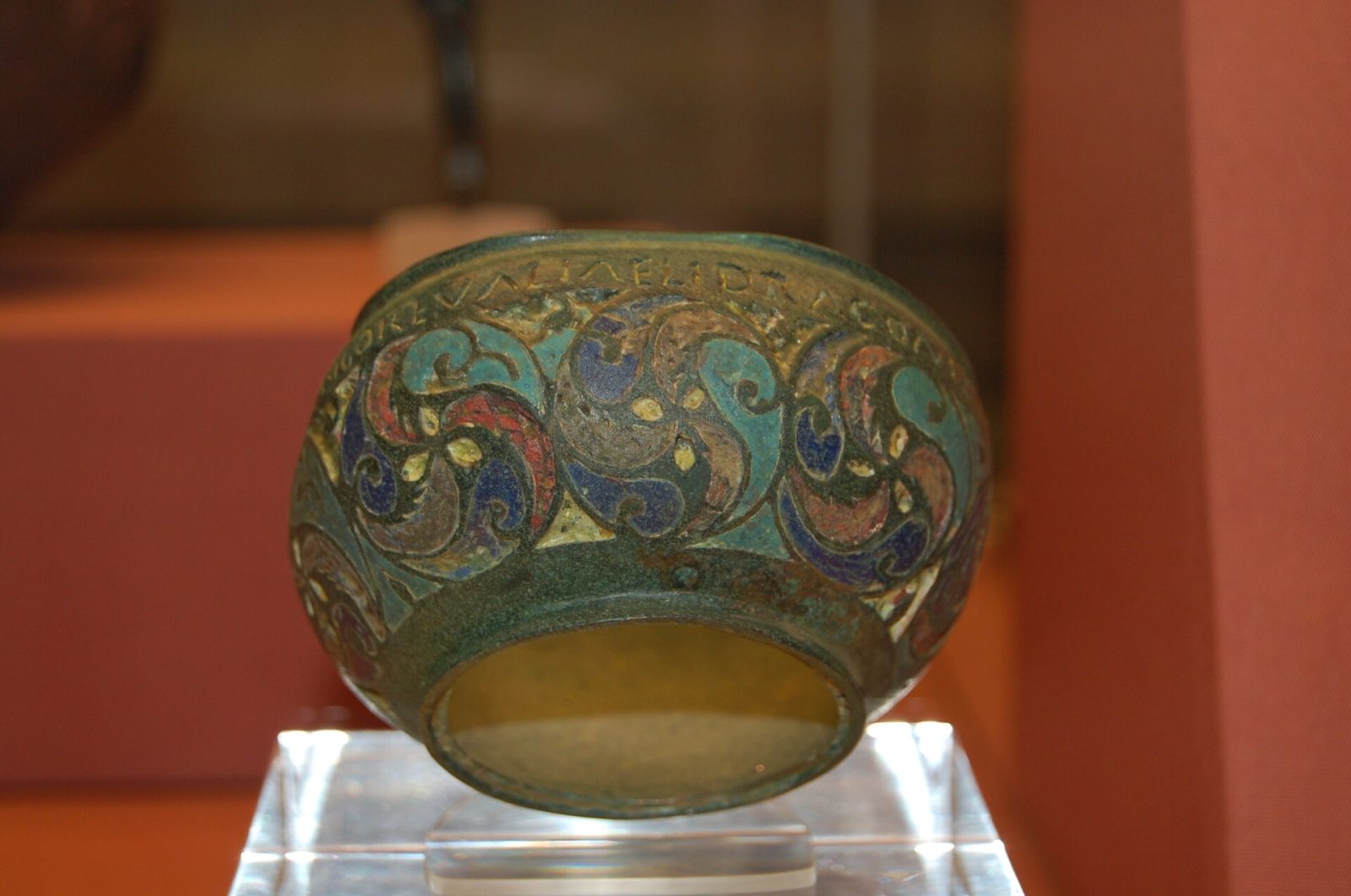
In 2003 metal detecting near Ilam in the Staffordshire Moorlands turned up a small enamelled Roman pan inscribed with the names of four forts on Hadrian's Wall, some 200 miles from the Wall itself.
In June 2003, a small enamelled bronze bowl was found by metal detecting near Ilam, in the Staffordshire Moorlands, and promptly reported to the Portable Antiquities Scheme. Its handle and base are missing, but what survives is in remarkable condition.
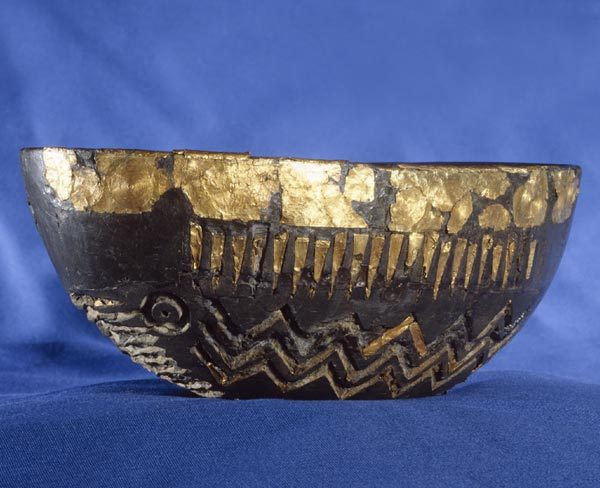
It is a trulla, a Roman pan, just under 10 centimetres across and weighing 132.5 grams. Around its side are eight roundels of swirling designs in red, blue, turquoise and yellow enamel. Below the rim runs an inscription naming four forts at the western end of Hadrian's Wall: MAIS (Bowness-on-Solway), COGGABATA (Drumburgh), VXELODVNVM (Stanwix) and CAMMOGLANNA (Castlesteads). It continues RIGORE VALI AELI DRACONIS, usually read as "on the line of the Wall, the property of Aelius Draco", or of Draco. Aelius was Hadrian's family name, and the phrase may preserve the Romans' own name for the Wall, the Vallum Aelium.
It dates from the 2nd century AD, not long after the Wall was begun around AD 122. It is only the third known vessel inscribed with the names of Wall forts, after the Rudge Cup, found in Wiltshire in 1725, and the Amiens skillet from France, and it is the first to name Drumburgh and the first to carry a personal name. It seems to have been a souvenir or memento of service on the Wall, and it was found about 200 miles to the south.
Because it is made of base metal, not gold or silver, the pan did not count as Treasure and could legally have been sold on the open market. Instead, in 2005 it was bought jointly by the British Museum, Tullie House Museum in Carlisle and the Potteries Museum & Art Gallery in Stoke-on-Trent, with help from the Heritage Lottery Fund. The three museums take turns to display it.
Written for Global Finds from Roman Inscriptions of Britain, the BBC and other published accounts. Photo: the Staffordshire Moorlands Pan, The Portable Antiquities Scheme, Wikimedia Commons, CC BY 2.0.
Approximate location53.05, -1.81View on map
Source: Roman Inscriptions of Britain