The Treasure of Childeric: a Frankish king's grave, found in 1653 and stolen in 1831
Famous find Buried about AD 481 to 482 · Found in 1653 See it on the timeline →
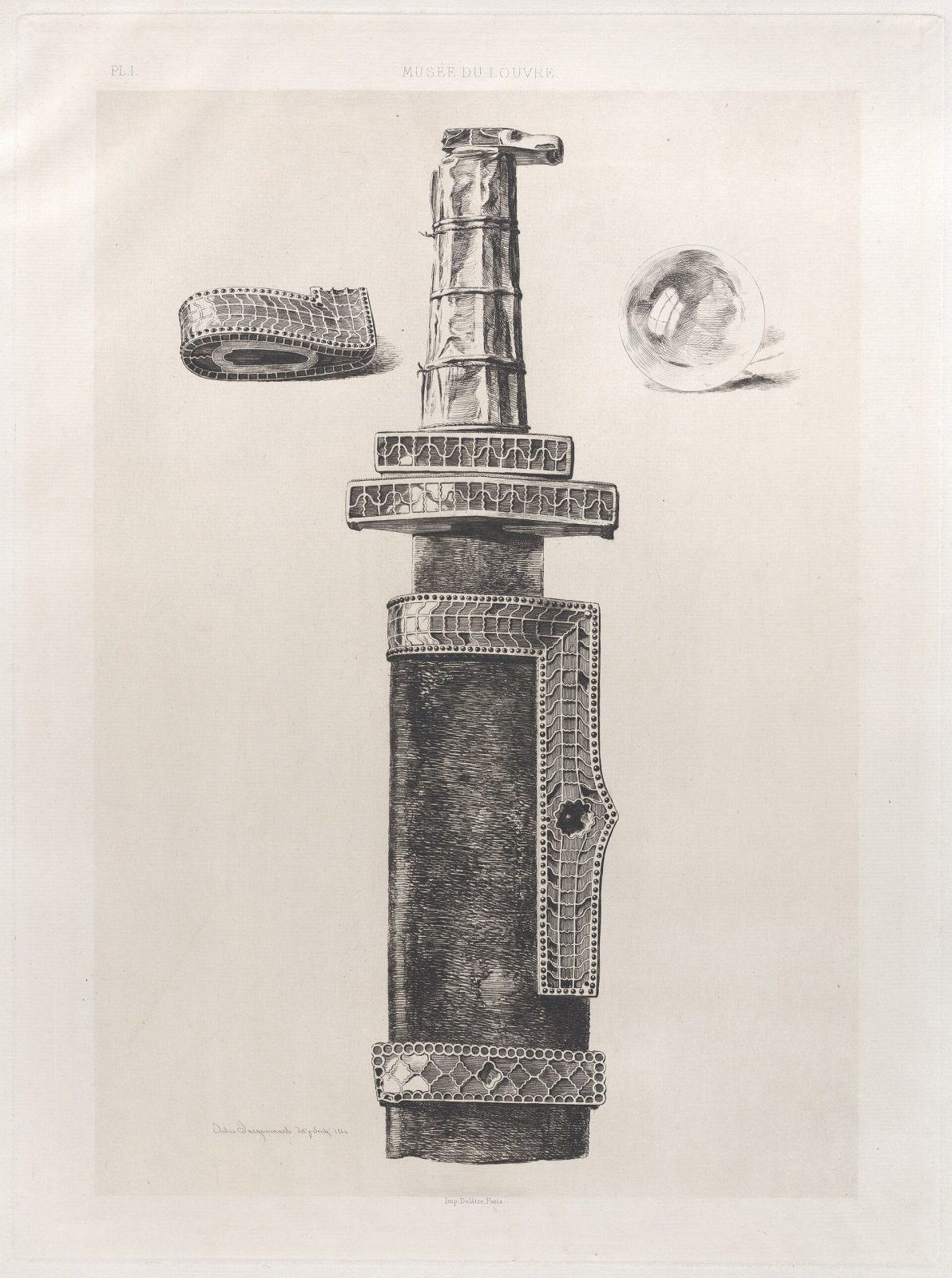
In 1653 a workman at Tournai, in what is now Belgium, uncovered the grave of Childeric, king of the Franks and father of Clovis, with gold, garnets and a ring bearing his name. Most of it was stolen from Paris in 1831 and melted down.
On 27 May 1653, a workman named Adrien Quinquin was digging during building work beside the church of Saint-Brice in Tournai, in what is now Belgium, when his shovel turned up gold coins. He had found the grave of Childeric I, king of the Salian Franks, who died around 481 and was the father of Clovis, the first king of all the Franks.
The grave held a long sword and a short sword with fittings of gold set with garnets, a throwing axe and a spear, a gold arm ring, a purse of more than a hundred gold and silver coins, buckles and harness fittings, a crystal ball, a gold bull's head, and around 300 small gold bees with garnet-inlaid wings. Most important of all was a gold signet ring with a portrait of a long-haired king and the words CHILDIRICI REGIS, "of King Childeric", which identified the grave beyond doubt.
In 1655 Jean-Jacques Chifflet published a detailed book on the find, with engravings that are now the main record of it. The treasure went to Vienna with the Habsburg governor of the Netherlands, Archduke Leopold Wilhelm, and in 1665 the Emperor Leopold I gave it to Louis XIV of France. It was kept in the royal collection that became the Cabinet des Médailles in Paris.
On the night of 5 to 6 November 1831, thieves broke into the Cabinet des Médailles and stole a great quantity of gold, including most of Childeric's treasure. Much of it was melted down. The signet ring was lost and is known today only from casts and copies. A few pieces survive in the Bibliothèque nationale de France, among them the gold and garnet sword fittings and two of the bees.
Childeric's bees had a second life: Napoleon adopted the bee as an emblem of his empire, and his coronation robes were embroidered with gold bees. Later excavations at Tournai found pits nearby holding the remains of 21 horses, radiocarbon dated to Childeric's time and thought to have been sacrificed at the king's funeral.
Written for Global Finds from the Bibliothèque nationale de France and other published accounts. Photo: Childeric's sword and crystal ball, a 19th-century etching by Jules Jacquemart, Metropolitan Museum of Art, Wikimedia Commons, CC0.
Approximate location50.61, 3.39View on map
Source: Bibliothèque nationale de France