The Dowris Hoard: Bronze Age horns, rattles and weapons from an Irish lakeside
Famous find Buried about 900 to 600 BC · Found in 1825 See it on the timeline →
In the 1820s two men trenching potatoes near Birr in County Offaly found around 200 Bronze Age bronzes: horns, buckets, swords, spearheads and strange pear-shaped rattles. The hoard gave its name to the last phase of the Irish Bronze Age.
In the 1820s, two men trenching potatoes at Dowris, on the edge of what was then Lough Coura, north-east of Birr in County Offaly, struck a great mass of bronze. One of them is named in a later account as Ed Hennessy. The first description of the find was published in 1833.
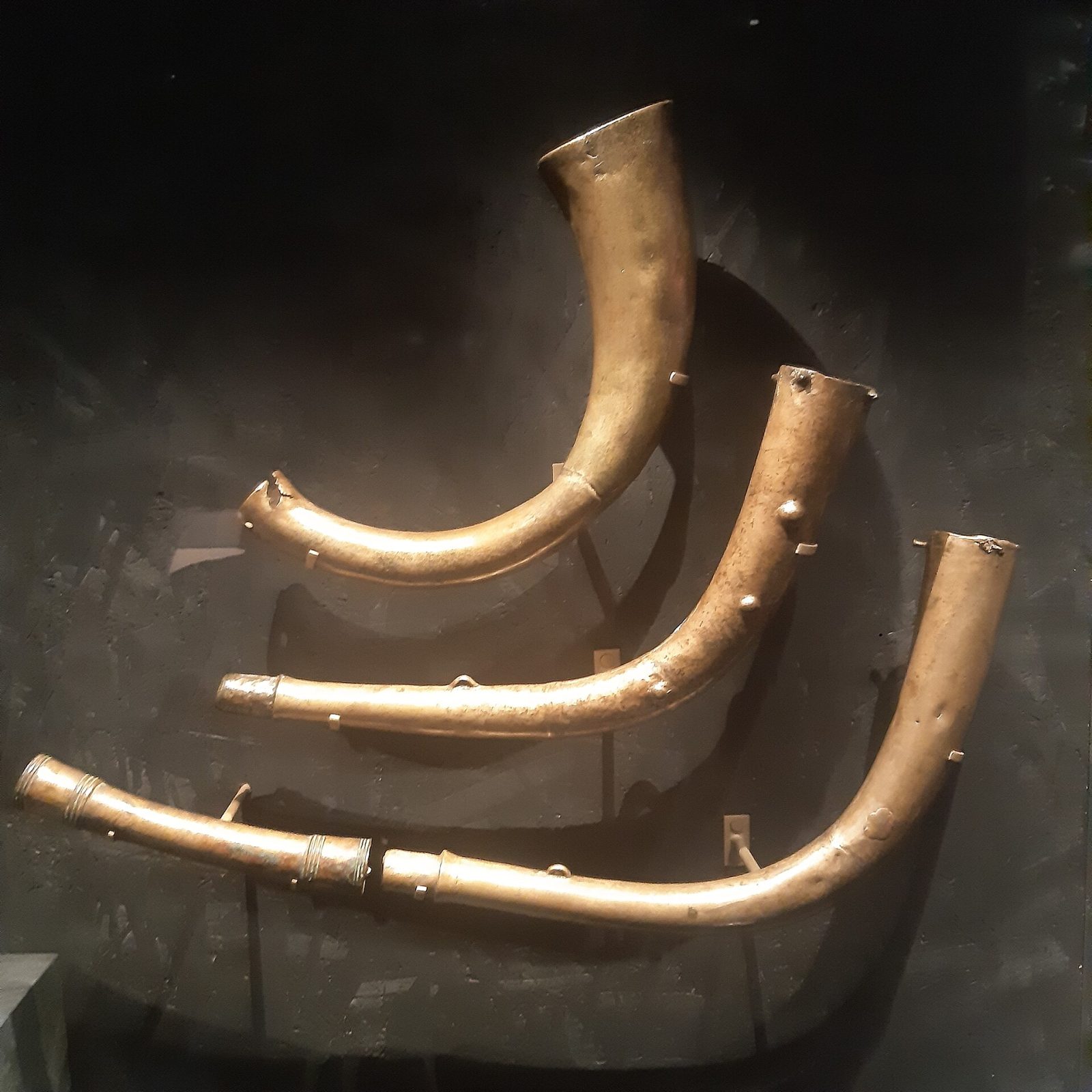
The hoard held around 200 objects, perhaps 218 in all, enough by one account to make a horse load. There were dozens of spearheads and axeheads, swords, knives and razors, a cauldron and bronze buckets, more than two dozen bronze horns, and over forty crotals, hollow pear-shaped rattles with a loose pellet inside, a type known only from Ireland. It dates from the Late Bronze Age, about 900 to 600 BC, and is so important that the last phase of the Irish Bronze Age is named the Dowris Phase after it.
Like many great Bronze Age hoards, it was placed at the edge of a lake, which suggests an offering rather than a store hidden for safety, though that cannot be proved.
The finders shared the objects out, sold some and swapped others. Most were collected by the antiquary T. L. Cooke and by the Earl of Rosse at Birr Castle. Cooke sold his share to the British Museum in the 1850s. The Rosse collection was blackened in a fire at Birr Castle in 1919 and later went to the National Museum of Ireland. Today about 111 pieces are in the National Museum in Dublin and about 79 in the British Museum.
Written for Global Finds from the National Museum of Ireland, the Offaly History blog and other published accounts. Photo: bronze horns from the Dowris Hoard in the British Museum, Jononmac46, Wikimedia Commons, CC BY-SA 4.0.
Approximate location53.16, -7.86View on map
Source: Offaly History