The Ipswich Torcs: Iron Age gold dug up by a digger on a housing estate
Famous find Made about 75 BC · Found in 1968 See it on the timeline →
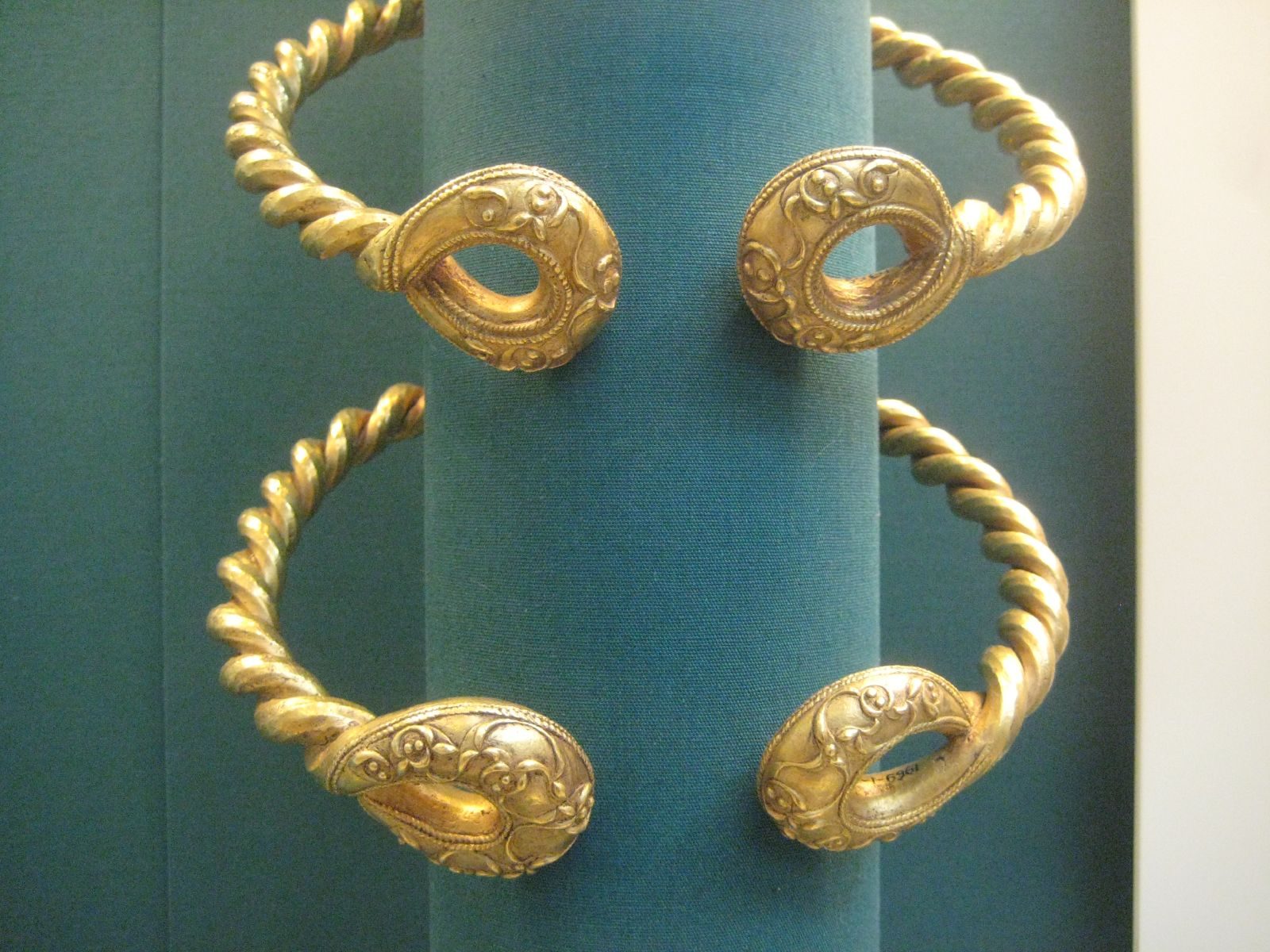
In 1968 a digger driver clearing ground for new houses on the edge of Ipswich turned up five Iron Age gold torcs. Two years later a sixth appeared in a new homeowner's garden. Some were never finished, which shows how they were made.
In 1968, a mechanical digger was clearing ground for a new housing estate in the Belstead Hills, on the south-western edge of Ipswich in Suffolk. Its driver, a Mr Tricker, spotted metal in the soil and found five heavy rings of gold. They were Iron Age torcs, neck rings of the kind worn by the most powerful people in late prehistoric Britain.
The houses went up, and the story might have ended there. But on 18 October 1970, a few metres away, a sixth torc came to light in soil left in the garden of one of the new homes. Archaeologists believe it came from the same workshop as the other five and was part of the same buried group.
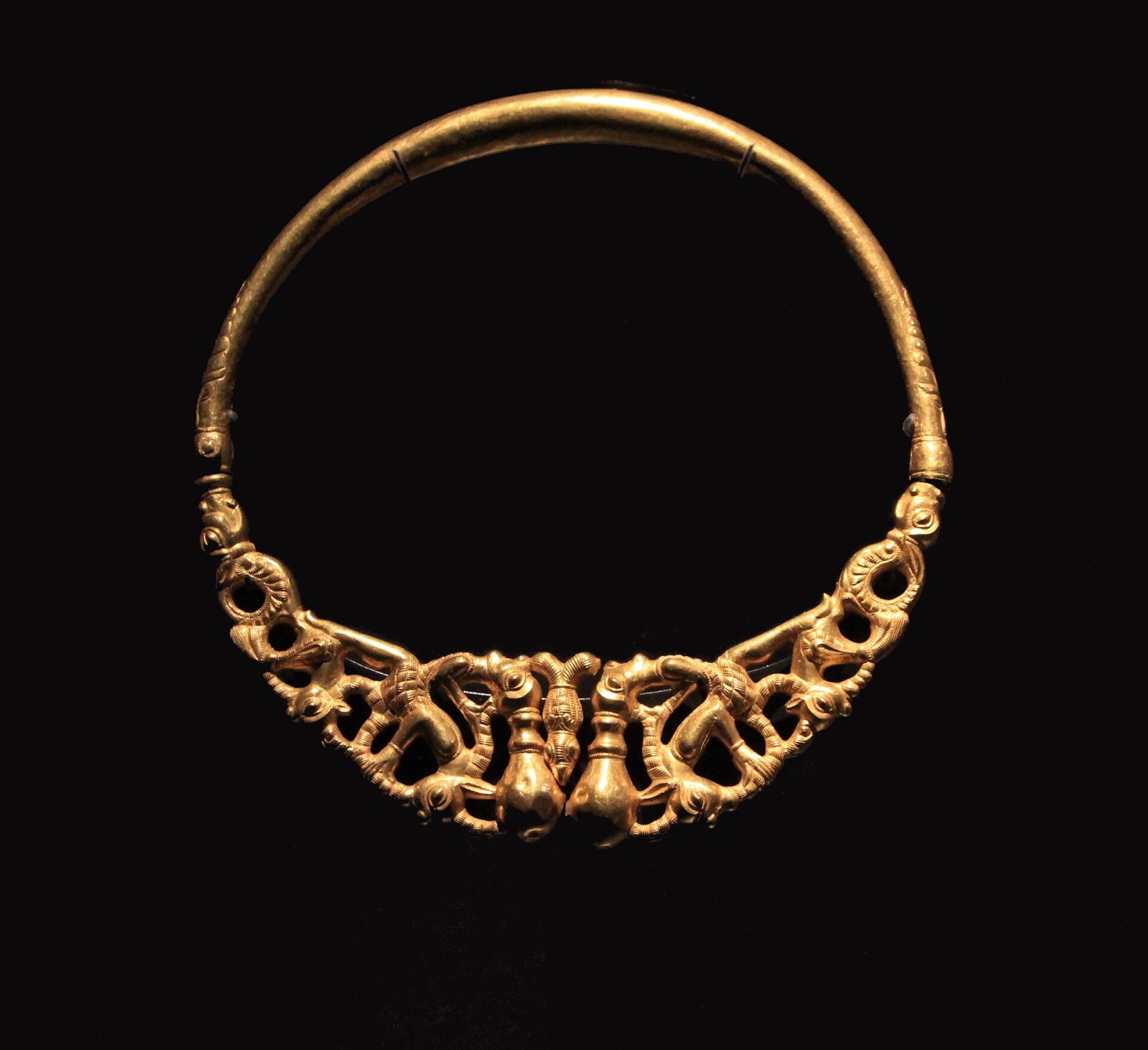
Each of the first five torcs weighs between about 765 and 935 grams and is around 20 centimetres across. They are made of gold alloyed with silver. The hoop of each one was formed from two gold rods twisted together, and the heavy ends, the terminals, were then cast on to the hoop by the lost-wax method. Four of the torcs carry raised decoration in the same style as the great torcs from Snettisham in Norfolk. The British Museum dates them to about 75 BC.
What makes the Ipswich hoard special is that it was never finished. One plain torc is at an earlier stage of manufacture than the others, and several show scratches and tool marks where the metal was still being worked. That makes it a rare glimpse into a goldsmith's workshop. Because the pieces were unfinished, archaeologists think the group was probably hidden for safe keeping, rather than offered to the gods as some other torc hoards may have been. Experts rank it second only to Snettisham among the Iron Age gold hoards of Britain.
The torcs were declared Treasure Trove. The first five were acquired by the British Museum in 1969 and the sixth joined them later. They are on display at the British Museum, and copies can be seen at Ipswich Museum.
Written for Global Finds from the Suffolk Historic Environment Record, R. Owles's report in Antiquity (1969) and J. Brailsford and J. Stapley's study in the Proceedings of the Prehistoric Society (1972). Photo: torcs from the Ipswich hoard in the British Museum, Claire H., Wikimedia Commons, CC BY-SA 2.0.
Approximate location52.04, 1.12View on map
Source: Suffolk Heritage Explorer