The Milton Keynes Hoard: two kilograms of Bronze Age gold in a pot
Famous find Late Bronze Age, about 1150 to 800 BC · Found in 2000 See it on the timeline →
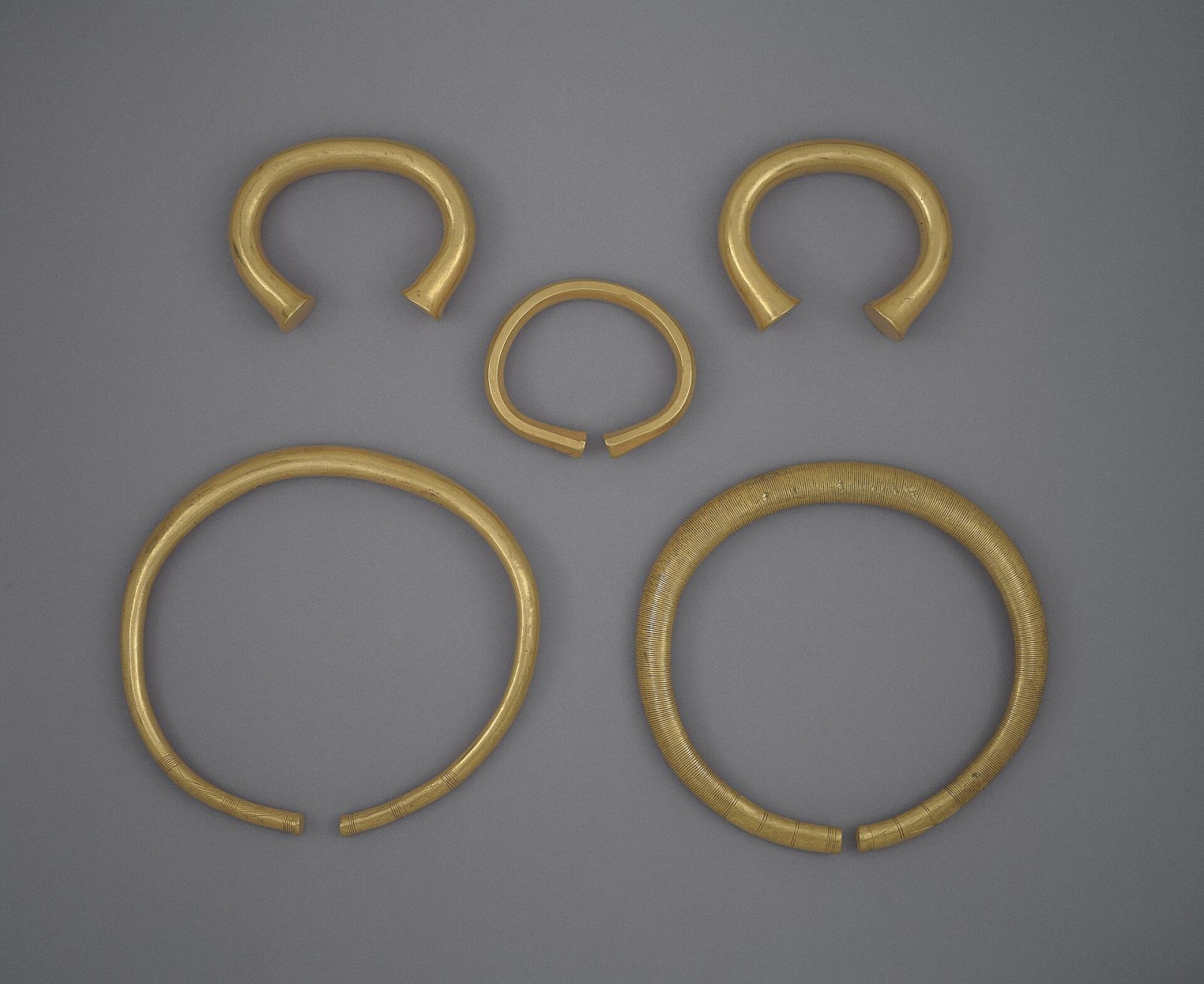
In 2000 two metal detectorists in Milton Keynes found two gold torcs and three heavy gold bracelets packed inside a plain pottery bowl. Weighing over two kilograms, it is one of the largest Bronze Age gold finds in Britain, and the pot made it the first that could be dated by its pottery.
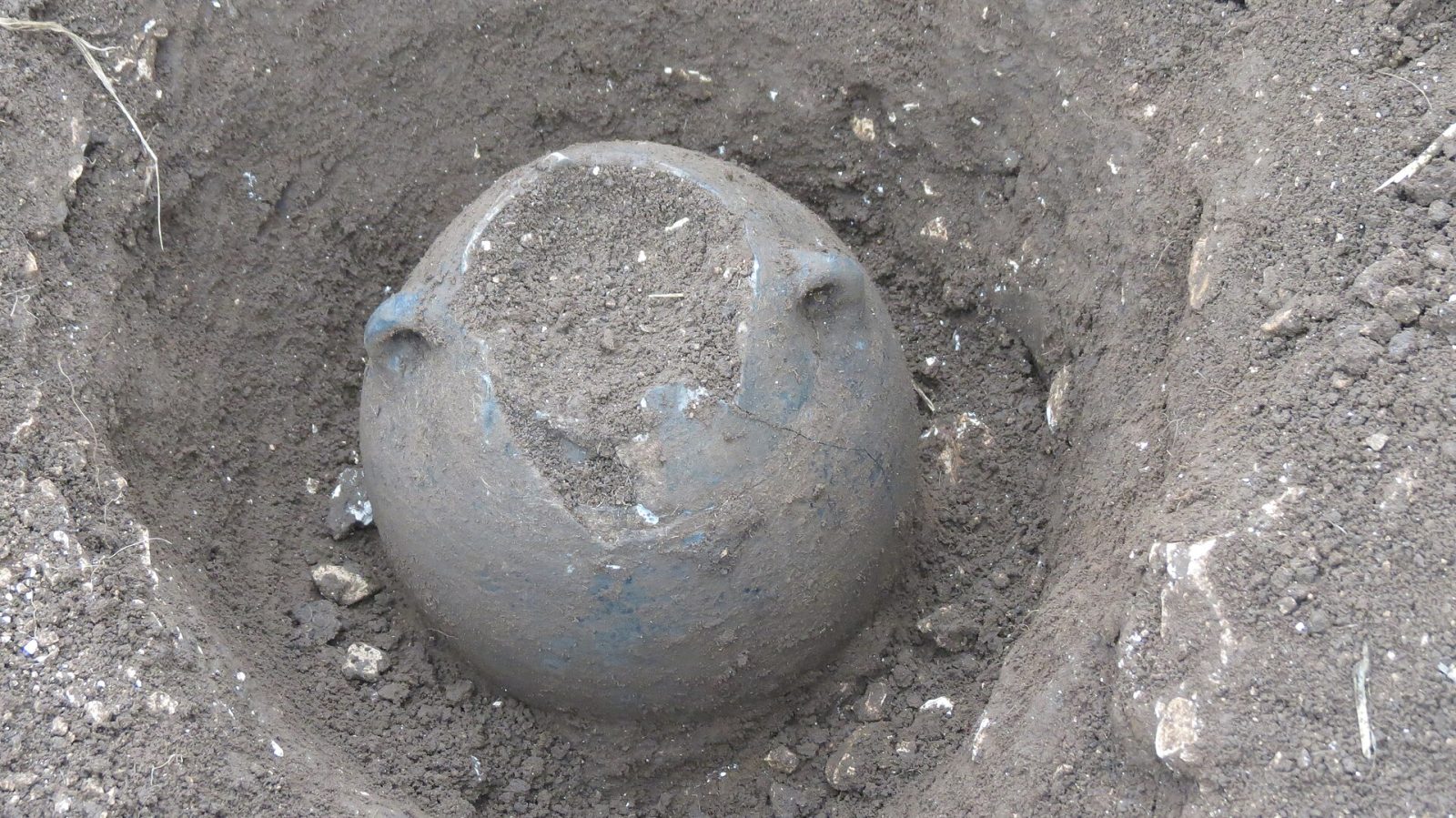
In 2000, two metal detectorists searching a field at what is now Monkston Park, on the eastern side of Milton Keynes, found a buried pottery bowl full of gold. Instead of emptying it out, they reported the find to local archaeologists, who excavated it carefully and recorded exactly how it lay.
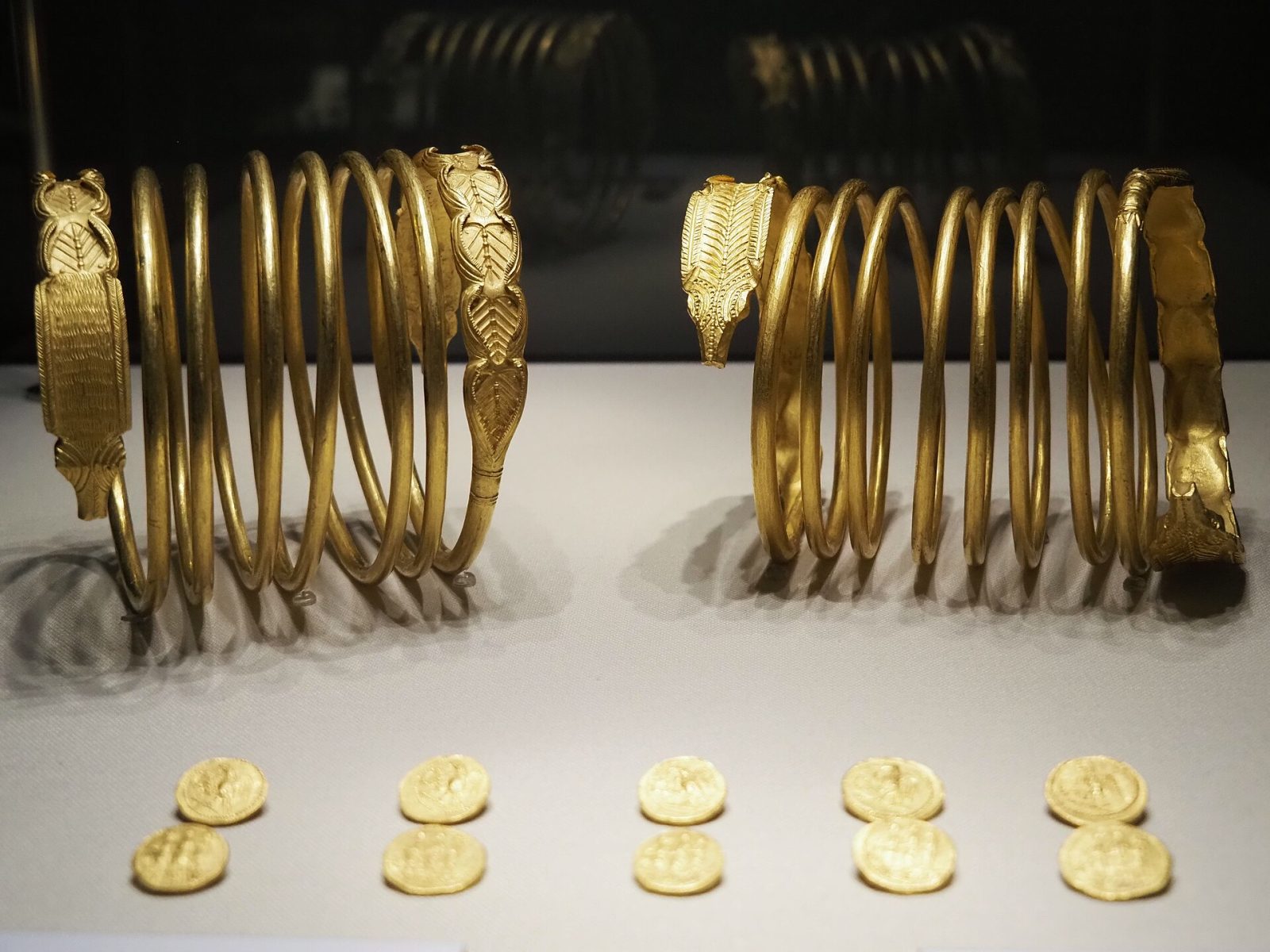
Inside the bowl were two gold torcs, neck rings made from bars of gold bent into a circle, and three massive gold bracelets, along with a tiny fragment of bronze. One torc is decorated with incised lines along its length and has grooved ends; the other is grooved only near its ends. Two of the bracelets are chunky C-shaped rings, and the third has an eight-sided cross-section. The five gold pieces together weigh more than two kilograms, with the heaviest torc alone at about 627 grams, which makes this one of the largest finds of Bronze Age gold ever made in Britain. Analysis showed the metal to be roughly 76 to 85 per cent gold.
The plain pot turned out to be as important as the gold. Bronze Age gold is notoriously hard to date, because ornaments like these were rarely found with anything else. The Milton Keynes bowl is of a known type of Late Bronze Age pottery, and the British Museum describes the find as the first certain association between a gold hoard and pottery for the British Middle to Late Bronze Age. It allows the hoard to be dated to about 1150 to 800 BC, and it helps to date similar gold found elsewhere.
The hoard was declared Treasure and acquired by the British Museum with help from the Art Fund, the National Heritage Memorial Fund and the British Museum Friends. Replicas can be seen at Milton Keynes Museum.
Written for Global Finds from the British Museum's description of the hoard and its Portable Antiquities Scheme record. Photo: the five gold ornaments from the Milton Keynes Hoard, The British Museum (Ian Richardson), Wikimedia Commons, CC BY-SA 4.0.
Approximate location52.03, -0.71View on map