The Erstfeld Gold: seven Celtic rings found between two boulders below the Gotthard
Famous find 4th century BC · Found in 1962 See it on the timeline →
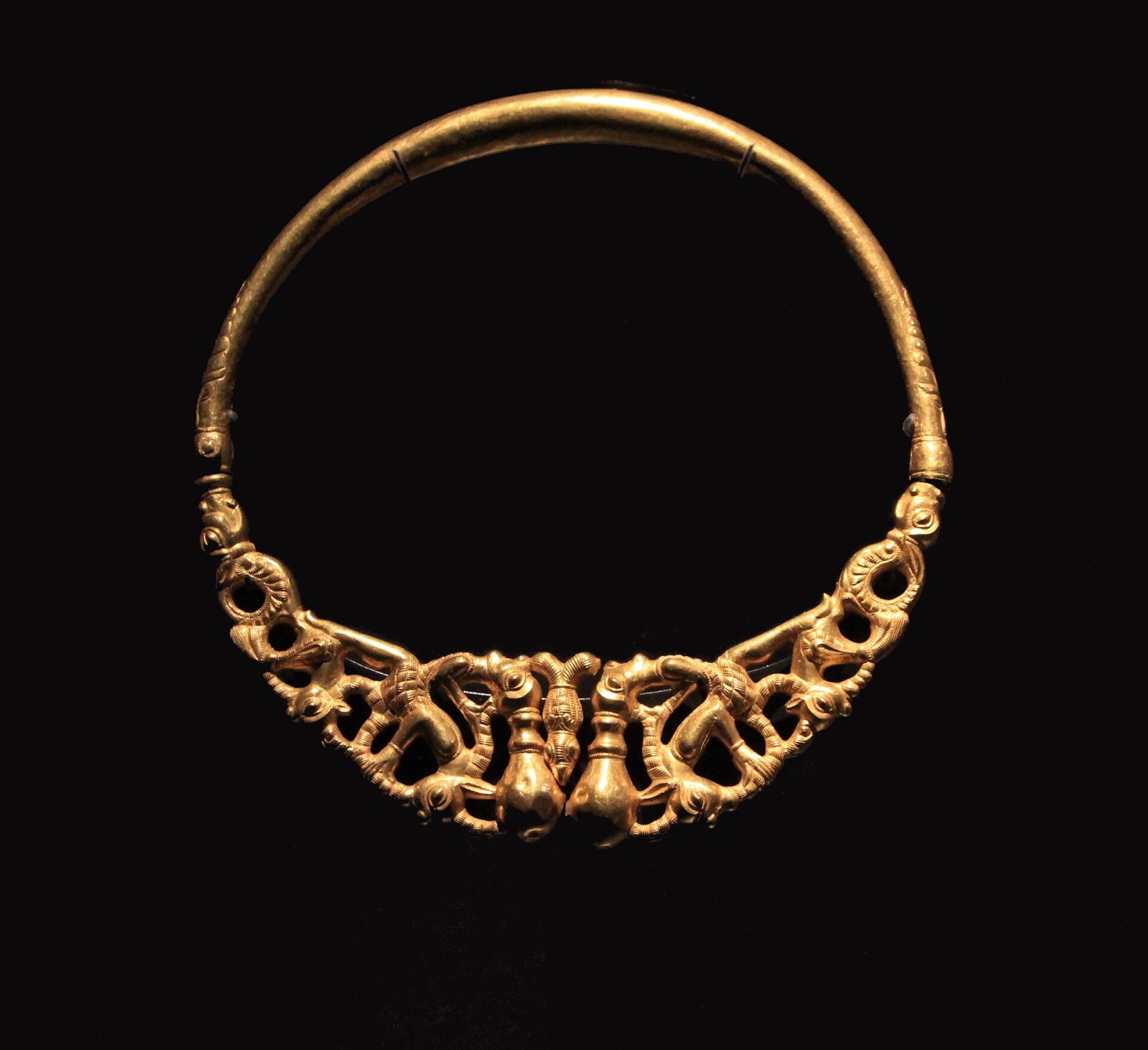
In August 1962 two Italian workers clearing scree above Erstfeld in the Swiss Alps saw seven gold rings slide out from between two huge boulders. The Celtic neck and arm rings, never worn, may have been an offering for a safe crossing of the Alps.
On 20 August 1962, the brothers Goffredo and Virgilio Ferrazza, Italian workers employed by the village of Erstfeld in canton Uri, in central Switzerland, were clearing scree with an excavator above the village. The village was building a basin to catch the rock falls and avalanches that came down the Locherbach stream. Seven to nine metres down, in a narrow gap between an enormous boulder and a smaller block, they uncovered seven rings of gold. They slid out at Virgilio's feet, stacked one inside another, smallest at the bottom.
The brothers kept the rings in their toolbox. One of their wives mentioned them to her doctor, who sent them to the Swiss National Museum in Zurich, where archaeologists identified them as Celtic. By then the great boulder had been blasted away, and the exact findspot destroyed. One of the brothers had washed a ring in a puddle, and its small locking pin slipped out and was never found.
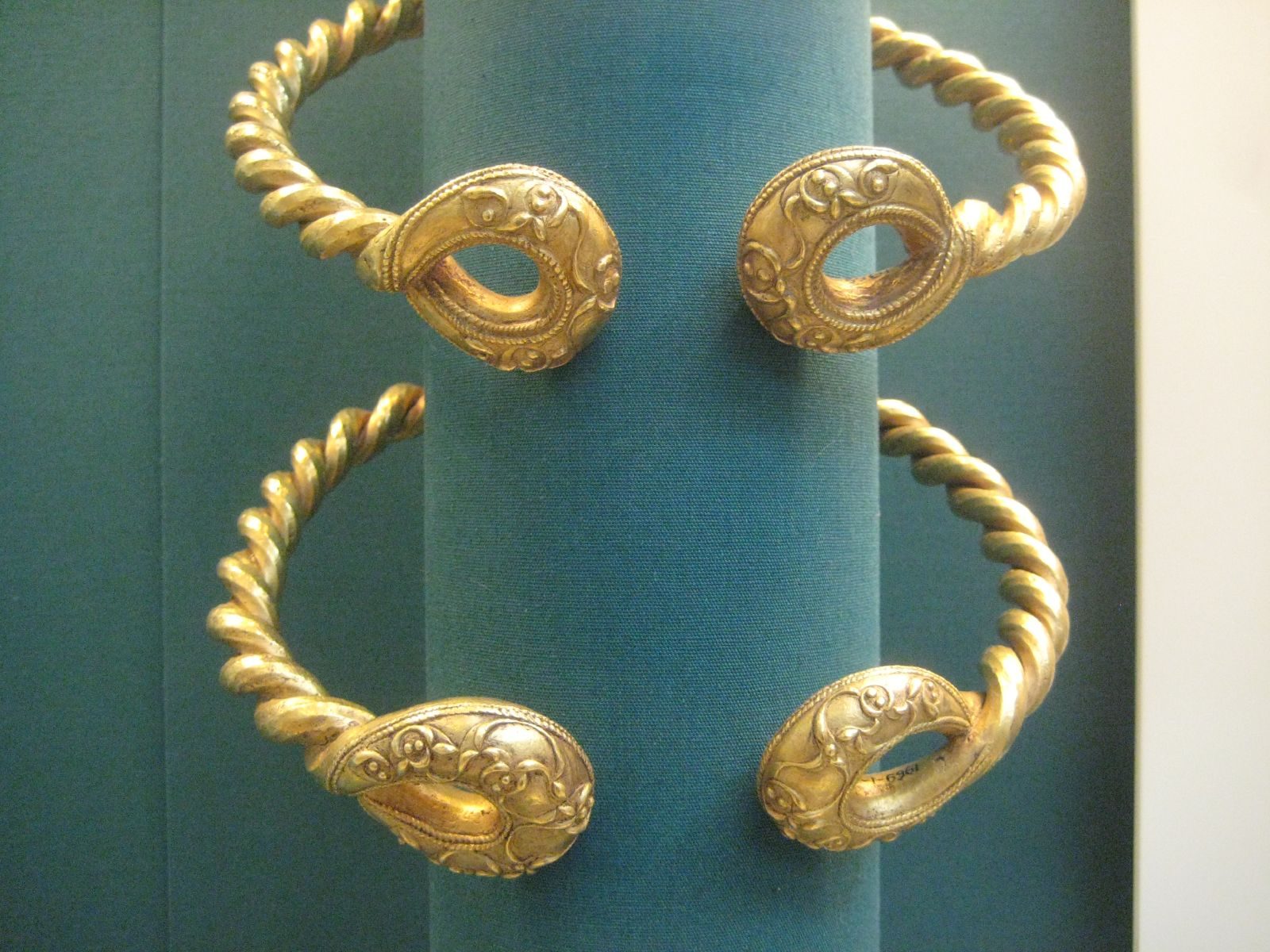
There are four neck rings, or torcs, and three arm rings, all made of hammered gold sheet up to 95 per cent pure, and weighing 640 grams together. They are hollow, and decorated with openwork friezes of strange creatures that are part human and part animal, with birds, snakes and plants, and a figure who seems to be a master of the animals. Two of the arm rings carry a running wave pattern. X-rays in 1994 revealed small folded bars of gold sheet hidden inside three of the torcs. The rings show no signs of wear, as if they had never been worn at all. They are usually dated to the 4th century BC, though experts differ on how early in that century.
Why would anyone hide seven gold rings between two boulders on a mountainside? Erstfeld lies on the route up the Reuss valley towards the Gotthard Pass, one of the main crossings of the Alps. The most popular explanation is that the rings were an offering to the gods, left by travellers or traders asking for a safe journey over the mountains, or perhaps a store of wealth hidden by a merchant who never came back.
The Erstfeld Gold is on display in the Swiss National Museum, the Landesmuseum, in Zurich, and copies can be seen at the Historical Museum of Uri in Altdorf. A signposted path leads to the findspot, about 20 minutes' walk from the village.
Written for Global Finds from the Historical Dictionary of Switzerland, swissinfo, F. Müller's study of the treasure (1990) and M. Guggisberg's monograph Der Goldschatz von Erstfeld (2000). Photo: one of the gold neck rings from Erstfeld in the Swiss National Museum, Zurich, Adrian Michael, Wikimedia Commons, CC BY 3.0.
Approximate location46.82, 8.65View on map