The Bedale Hoard: Viking silver and a gold-covered sword pommel under a stone
Famous find Late 9th or early 10th century AD · Found in 2012 See it on the timeline →
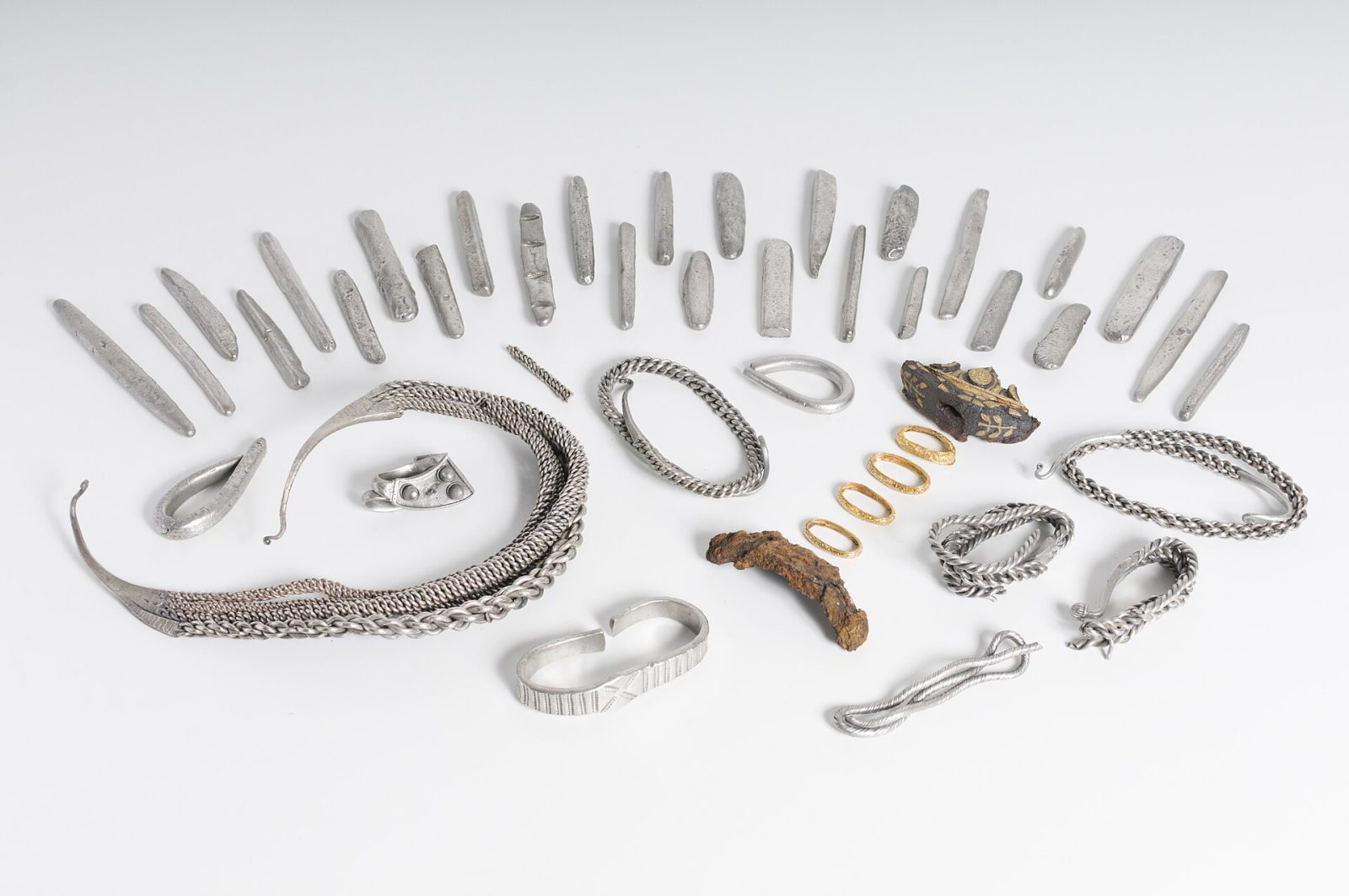
In May 2012 two detectorists in a North Yorkshire pasture lifted a large stone and found a Viking hoard beneath it: silver neck rings, 29 ingots and a sword pommel decorated with gold foil. Some of the silver has since been traced to the Islamic world.
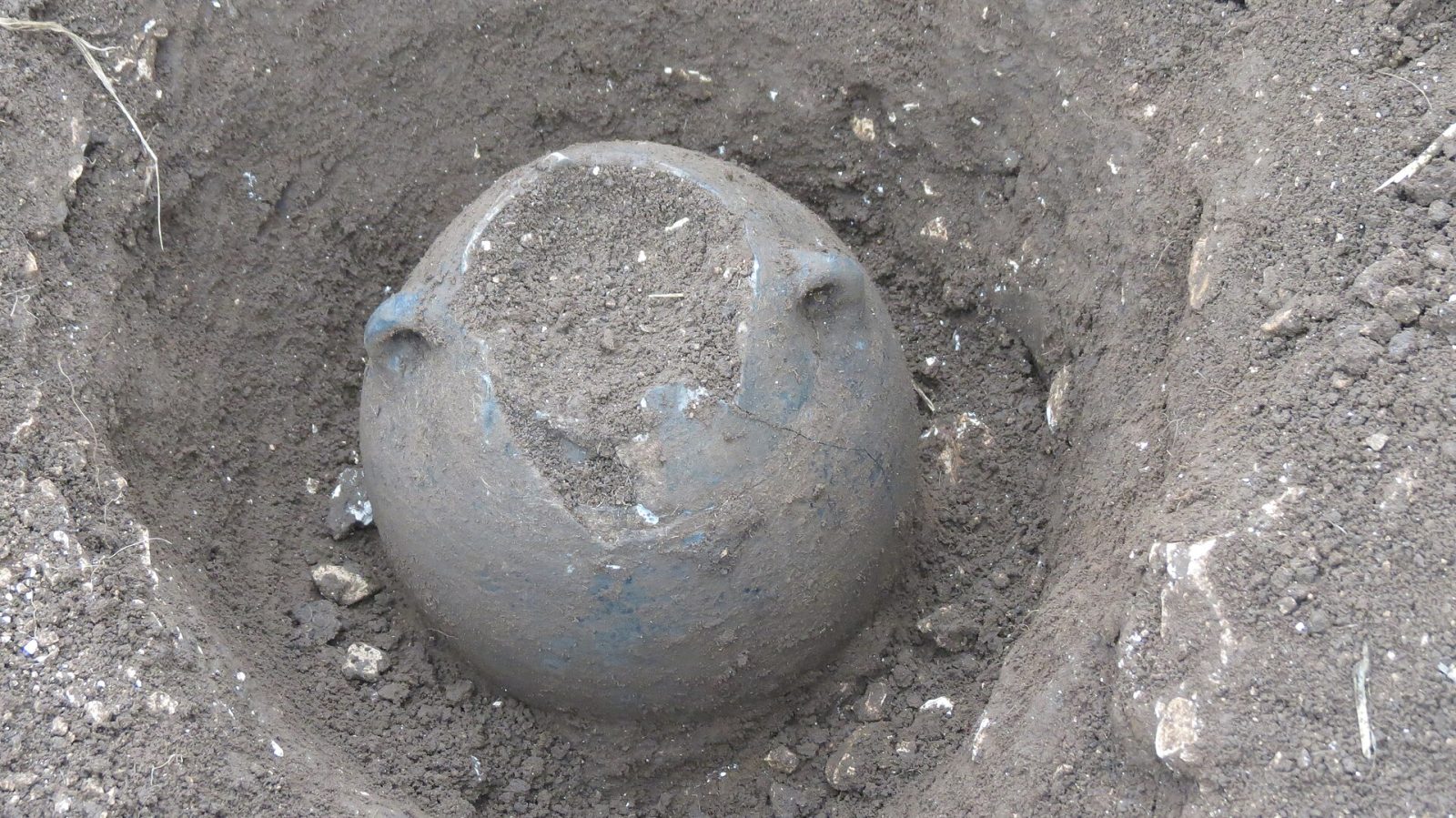
In May 2012, the metal detectorist Stuart Campbell and his detecting partner were searching open pasture near Bedale, in North Yorkshire. Beneath a large stone and a layer of corroded iron plates, they found a hoard of Viking silver. They reported it to the Portable Antiquities Scheme, and the Finds Liaison Officer, Rebecca Griffiths, excavated the rest with a colleague from the Yorkshire Museum. Scraps of lead sheet suggest it had been buried in a lead container. At the landowner's request, the exact findspot has been kept secret.
The hoard weighs just over four kilograms. Most of it is silver: four collars and neck rings, one of them cut in half, an arm ring, a fragment of a type of ring made far away in northern Russia, a brooch, and 29 silver ingots, weighing between about 40 and 146 grams each. The great four-strand silver collar alone weighs more than half a kilogram. The finest object is an iron sword pommel and upper guard, decorated with plaques of gold foil carrying intricate animal designs in an Anglo-Saxon style, together with four gold hoops from the sword's grip and six tiny gold rivets. Art Fund described the pommel as the largest of its type ever found. It was probably taken from an Anglo-Saxon sword as loot.
The hoard dates from the late 9th or early 10th century, when Vikings controlled York and much of northern England. Tiny test nicks on the silver show where its owners checked its purity, the way Viking traders did when they paid by weight. A study led by the University of Oxford, published in 2025, traced nine of the ingots to silver from Islamic coins, minted in the region of modern Iran and Iraq, which had travelled across Russia and Scandinavia before reaching Yorkshire.
The hoard was declared Treasure and valued at £51,636. The Yorkshire Museum launched an appeal, and with grants from Art Fund and the V&A Purchase Grant Fund and gifts from the public, it bought the hoard in May 2014. After conservation by York Archaeological Trust it went on display that December. It is in the Yorkshire Museum in York.
Written for Global Finds from the Yorkshire Museum and York Museums Trust, Art Fund, the Portable Antiquities Scheme record (YORYM-CEE620) and The Past. Photo: the Bedale Hoard, York Museums Trust, Wikimedia Commons, CC BY-SA 4.0.
Approximate location54.29, -1.59View on map
Source: Yorkshire Museum