The Hand of Faith: the biggest gold nugget ever found with a metal detector
Famous find A natural gold nugget · Found in 1980 See it on the timeline →
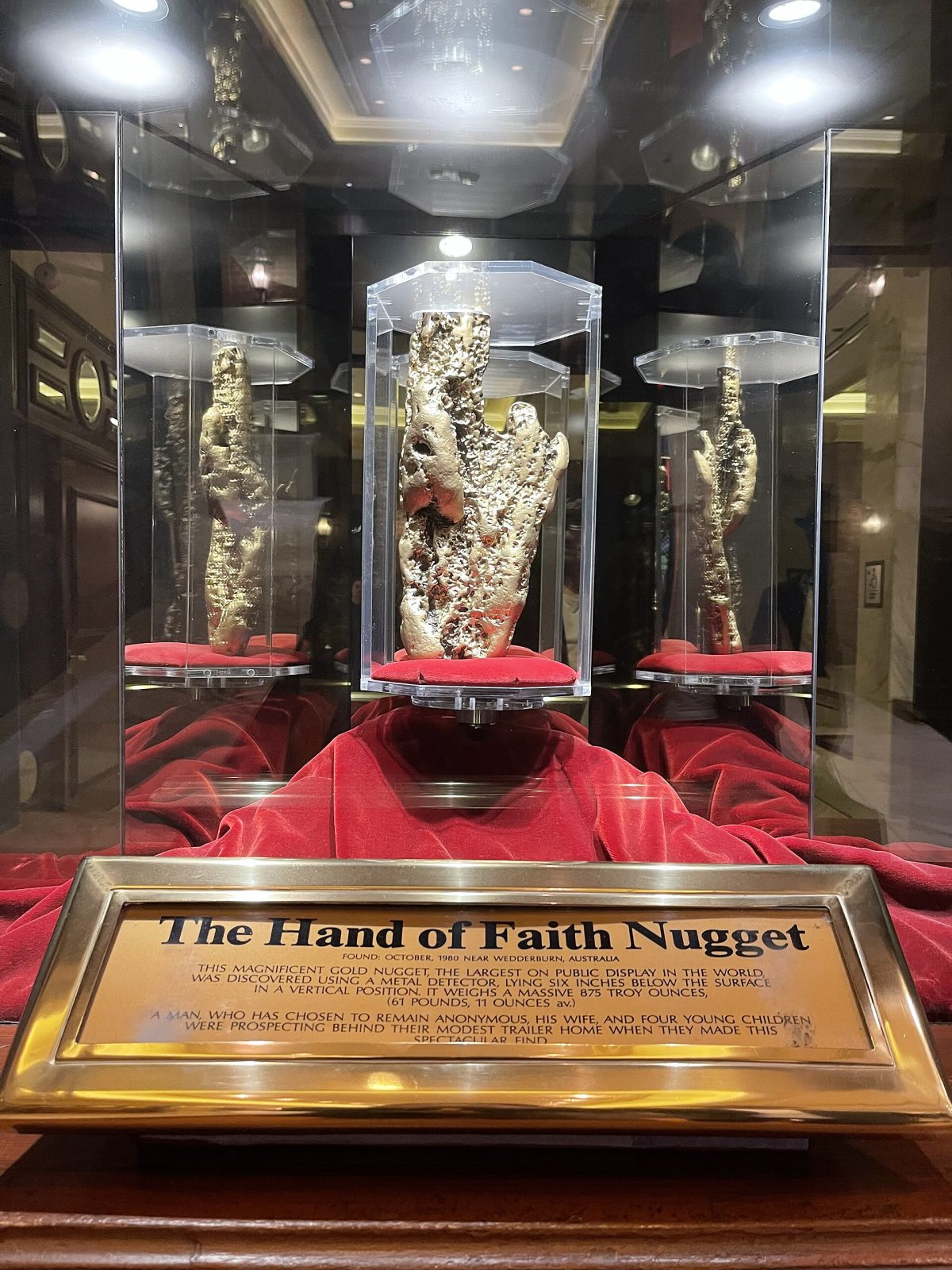
On 26 September 1980 a prospector with a metal detector near Kingower in Victoria, Australia, found a gold nugget weighing about 27 kilograms just below the surface. It is the largest nugget ever found with a detector, and is now on show in Las Vegas.
On 26 September 1980, Kevin Hillier and his wife Bep were prospecting near Kingower, a small settlement in the Victorian goldfields north-west of Bendigo, in Australia. They had found nothing all morning. After lunch, Kevin was sweeping his metal detector over the ground at the edge of the Kingower State Forest when he got a signal and began to dig. Bep found him kneeling beside the hole, in tears.
Lying upright just below the surface was a gold nugget weighing about 875 troy ounces, a little over 27 kilograms. It is the largest gold nugget ever found with a metal detector. Standing on end in the ground, its tip looked like a hand reaching upwards, and the Hilliers, a devout Catholic family, named it the Hand of Faith.
Kingower lies in the heart of the Golden Triangle of central Victoria, the area that produced most of Australia's largest gold nuggets during the gold rushes of the 19th century, including the Welcome Stranger, found near Moliagul in 1869. By the 1970s, most people believed the big surface gold there had long gone. The arrival of metal detectors able to find gold changed that. Prospectors began to recover nuggets that the diggers of the 1850s had missed, and the Hand of Faith was the most spectacular of them.
The find was announced at a press conference in Melbourne in October 1980. Early in 1981 the nugget was sold, through a Melbourne gem dealer, to the Golden Nugget casino in Las Vegas, for a price reported at around one million US dollars. It has been on show near the hotel's lobby ever since.
The spot where it was found is marked by a memorial of quartz, put up by the Prospectors and Miners Association of Victoria in 2010. Kevin Hillier died in 2014. In 2018 Bep gave a replica of the nugget to the Central Deborah Gold Mine in Bendigo, so that it can be seen in the goldfields where it was found.
Written for Global Finds from the Bendigo Advertiser (2018), the Goldfields Guide to the discovery site, The Catholic Weekly (2021) and other published accounts. Photo: the Hand of Faith on display at the Golden Nugget, Las Vegas, Sarah Stierch, Wikimedia Commons, CC BY 4.0.
Approximate location-36.62, 143.76View on map
Source: Bendigo Advertiser