The Capel Garmon Firedog: an Iron Age masterpiece of the blacksmith's art
Famous find Made about 50 BC to AD 75 · Found in 1852 See it on the timeline →
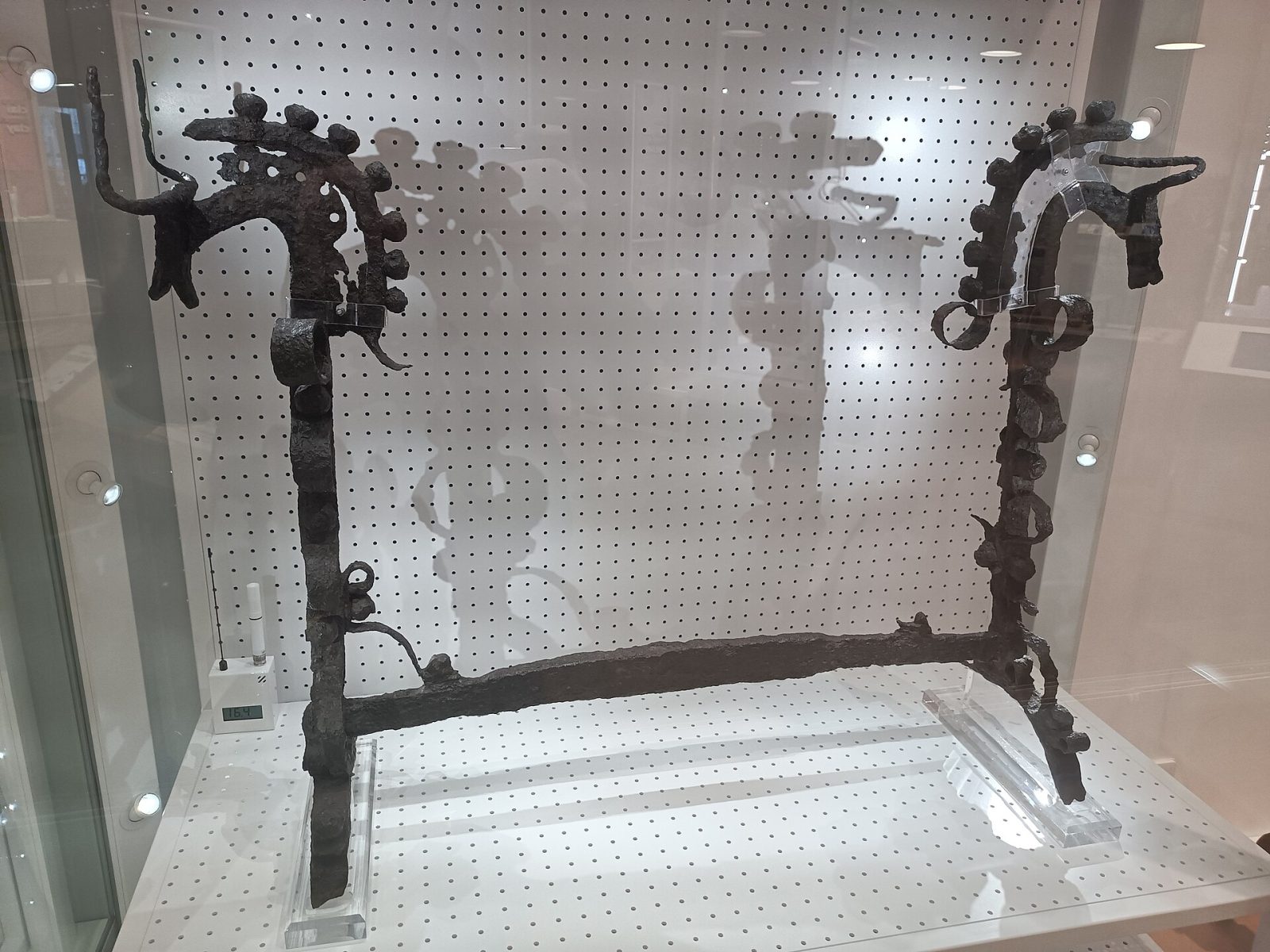
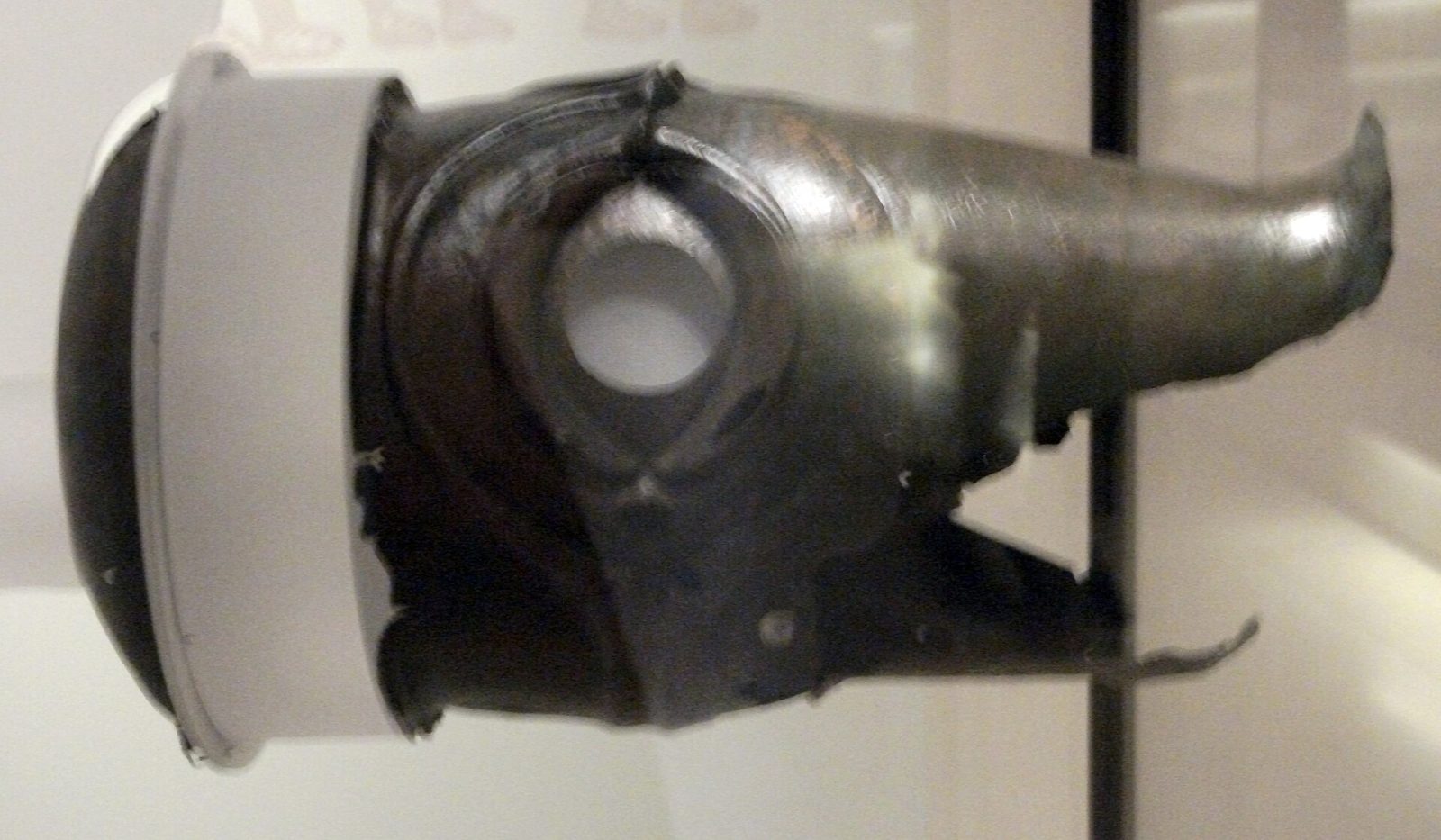
In May 1852 a man cutting a ditch through a peat bog in Conwy found an iron firedog nearly a metre tall, its ends shaped as horned animal heads. Made from 85 separate pieces of iron, it may have taken a smith more than three years to make.
In May 1852, a man was cutting a drainage ditch through a peat bog on Carreg Goedog farm, near the village of Capel Garmon above Llanrwst in the Conwy valley. Deep in the peat, lying flat on the clay beneath it, he found a large iron object, set with a big stone at each end. It was a firedog, one of a pair of iron stands that once stood on either side of a hearth to hold burning logs.
It is a remarkable piece of ironwork. The firedog is 75 centimetres high and more than a metre long, and weighs about 35 kilograms. Each end rises into the head of a horned animal, a bull or a stylised horse, crowned with a crest of seven large round knobs, like a helmet. It is made of 85 separately shaped pieces of wrought iron, fitted and fixed together. X-rays and a modern reconstruction by a blacksmith have shown how it was built, and the museum estimates that the whole process, from smelting the iron ore to finishing the last knob, could have taken a single skilled smith more than three years.
The firedog dates from about 50 BC to AD 75, at the very end of the Iron Age, just before and during the Roman conquest of Wales. It would have stood in the great roundhouse of a powerful family, where the fire was the centre of feasting and hospitality. The way it was laid in the bog, complete and placed between two stones, suggests it was a deliberate offering rather than something lost or thrown away.
For many years the firedog belonged to the Wynne Finch family of Voelas Hall. In 1939 it was lent to the National Museum of Wales in Cardiff, and in 2011 it was accepted by the nation in lieu of inheritance tax, so that it now belongs to the museum. It is on display at St Fagans National Museum of History, near Cardiff.
Written for Global Finds from Amgueddfa Cymru - Museum Wales's collection record and articles, the Royal Commission's Coflein record, Cyril Fox's study in the Antiquaries Journal (1939) and BBC News (December 2011). Photo: the Capel Garmon Firedog at St Fagans National Museum of History, Brigade Piron, Wikimedia Commons, CC BY 3.0.
Approximate location53.06, -3.76View on map
Source: Amgueddfa Cymru - Museum Wales