The Deskford Carnyx: an Iron Age war trumpet shaped like a boar's head
Famous find About AD 80 to 250 · Found in 1816 See it on the timeline →
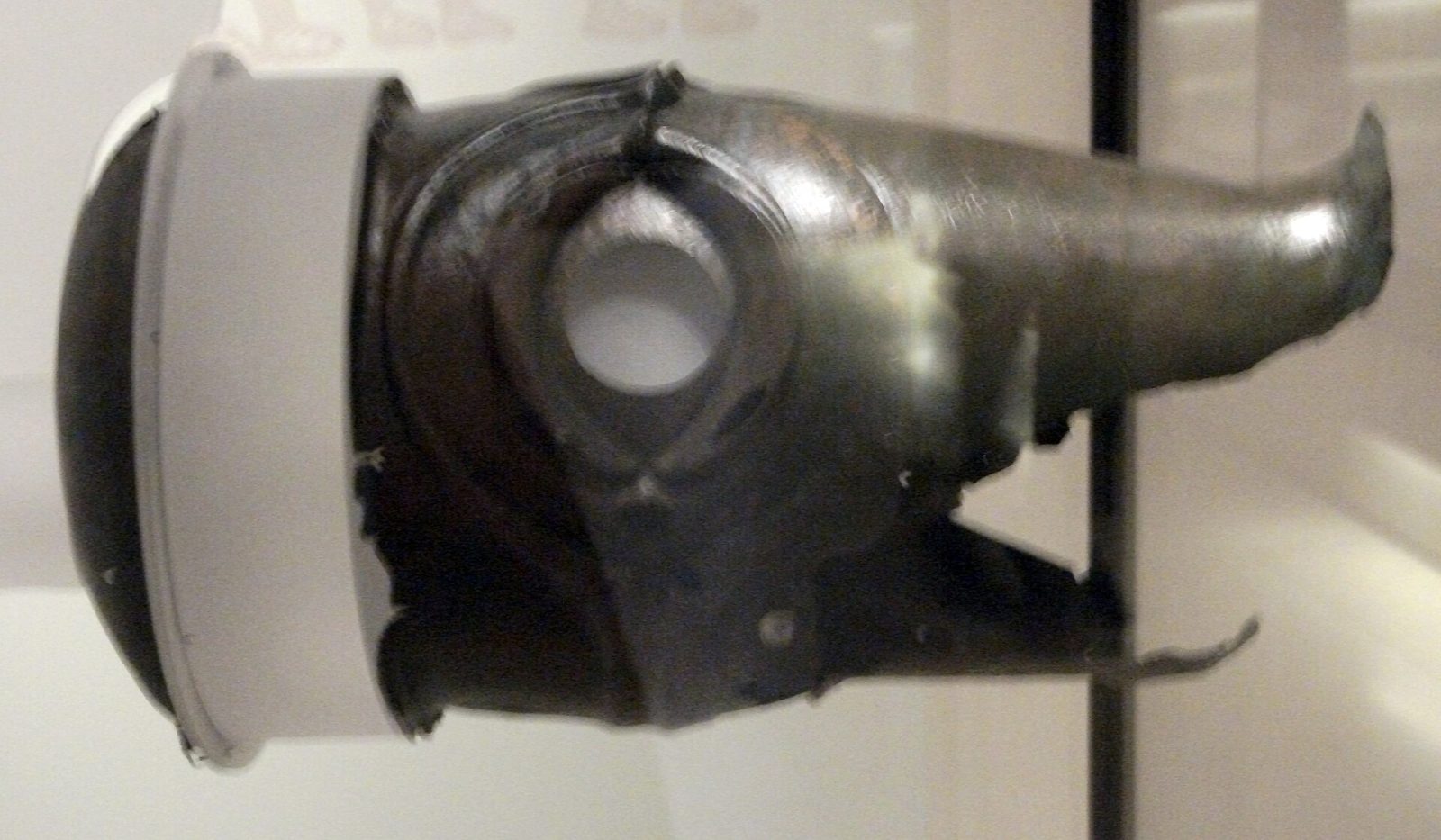
Around 1816 workers in a peat bog at Leitchestown, Deskford, in north-east Scotland found the bronze head of a carnyx, a Celtic war trumpet shaped like a boar. It is the only carnyx head ever found in Britain, and it was deliberately taken apart before it went into the bog.
Around 1816, farm workers in a peat bog about 450 metres south-west of Leitchestown farm, at Deskford in Banffshire, in north-east Scotland, found a strange object of sheet bronze at the bottom of the peat. The parish minister recorded the find. It was the head of a boar, with an open mouth, and it turned out to be part of a carnyx: a tall war trumpet played by Iron Age warriors across Europe, held upright so that the animal head rose high above the battle.
The Deskford carnyx is the only carnyx head ever found in Britain. What survives is the head itself, made of sheet bronze and brass, with the separate pieces of its palate, lower jaw and a round back plate. The early accounts say it once had a wooden tongue mounted on a spring, which would have rattled as it was played, but that has been lost, along with the crest, the ears, the enamelled eyes and the long tube. The brass was probably recycled from Roman metal, which helps date the carnyx to about AD 80 to 250, the time when Roman armies were campaigning in Scotland.
Between 1994 and 1996, archaeologists from National Museums Scotland excavated the findspot. They found that the carnyx had not been lost or thrown away. It had been deliberately taken apart, ritually killed, before the head was placed in what was then a pool or bog, a place where people also left other offerings, including quartz pebbles, broken pottery and animal bones.
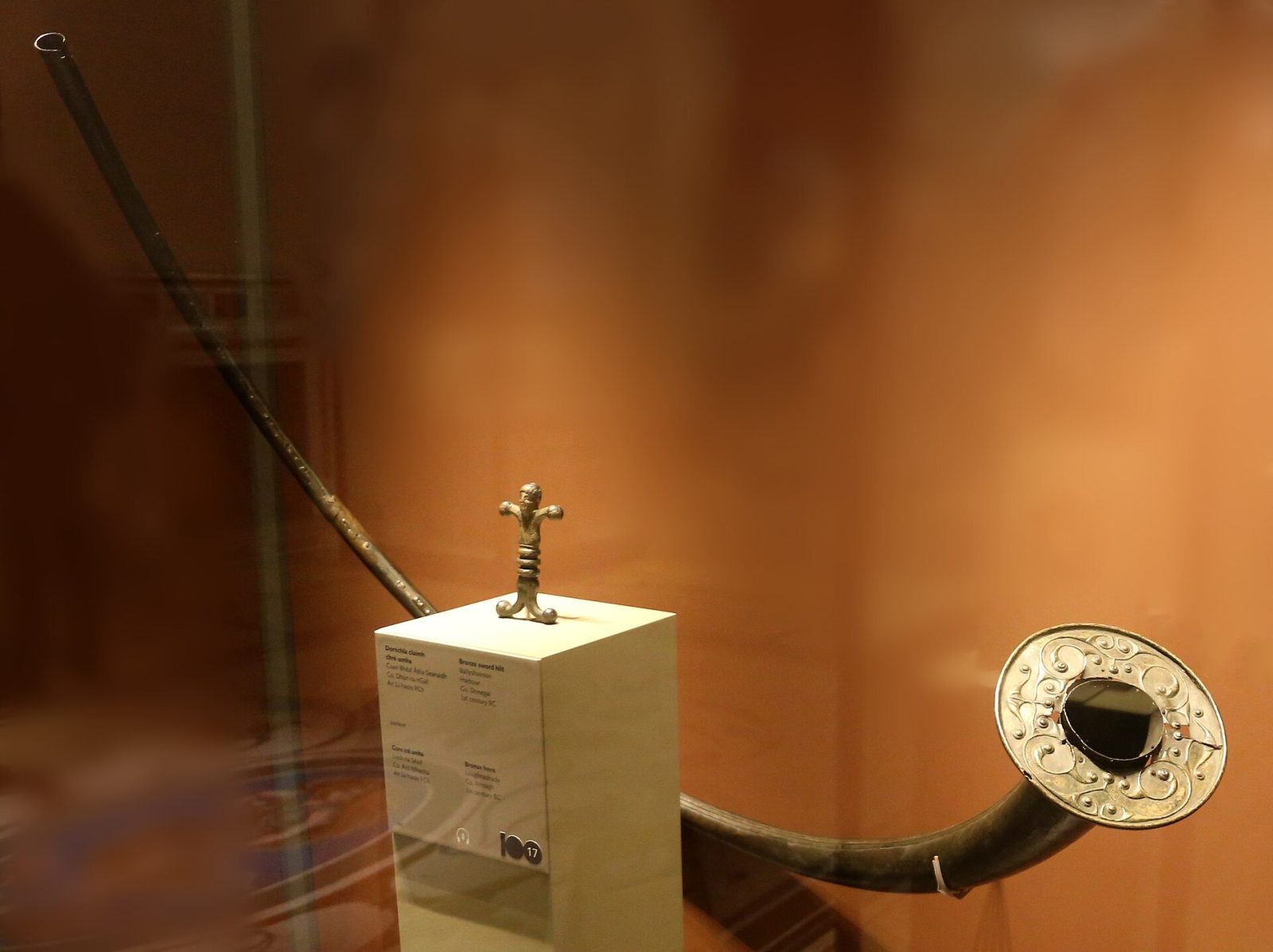
The carnyx is best known today for the sound it makes. In the early 1990s, a project led by the musicologist John Purser commissioned the metalsmith John Creed to make a full reconstruction, 1.66 metres tall, which took around 400 hours. Played by the musician John Kenny, it has been heard in concerts and recordings around the world, producing a sound nobody had heard for nearly two thousand years.
The original head belongs to Aberdeenshire Museums, from the old Banff Museum collection, and is on loan to the National Museum of Scotland in Edinburgh, where it is displayed beside the reconstruction.
Written for Global Finds from the Aberdeenshire Historic Environment Record, National Museums Scotland, Fraser Hunter's report on the excavation in the Archaeological Journal (2019) and carnyx.org.uk. Photo: the original head of the Deskford carnyx in the National Museum of Scotland, Johnbod, Wikimedia Commons, CC BY-SA 3.0.
Approximate location57.66, -2.80View on map