The Oseberg Ship: a Viking queen's ship found by a Norwegian farmer
Famous find Buried in AD 834 · Found in 1903 See it on the timeline →
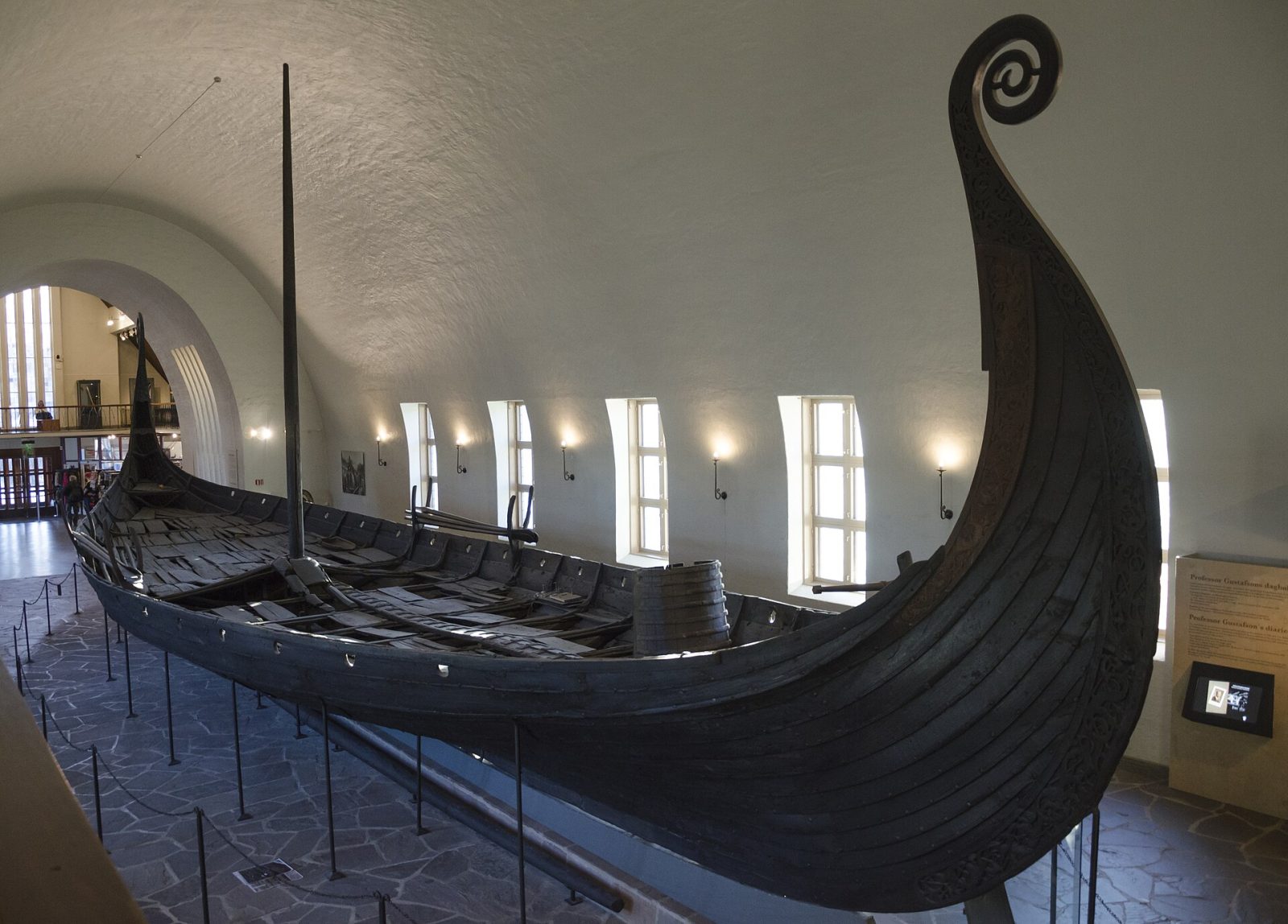
In August 1903 a farmer at Oseberg in southern Norway dug into a mound on his land and found wood. Beneath it lay the finest Viking ship ever found, the grave of two women buried in AD 834 with a carved cart, sledges, horses and textiles.
On 8 August 1903, Oskar Rom, a farmer at Lille Oseberg near Tønsberg, at the mouth of the Oslo fjord in southern Norway, dug into a large mound on his land and found pieces of decorated wood. Two days later he went to see Gabriel Gustafson, the archaeologist in charge of the university's collection of antiquities in Oslo. The following summer, in 1904, Gustafson and Haakon Shetelig excavated the mound. Inside it, preserved in blue clay, was a Viking ship.
The Oseberg ship is about 21.6 metres long and 5.1 metres wide, built of oak with 15 oar holes on each side and a prow ending in a spiralling serpent's head, carved with interlaced animals. It was built around AD 820 and used as a grave. Two women were buried in a wooden chamber on board: one about eighty, who seems to have suffered from cancer, and one in her fifties. The tree rings of the chamber timbers show that they were buried in AD 834.
The women were given extraordinary riches. There was a carved wooden cart, the only complete Viking-age cart ever found, ornate sledges, beds, tents, five carved animal-head posts, kitchen equipment, chests, textiles including a woven tapestry and imported silk, and many animals, including horses and dogs. The grave had been broken into in antiquity, and any gold or silver the women had worn was taken, but almost everything made of wood and cloth survived.
The ship took 21 years to restore and is more than 90 per cent original timber. It was displayed for decades in the Viking Ship Museum in Oslo, which closed in 2021 for rebuilding. In September 2025 the ship was moved, in a ten-hour operation, into the new building, and it will go back on show when the Museum of the Viking Age opens in Oslo, expected in 2027.
Written for Global Finds from the Museum of the Viking Age, University of Oslo, and the Store norske leksikon. Photo: the Oseberg ship, Petter Ulleland, Wikimedia Commons, CC BY-SA 4.0.
Approximate location59.31, 10.45View on map