The Negau Helmets: 26 bronze helmets ploughed up in Slovenia, one bearing an early Germanic name
Famous find Made mostly in the 5th century BC; buried about 100 BC · Found in 1811 See it on the timeline →
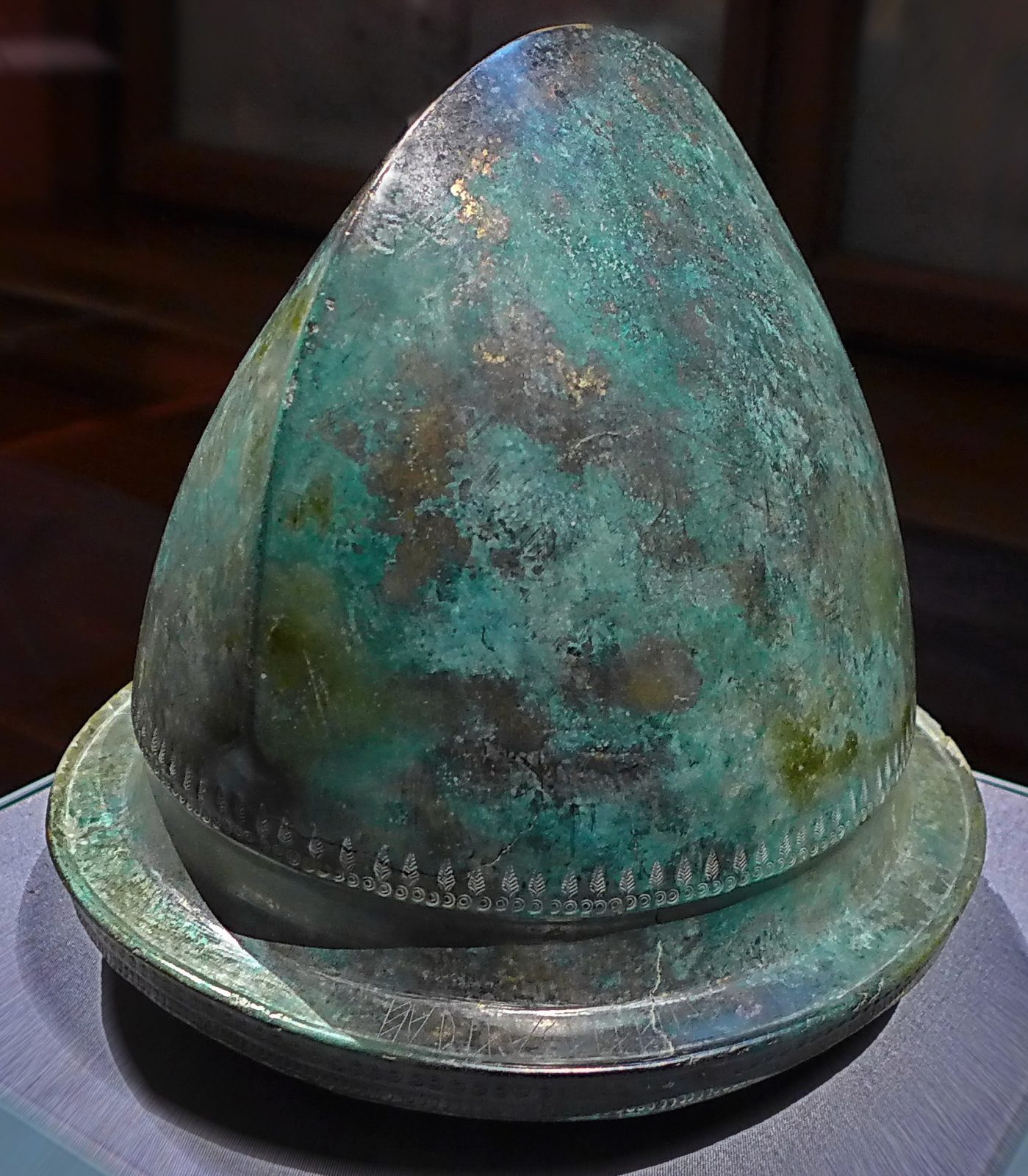
In November 1811 a farmer ploughing new land at Ženjak in what is now Slovenia found 26 bronze helmets stacked together. Some were melted down for scrap. One of the survivors carries an inscription reading harigasti teiva, among the oldest known words in a Germanic language.
In November 1811, Jurij Slaček, a farmer at Ženjak, near Negova in what is now north-eastern Slovenia, was ploughing a piece of recently cleared woodland for the third time when his plough struck metal. Buried together, stacked one inside another, were 26 bronze helmets. The area was then part of the Austrian Empire, and the find is known by the German name of the local lordship, Negau.
Slaček broke one helmet and sold the rest to a coppersmith named Denzel in Marburg, today's Maribor, who melted down or sold some of them as scrap metal. The survivors were scattered to collections in Vienna, Graz, Ljubljana and Berlin. How many survive is not certain; sources give between 17 and 23.
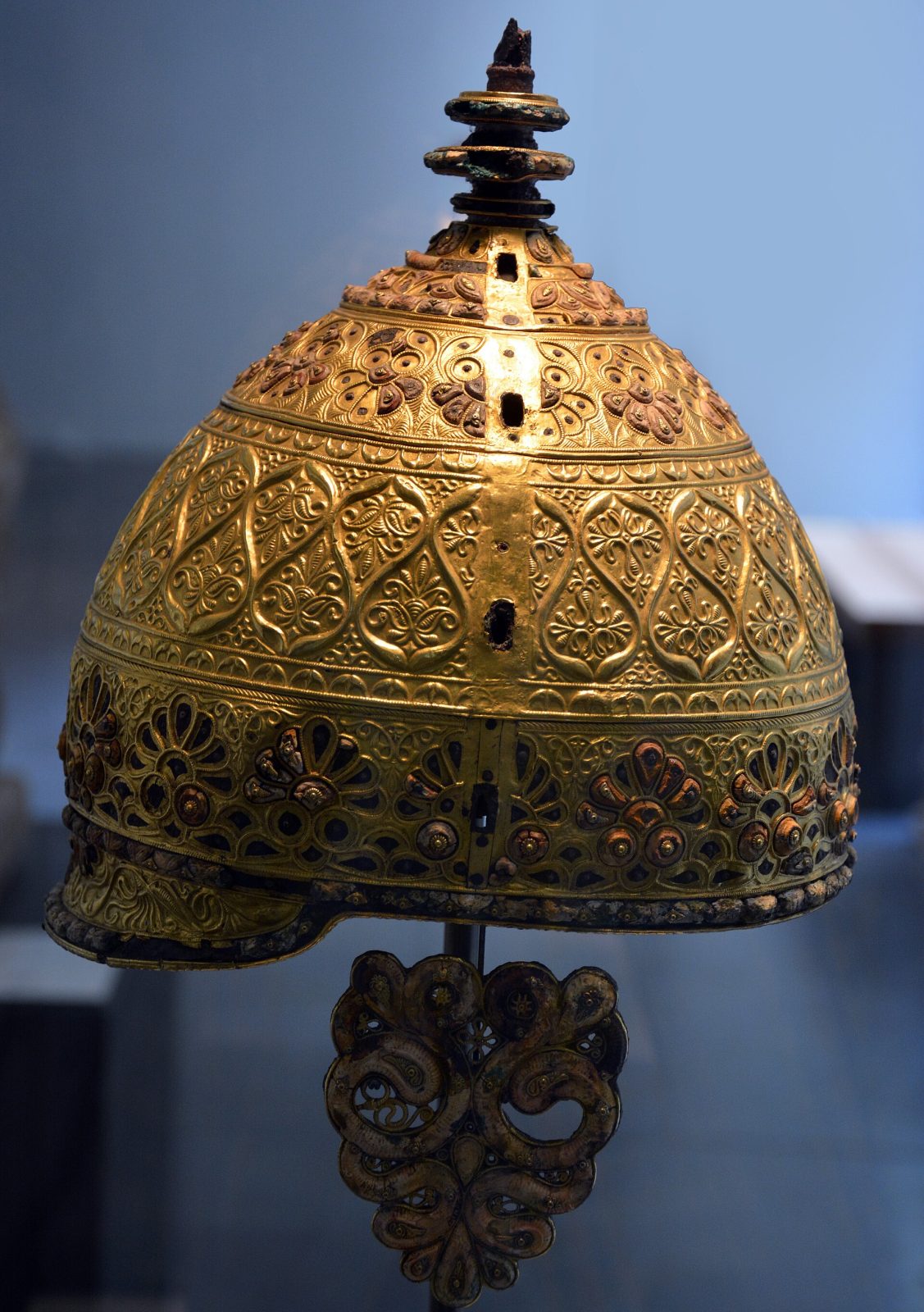
The helmets are of a type made in northern Italy and the eastern Alps, with a tall, slightly pointed crown and a flat brim, known to archaeologists as Negau helmets after this find. They were made at different times, mostly in the 5th century BC, and were buried together much later, around 100 BC, perhaps as an offering. The best known, Negau B, is in the Kunsthistorisches Museum in Vienna. It is about 21 centimetres high and weighs 1.35 kilograms.
Around its brim is a short inscription, scratched in an alphabet used in northern Italy and the Alps and read from right to left: harigasti teiva. Harigast is a Germanic personal name, usually translated as army guest, and the inscription is one of the oldest known texts in any Germanic language. Scholars still argue about what teiva means, perhaps a second name, a title or a god, and about when the words were added, perhaps in the 4th century BC, long after the helmet was made.
Negau A and Negau B are displayed in the collection of Greek and Roman antiquities at the Kunsthistorisches Museum in Vienna.
Written for Global Finds from the Kunsthistorisches Museum Vienna, the Thesaurus Inscriptionum Raeticarum (University of Vienna) and published studies of the inscription. Photo: Negau helmet B in the Kunsthistorisches Museum, Vienna, Peter1936F, Wikimedia Commons, CC BY-SA 4.0.
Approximate location46.60, 15.89View on map
Source: Kunsthistorisches Museum Vienna