The Wieringen Hoard: the first Viking silver hoard found in the Netherlands
Famous find Buried about AD 850 to 880 · Found in 1996 See it on the timeline →
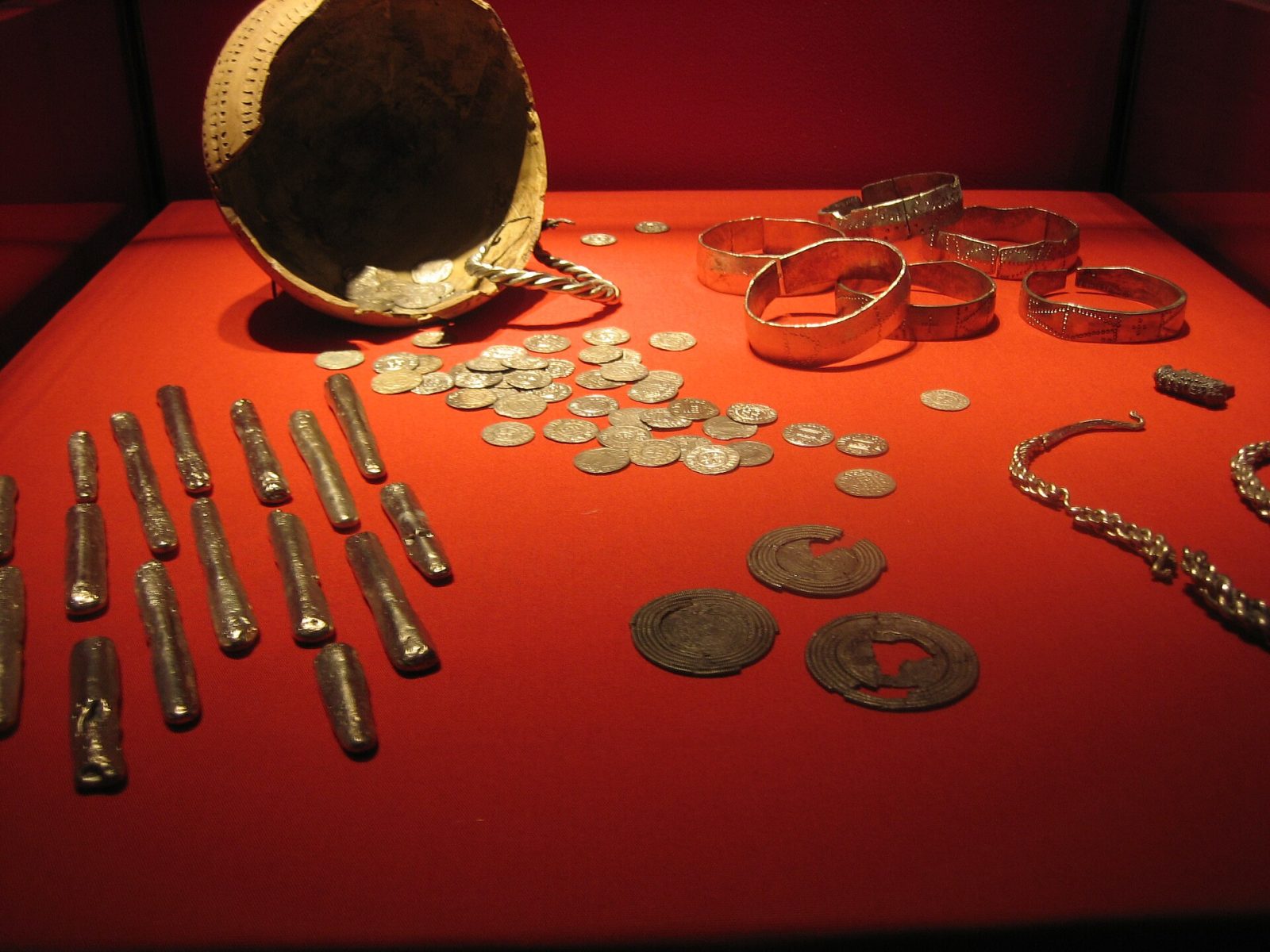
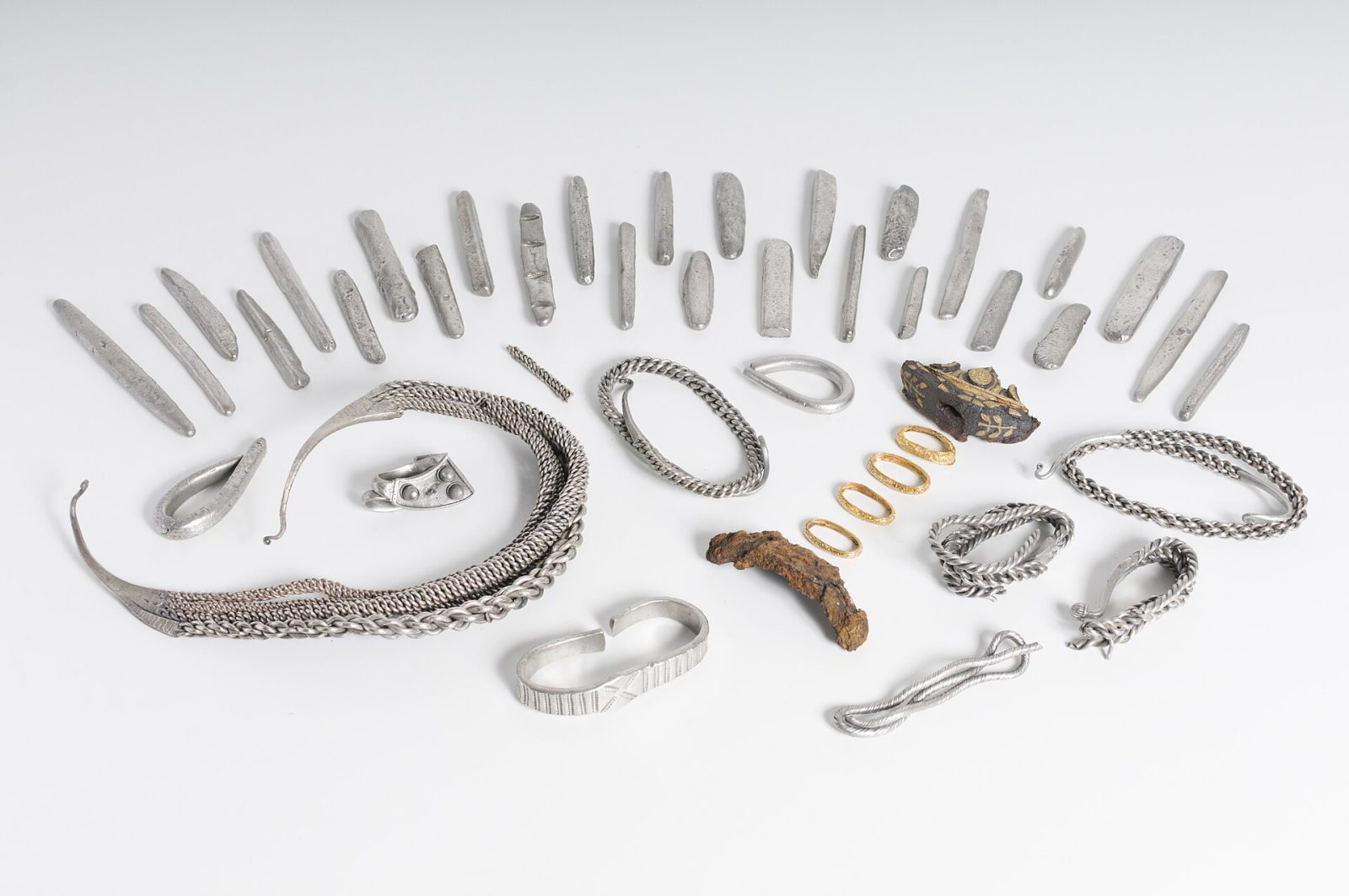
In 1996 a metal detectorist searching a meadow on the former island of Wieringen in North Holland found a pot packed with Viking silver: arm rings, ingots, coin brooches and 78 coins. It was the first Viking silver hoard ever found on Dutch soil.
In 1996, a metal detectorist searching a pasture at Westerklief, on the former island of Wieringen in North Holland, found Viking silver. Some pieces came up in 1995, the rest in 1996, and together they made up the first Viking silver hoard ever found in the Netherlands.
The silver had been buried in a small pot of Badorf ware, a type of pottery made in the Rhineland, packed with grass. It weighs about 1.66 kilograms in all. There are six silver arm rings, a neck ring, an arm ring made of twisted silver threads, and three brooches each set with an Eastern coin: an Arab dirham and two Persian drachms. There are also 16 silver ingots of about 50 grams each, 729 grams in all, fragments of a strap end and a brooch clasp, and 78 Carolingian silver coins. Almost all of the coins were struck at Dorestad, the great trading town on the Rhine, for the emperors Louis the Pious and Lothar I; two are of Charles the Bald. The youngest coins date from about 850.
That date is the key to the hoard's story. In 850 the emperor Lothar I granted Dorestad and West Frisia to a Danish Viking leader called Rorik, so that he would defend the coast against other raiders. Archaeologists have linked the Wieringen hoard to Danes who settled on the island after that grant, and the style of the jewellery points to Danish workmanship. Not everyone agrees on that reading, but it fits the evidence well.
The grass packing has its own story to tell. Pollen preserved in it shows that the pot was hidden on a spring day, in an open meadow.
The discovery led to more detecting in the same field, and a second, separate Viking hoard turned up there between 1999 and 2001, this time with 95 Arab coins and cut-up silver, buried some 25 years after the first.
The first hoard was acquired by the National Museum of Antiquities in Leiden, the Rijksmuseum van Oudheden, in November 1996, and is one of the highlights of its collection.
Written for Global Finds from the Rijksmuseum van Oudheden, J. Besteman's study of the Westerklief hoards in the Jaarboek voor Munt- en Penningkunde (2006-7) and NH Nieuws. Photo: the Wieringen hoard in the Rijksmuseum van Oudheden, Leiden; the display lighting makes the silver look gold, Marieke Kuijjer, Wikimedia Commons, CC BY-SA 2.0.
Approximate location52.90, 4.95View on map
Source: Rijksmuseum van Oudheden