The Wold Newton Hoard: a pot of Roman coins from the year Constantine became emperor
Famous find Buried about AD 307 · Found in 2014 See it on the timeline →
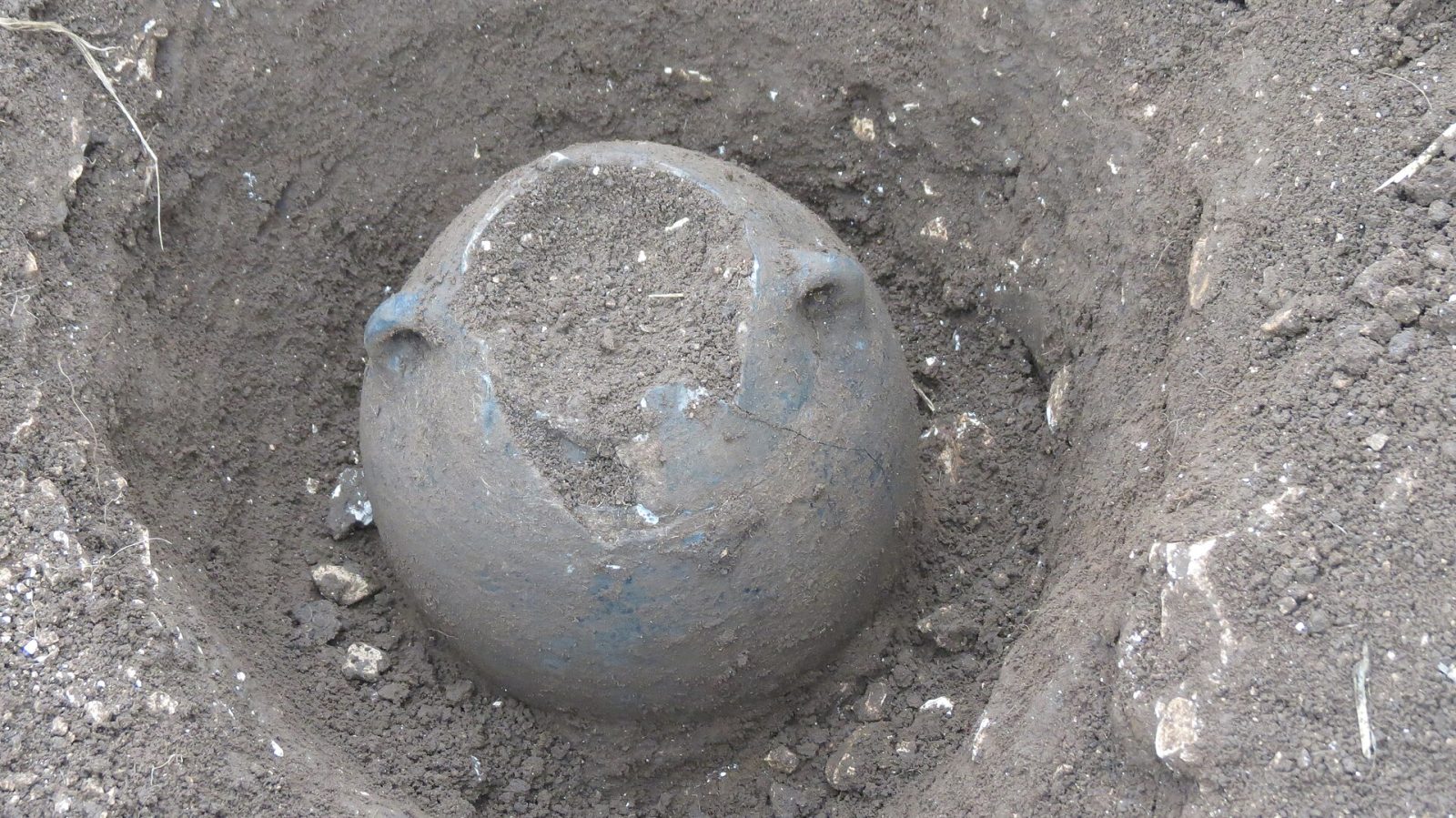
In September 2014 a detectorist in East Yorkshire found a Roman pot holding 1,857 coins and lifted it whole, unopened. Excavated layer by layer at the British Museum, it turned out to have been buried around AD 307, just after Constantine the Great was proclaimed emperor at York.
On Sunday 21 September 2014, the metal detectorist David Blakey was searching a field near Wold Newton, in the East Riding of Yorkshire, when he found a Roman pottery jar packed with coins. He filmed the moment. Then, instead of tipping the coins out, he and his fellow detectorists lifted the jar out of the ground whole and reported it to the Portable Antiquities Scheme.
That decision made the hoard far more valuable to archaeology. At the British Museum, specialists excavated the contents of the pot in nine layers, recording the position of every coin. They found 1,857 copper-alloy coins: 1,856 of them nummi, the standard bronze coin of the time, struck between about AD 294 and 307, and one older coin of the emperor Claudius II. Almost half came from the mint at Trier, more than a quarter from London and most of the rest from Lyon. The layers showed that two separate batches of coins had been combined in the pot. The jar itself, a grey ware vessel nearly 30 centimetres tall, was made at Crambeck in North Yorkshire; with it were a broken dish, probably used as a lid, and a tiny blue glass bead.
The latest coins are London issues of Constantine, struck in 307. That date is significant. In July 306 the emperor Constantius died at York, and his son Constantine was proclaimed emperor there by the army, the beginning of the reign of Constantine the Great. The Wold Newton coins were buried in the first months of that new reign, perhaps at a time of uncertainty. The museum describes the hoard as the largest of its period from northern Britain, worth about a year's pay for a legionary soldier.
The hoard was declared Treasure in December 2015. The Yorkshire Museum launched an appeal on 25 July 2016, the 1,710th anniversary of Constantius's death at York, and raised the money that November, with support from the Arts Council England/V&A Purchase Grant Fund, the American Friends of Art Fund and members of the public. It went on display in June 2017 and is in the Yorkshire Museum in York.
Written for Global Finds from the Yorkshire Museum, York Museums Trust's account by the Finds Liaison Officer and the Portable Antiquities Scheme record (DUR-16C89F). Photo: the Wold Newton hoard as it was found, Portable Antiquities Scheme, Wikimedia Commons, CC BY 2.5.
Approximate location54.13, -0.43View on map
Source: Yorkshire Museum