The Erfurt Treasure: a Jewish family's silver, hidden before the pogrom of 1349
Famous find Hidden before the pogrom of 1349 · Found in 1998 See it on the timeline →
In 1998 builders working beside Erfurt's medieval synagogue found a silver bowl under a cellar wall, and took it for tin. It led to nearly 28 kilograms of coins, silver and jewellery, including a gold Jewish wedding ring, hidden before the town's Jewish community was destroyed in 1349.
In 1998, builders were working on a house in the Michaelisstraße in Erfurt, in central Germany, next to the town's medieval synagogue. Under the wall of an old cellar entrance they found a silver bowl. Thinking it was tin, they put it in their site hut. When its importance was realised, archaeologists recovered what lay with it: one of the largest and richest medieval treasures ever found in Europe.
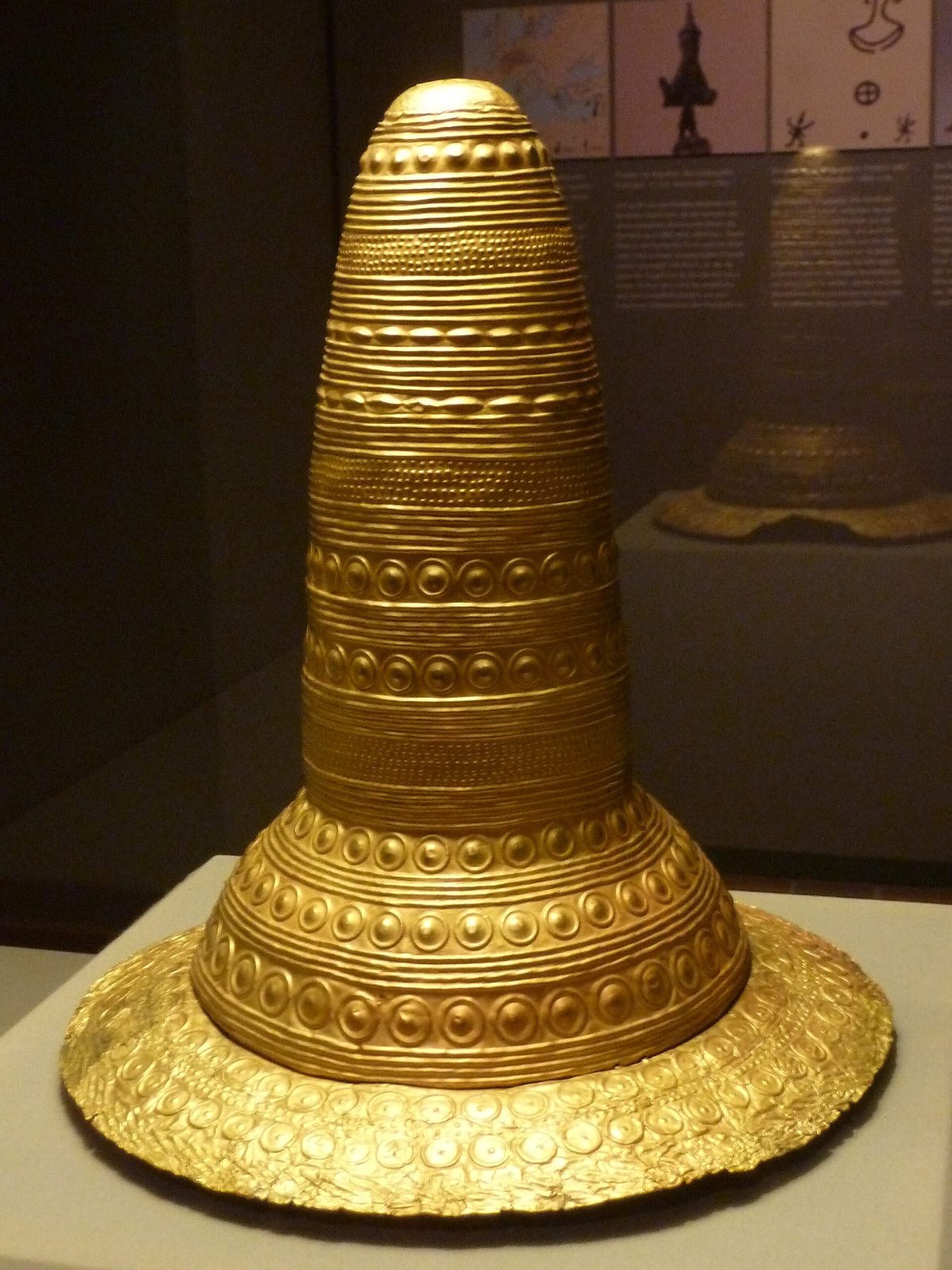
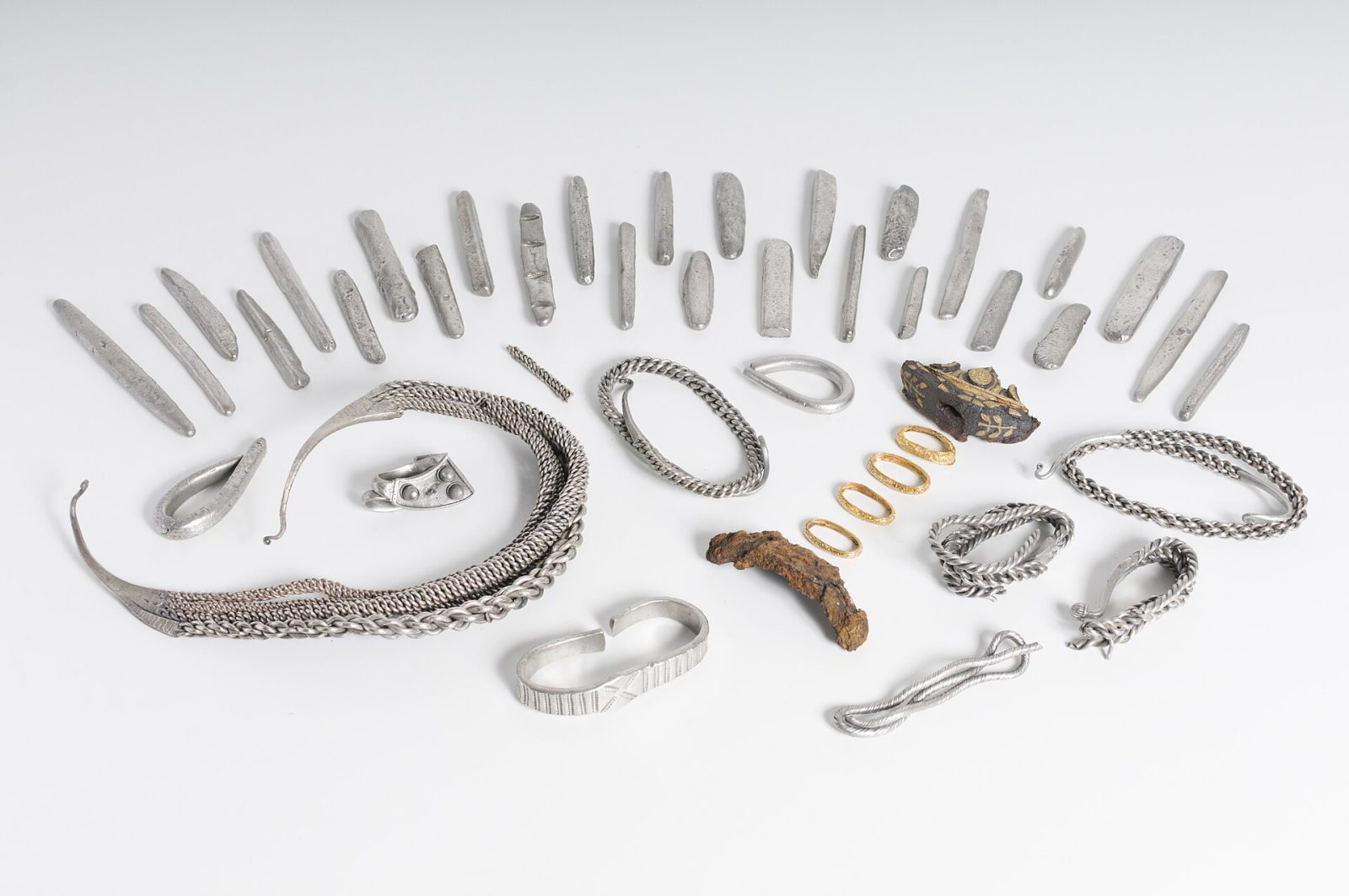
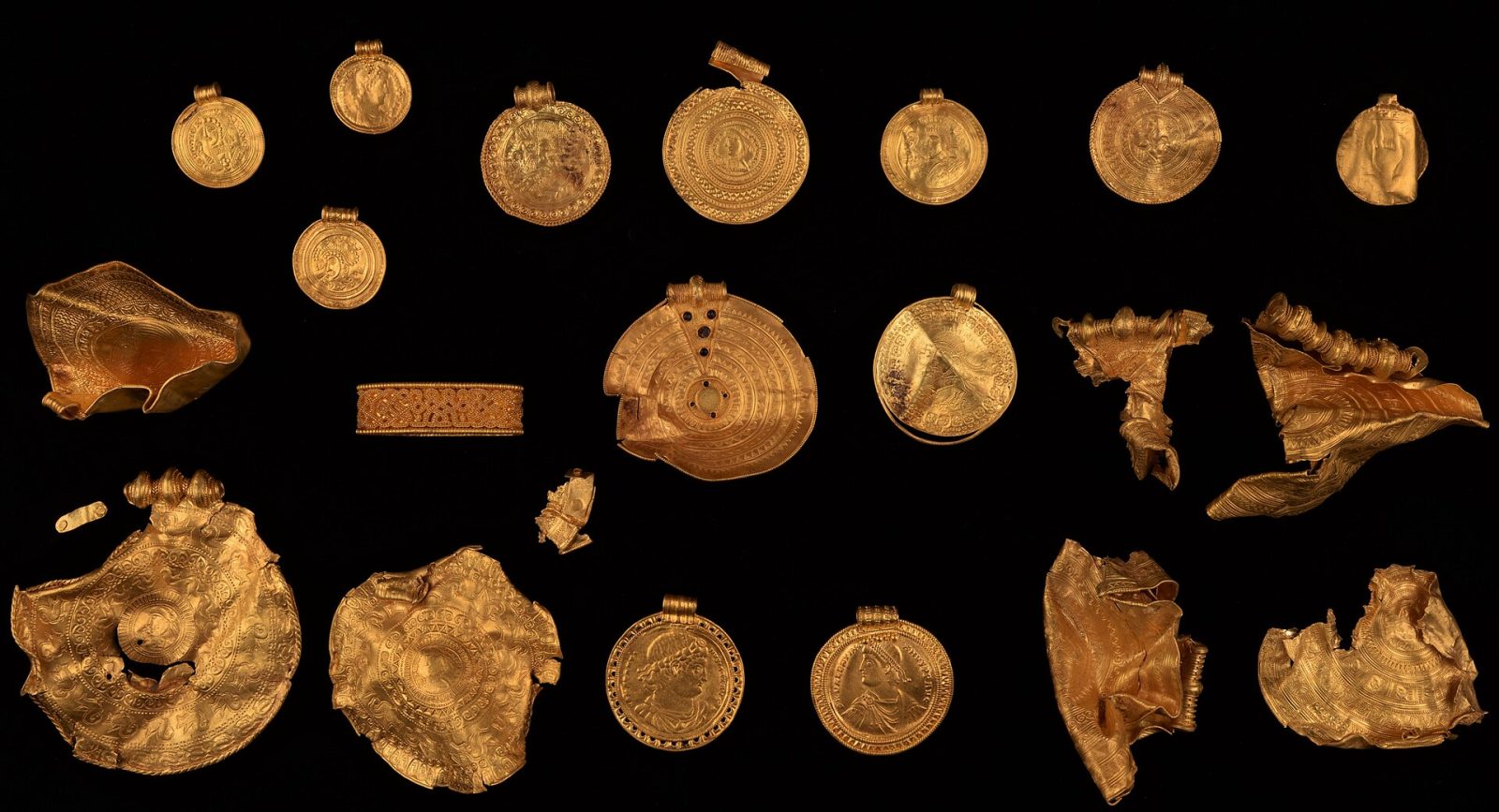
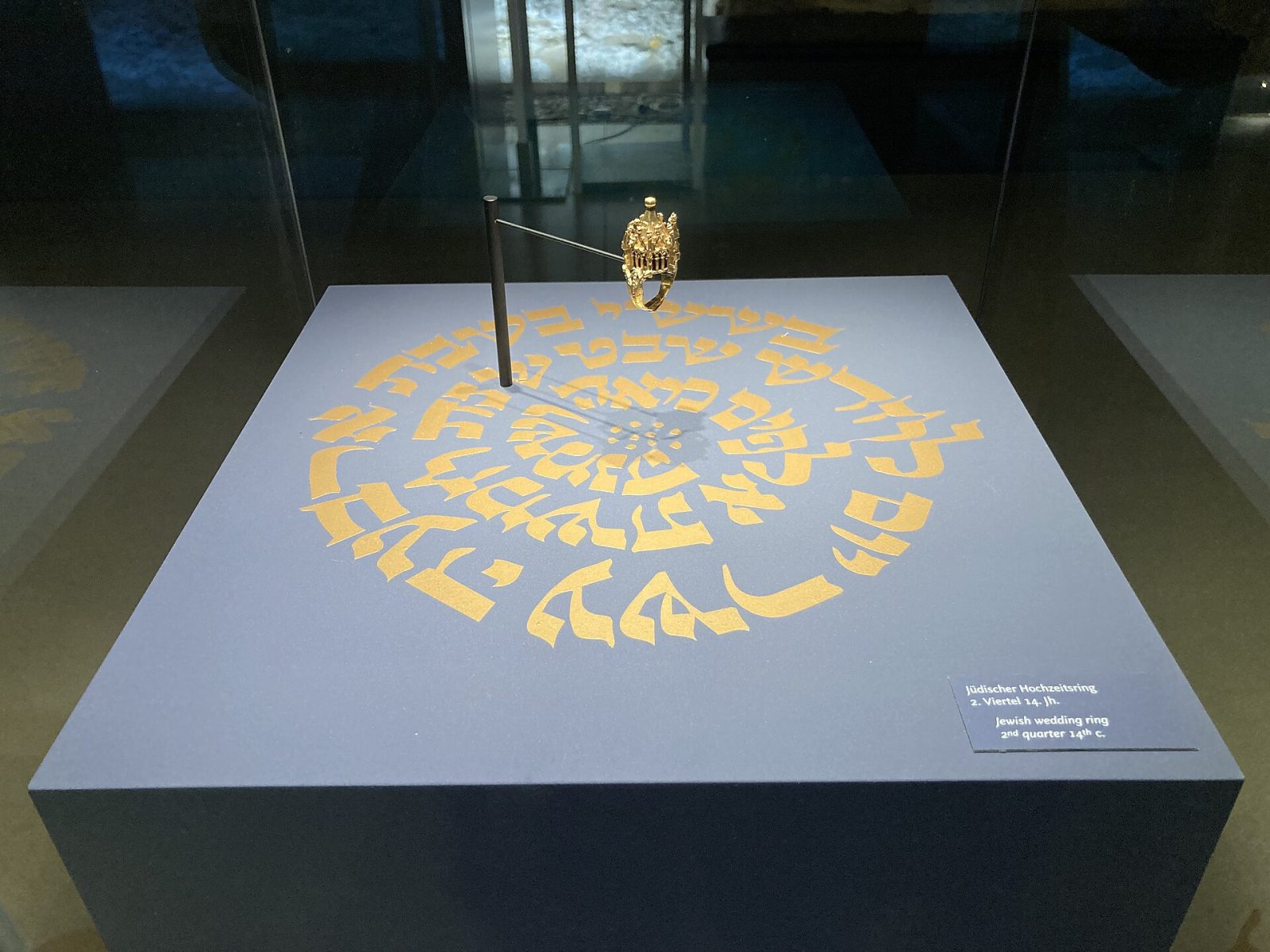
The Erfurt Treasure weighs almost 28 kilograms. It contains 3,141 silver coins, almost all French gros tournois of the late 13th and early 14th centuries, and 14 silver ingots. There is a set of silver tableware, including eight beakers that nest inside one another, a ewer, a drinking bowl and a double cup, in which eight brooches had been tucked away. And there are more than 700 pieces of Gothic goldsmiths' work: belt fittings, garment ornaments, brooches and rings. The finest is a Jewish wedding ring of pure gold, made in the first half of the 14th century, crowned with a tiny model of a Gothic building, a symbol of the Temple in Jerusalem or of the couple's new home.
Erfurt had a large and prosperous Jewish community in the Middle Ages. On 21 March 1349, as the Black Death spread across Europe and Jews were falsely blamed for it, the community was attacked and destroyed in a pogrom. The last known owner of the house where the treasure lay was a Jewish moneylender called Kalman of Wiehe, and it is very likely that he or his family hid their wealth as the danger grew, and did not survive to recover it.
Under Thuringia's law, the treasure belongs to the state. After conservation it was shown in Paris, New York and London, and since October 2009 it has been on permanent display in the cellar of the Old Synagogue in Erfurt, now one of the oldest surviving synagogue buildings in Europe. In 2023 the Old Synagogue and the nearby medieval ritual bath became part of a UNESCO World Heritage Site.
The story had one more twist. In 2025, a former construction worker offered the city four gilded silver pieces that he admitted taking from the site in 1998. Prosecutors had them seized; too much time had passed for a prosecution, but they still belong to Thuringia.
Written for Global Finds from the City of Erfurt's Jewish Life in Erfurt pages, the Yeshiva University Museum and the Jüdische Allgemeine (June 2025). Photo: the Jewish wedding ring from the Erfurt Treasure, in the Old Synagogue, Erfurt, Markus Köllner, Wikimedia Commons, CC BY-SA 4.0.
Approximate location50.98, 11.03View on map