The Crondall Hoard: the first English gold coins, found by a young man in 1828
Famous find Buried about AD 635 to 650 · Found in 1828 See it on the timeline →
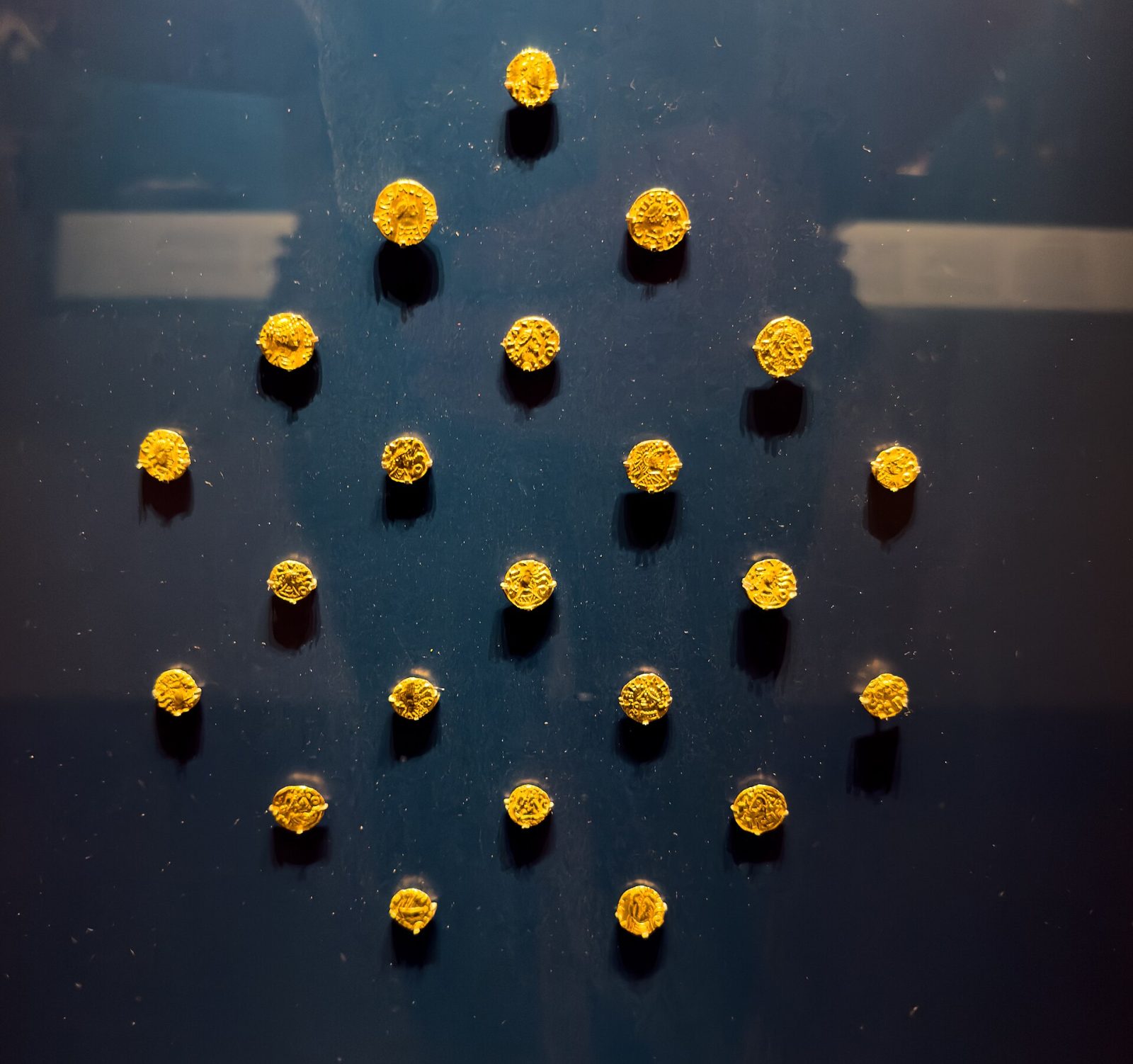
In 1828 eighteen-year-old Charles Lefroy found a purse of about 100 early Anglo-Saxon gold coins on his family's land at Crondall in Hampshire. Buried before AD 650, they are the most important evidence for the beginning of English coinage.
In 1828, Charles Lefroy, an 18-year-old whose family owned land at Crondall, in north-east Hampshire, found a hoard of small gold coins in the ground on the estate. Accounts of exactly how he came across them vary. What he found was a purse of around a hundred pieces of gold, along with two jewelled ornaments and chains.
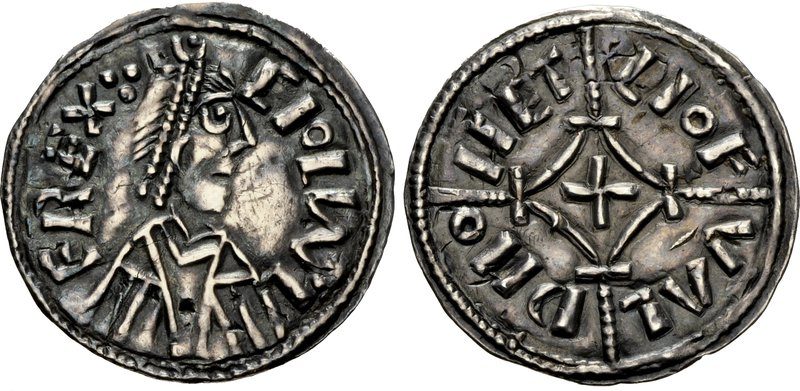
The coins are the key. There were 73 English gold coins, known as thrymsas or shillings, struck in London and Kent, and two dozen Merovingian gold coins from the Frankish kingdoms across the Channel, as well as three blank discs of gold ready for striking and one gold-plated fake. The English coins are among the very first coins made in Britain since the Roman period ended two centuries earlier, and the Ashmolean Museum describes the hoard as the most important evidence for the beginning of English coinage. Some of the coins carry the names of moneyers or rulers; others copy Roman and Frankish designs.
The hoard was buried before AD 650, probably between about 635 and 650. The historian Philip Grierson suggested that a hundred gold shillings may have been a deliberate sum, perhaps the legal price of a man's life, his wergild, though that is only a theory.
The Lefroy family kept the hoard until 1895, when it passed to Lord Grantley, a keen coin collector. After his death it was bought by the Ashmolean Museum in Oxford in 1944, in memory of the archaeologist Sir Arthur Evans. Sadly, the jewellery and some of the other pieces found in 1828 have since been lost, and their whereabouts are unknown. The coins are on display in the Ashmolean.
Written for Global Finds from the Ashmolean Museum's pages on the hoard and C. H. V. Sutherland's Anglo-Saxon Gold Coinage in the Light of the Crondall Hoard (1948). Photo: coins from the Crondall Hoard in the Ashmolean Museum, Mike Peel, Wikimedia Commons, CC BY-SA 4.0.
Approximate location51.23, -0.86View on map
Source: Ashmolean Museum