The Sedgeford Torc: a detectorist found its missing end 39 years later
Famous find About 200 to 50 BC · Found in 1965 See it on the timeline →
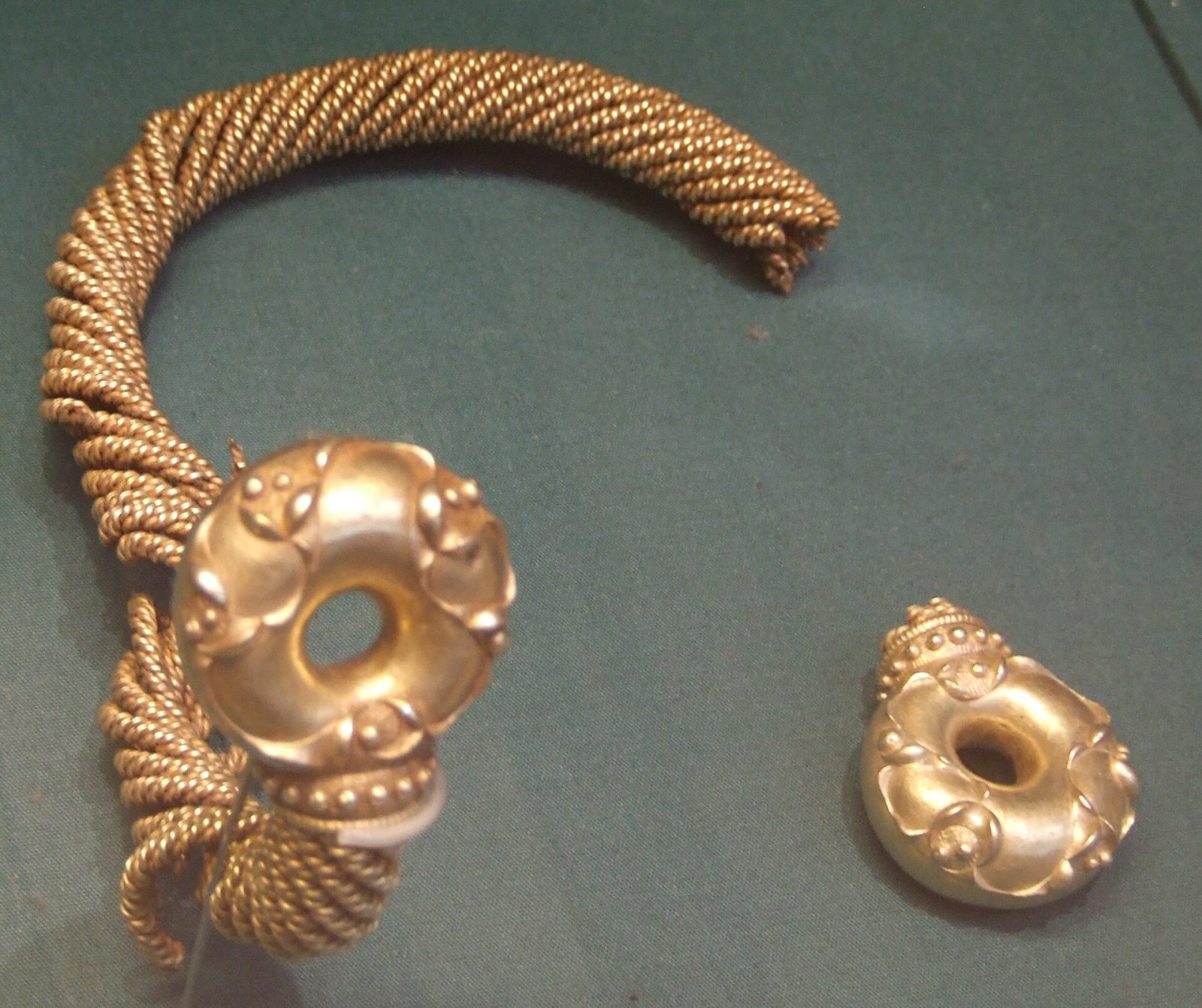
In May 1965 an Iron Age gold torc was caught on a harrow in a Norfolk field, with one of its ends missing. At Easter 2004 a metal detectorist taking part in a local archaeology project found the lost end in the same field, and the two were reunited in the British Museum.
On 6 May 1965, a gold torc, an Iron Age neck ring, was caught on a harrow working a field called Polar Brek at West Hall Farm, Sedgeford, in north-west Norfolk, a couple of miles from the famous treasure fields of Snettisham. Accounts name the farmworker A. E. Middleton as the finder; the land was farmed by Dr Bernard Campbell. The torc was declared Treasure Trove at an inquest in Sedgeford in December 1966 and acquired by the British Museum. But it was incomplete: one of its two decorated ends, the terminals, was missing.
Thirty-nine years later, at Easter 2004, Dr Steve Hammond, a retired chemistry lecturer, was metal detecting with the Sedgeford Historical and Archaeological Research Project, a long-running community archaeology project, in the same field, about 400 metres from where the torc had been found. He got a strong signal and dug up a heavy ring of gold. It was the missing terminal. When it was compared with the torc in the British Museum, the broken wire ends matched perfectly.
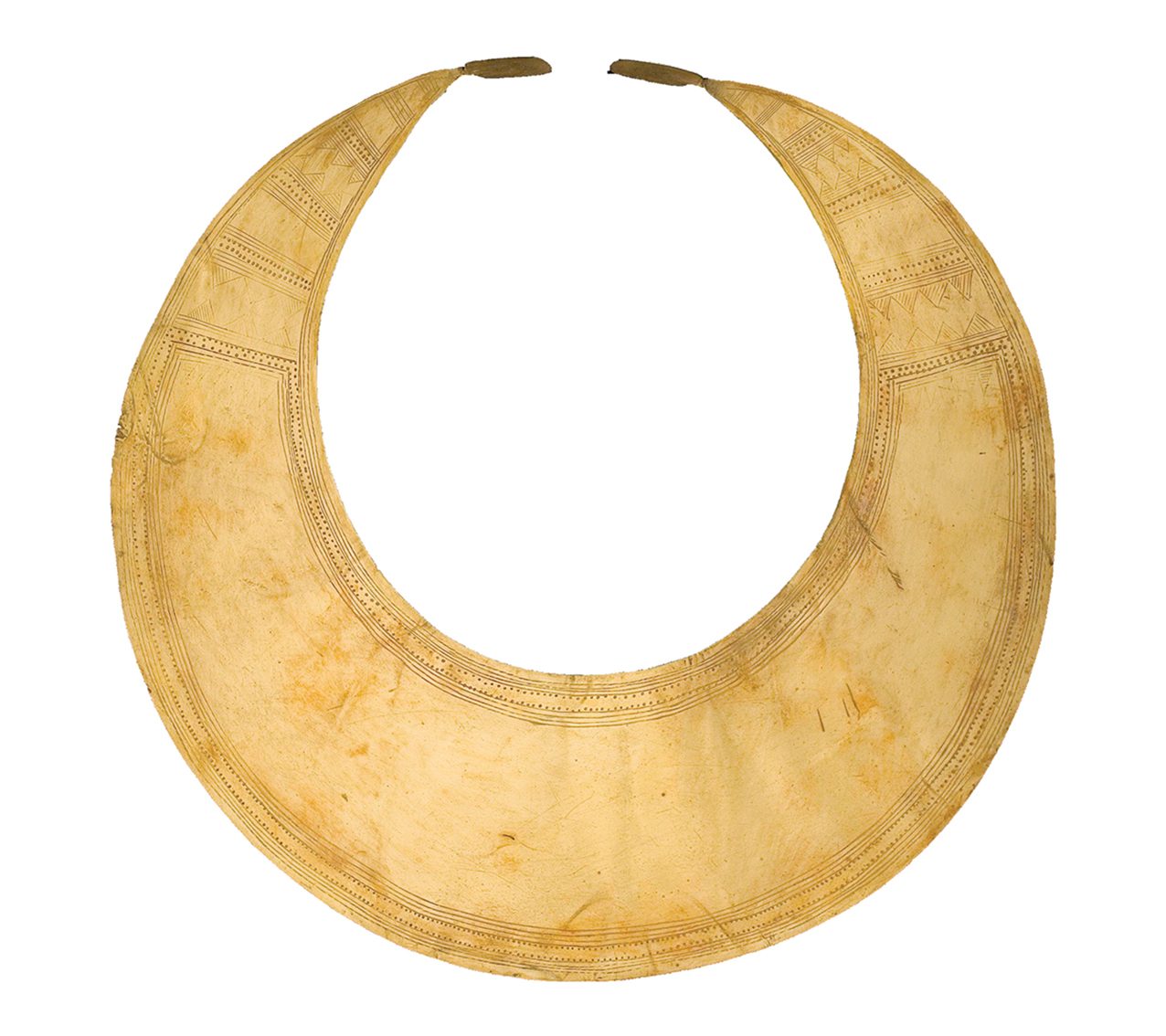
The Sedgeford Torc is a masterpiece of Iron Age goldwork. Its hoop is made of 48 fine wires, twisted in pairs, then in threes, then into eight ropes, about 25 metres of wire in all, and the terminals were cast by the lost-wax method and decorated with swirling patterns in the La Tène style. The craftsman even pushed a hidden metal bar through the collar of each terminal and smoothed it almost invisibly. It dates from about 200 to 50 BC. It is so like the gold torc found near Newark in 2005 that the two may be the work of the same maker.
The terminal was declared Treasure and bought by the British Museum in 2005, with help from Art Fund and the British Museum Friends, and reunited with the rest of the torc. In 2007 the government launched its annual Treasure report with the Sedgeford terminal, and the culture minister called detectorists the unsung heroes of Britain's heritage. The torc and its terminal are displayed together in the British Museum, next to the Newark Torc.
Written for Global Finds from the Sedgeford Historical and Archaeological Research Project, the Norfolk Heritage Explorer, Art Fund and The Guardian (January 2007). Photo: the Sedgeford torc with its reunited terminal in the British Museum, JMiall, Wikimedia Commons, CC BY-SA 3.0.
Approximate location52.90, 0.55View on map
Source: Sedgeford Historical and Archaeological Research Project