The Tomares Hoard: 19 jars of Roman coins hit by a digger laying water pipes near Seville
Famous find Struck about AD 294 to 310 · Found in 2016 See it on the timeline →
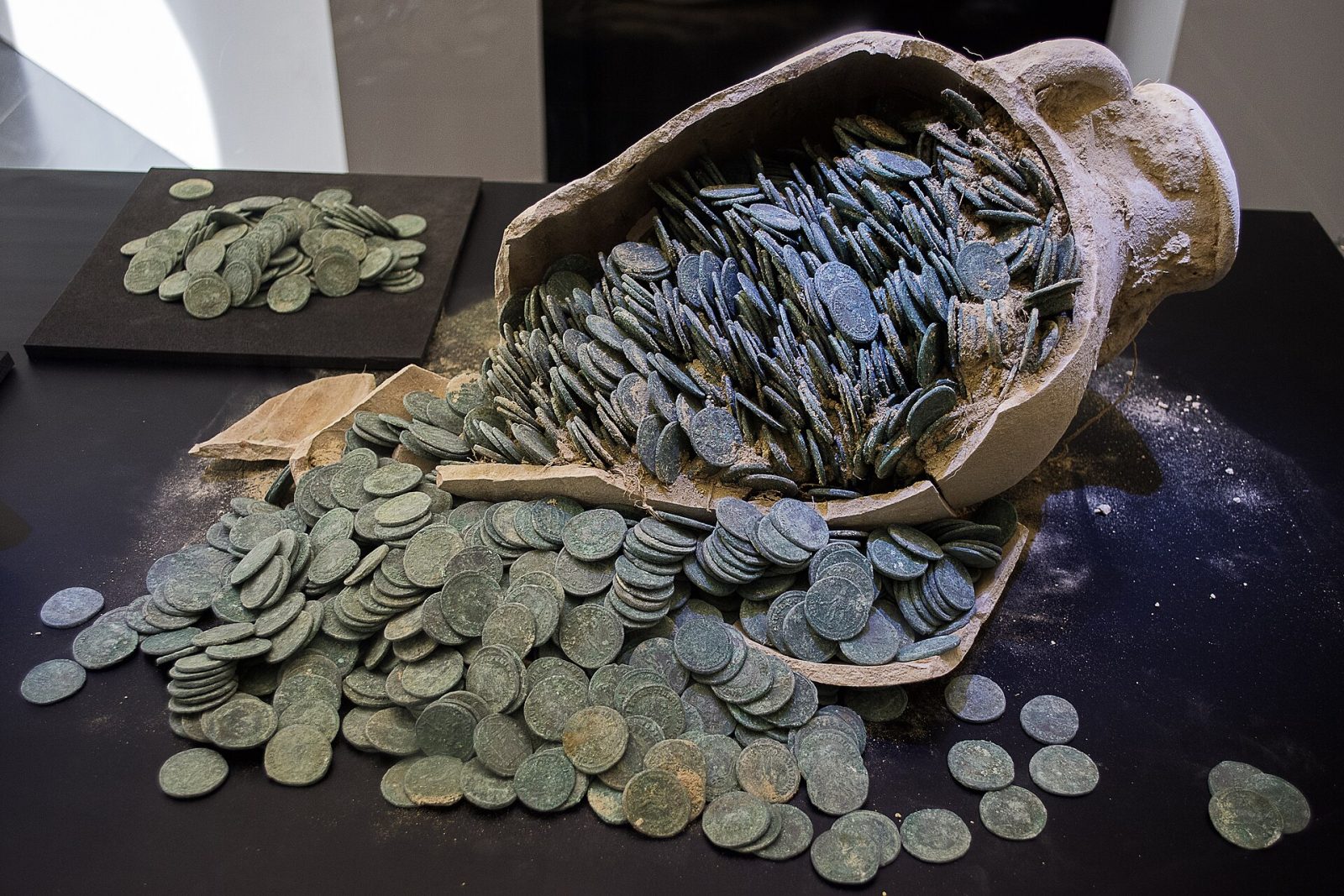
In April 2016 workers digging a trench for water pipes in a park at Tomares, near Seville in Spain, hit a row of Roman amphorae packed with coins. They held about 53,000 bronze coins, weighing some 600 kilograms, struck around AD 300.
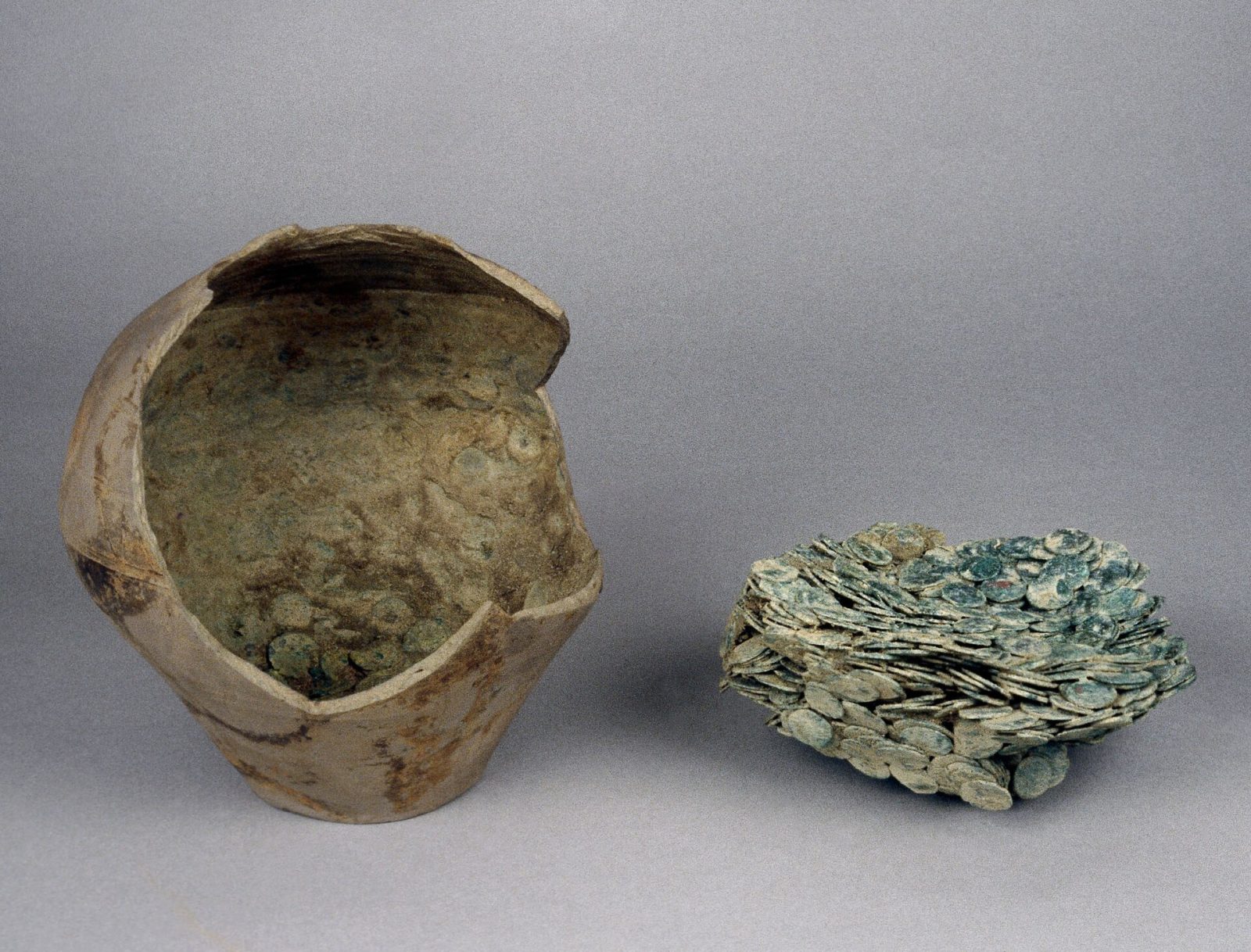
On 27 April 2016, a work crew digging a trench for water pipes in the Parque del Olivar del Zaudín, a park in the town of Tomares on the edge of Seville in southern Spain, broke into a buried pottery jar full of coins. The work was stopped, and archaeologists found that it was one of nineteen amphorae, the tall jars the Romans used to carry olive oil, buried side by side. Some were intact; others had been smashed by the excavator. The coins were taken straight to the Archaeological Museum of Seville.
When they were counted, there were about 53,000 of them, weighing roughly 600 kilograms in all. They are bronze coins of the late Roman Empire, known as folles or nummi, each with a thin wash of silver when new. They show the emperors of the Tetrarchy, the system of four rulers set up by Diocletian, including Diocletian himself, Maximian, Constantius I and Galerius. They were struck at mints across the empire, from Rome, Carthage and Aquileia to Trier, Lyon and London, mostly in the years before about AD 307. Many look as if they had hardly been used.
The jars themselves were Dressel 20 amphorae, the standard container for the olive oil of southern Spain, which was shipped all over the Roman world. Why so many coins were buried in reused oil jars is not known. The hoard may have been a tax payment, money belonging to an official institution, or a reserve to pay soldiers. It has been reported as the largest Roman coin hoard ever found in Spain.
Under Spanish law, chance finds of this kind belong to the state. The coins are held by the Archaeological Museum of Seville and are being studied by the University of Seville. Part of the hoard was shown in Seville in 2016 and 2017, and later in an exhibition at the National Archaeological Museum in Madrid. The Seville museum's main building is currently closed for rebuilding.
Written for Global Finds from The Local (2016), the Universidad Pablo de Olavide (2026) and El Independiente (2025). Photo: a broken amphora and coins from the Tomares Hoard in the Archaeological Museum of Seville, Anual, Wikimedia Commons, CC BY-SA 4.0.
Approximate location37.37, -6.05View on map
Source: The Local Spain