The Bosworth Boar Badge: the detectorist's find that moved a famous battlefield
Famous find Lost at the Battle of Bosworth, 22 August 1485 · Found in 2009 See it on the timeline →
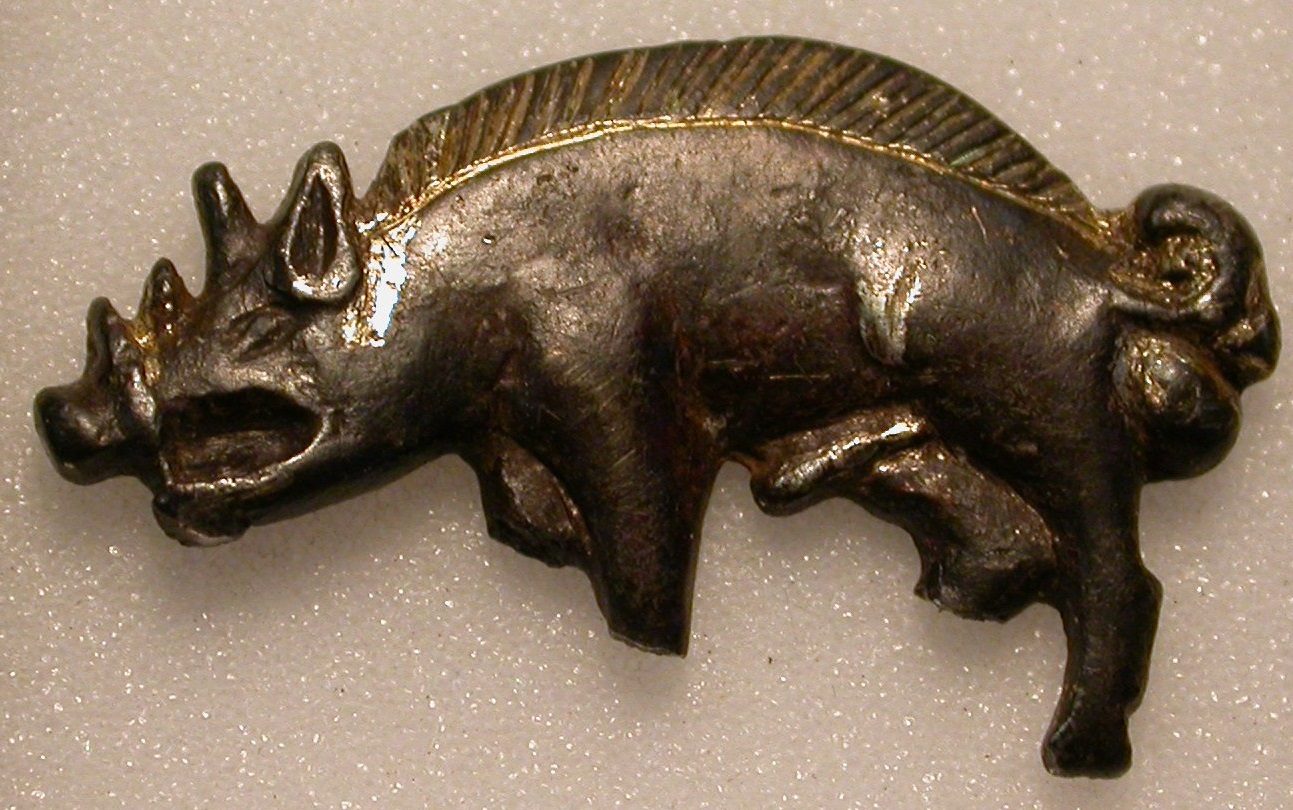
In 2009 a volunteer detectorist on a battlefield survey in Leicestershire found a tiny silver-gilt boar, the badge of Richard III, beside the remains of a medieval marsh. With dozens of cannonballs, it showed that the Battle of Bosworth was fought about three kilometres from where everyone thought.
On 22 August 1485, Richard III was killed at the Battle of Bosworth, the last time an English king died in battle, and Henry Tudor took the throne as Henry VII. For centuries the battle was thought to have been fought on Ambion Hill, near Market Bosworth in Leicestershire, where a heritage centre was built. But no battle debris had ever been found there.
In 2005, Dr Glenn Foard of the Battlefields Trust began a five-year survey to find the real site, funded by the Heritage Lottery Fund through Leicestershire County Council. It combined old documents, a reconstruction of the medieval landscape and systematic metal detecting by volunteers. In March 2009 the detectorists found a single lead ball about 30 millimetres across, and more soon followed: in the end 34 lead round shot, from about 30 to 94 millimetres across, the largest group of artillery shot ever found on a medieval battlefield in Europe. They showed that the fighting had taken place on low ground on either side of the old Roman road, Fenn Lane, about three kilometres south-west of Ambion Hill.
Then, in 2009, Carl Dawson, a retired university lecturer and one of the survey's volunteer detectorists, found a tiny silver-gilt boar, just 29 millimetres long, beside a place called Fen Hole, thought to be all that remains of the marsh where, according to the chronicles, Richard's horse became stuck. The white boar was Richard's personal emblem, given out in large numbers to his followers, but most boar badges were cheap base metal. One of silver gilt must have belonged to a man of rank, probably a knight of Richard's own household who rode with him in his final cavalry charge.
The discovery of the true battlefield was announced on 19 February 2010. In May 2010 the coroner declared the badge Treasure; the finder reportedly gave up his share of the reward so that it could stay in Leicestershire. It is displayed with other finds from the survey at the Bosworth Battlefield Heritage Centre, near Sutton Cheney. In a public vote that year it was named joint favourite object in Leicestershire's museums.
Written for Global Finds from Leicestershire County Council's Bosworth Battlefield collection, the Heritage Lottery Fund's announcement (February 2010), the Bosworth Battlefield Heritage Centre and Medievalists.net. Photo: the Bosworth boar badge, Portable Antiquities Scheme, Wikimedia Commons, CC BY 2.0.
Approximate location52.58, -1.44View on map
Source: Leicestershire County Council (Bosworth Battlefield collection)