The Llanllyfni Lunula: a 4,000-year-old gold collar mistaken for a laurel leaf
Famous find About 2400 to 2000 BC · Found in 1869 See it on the timeline →
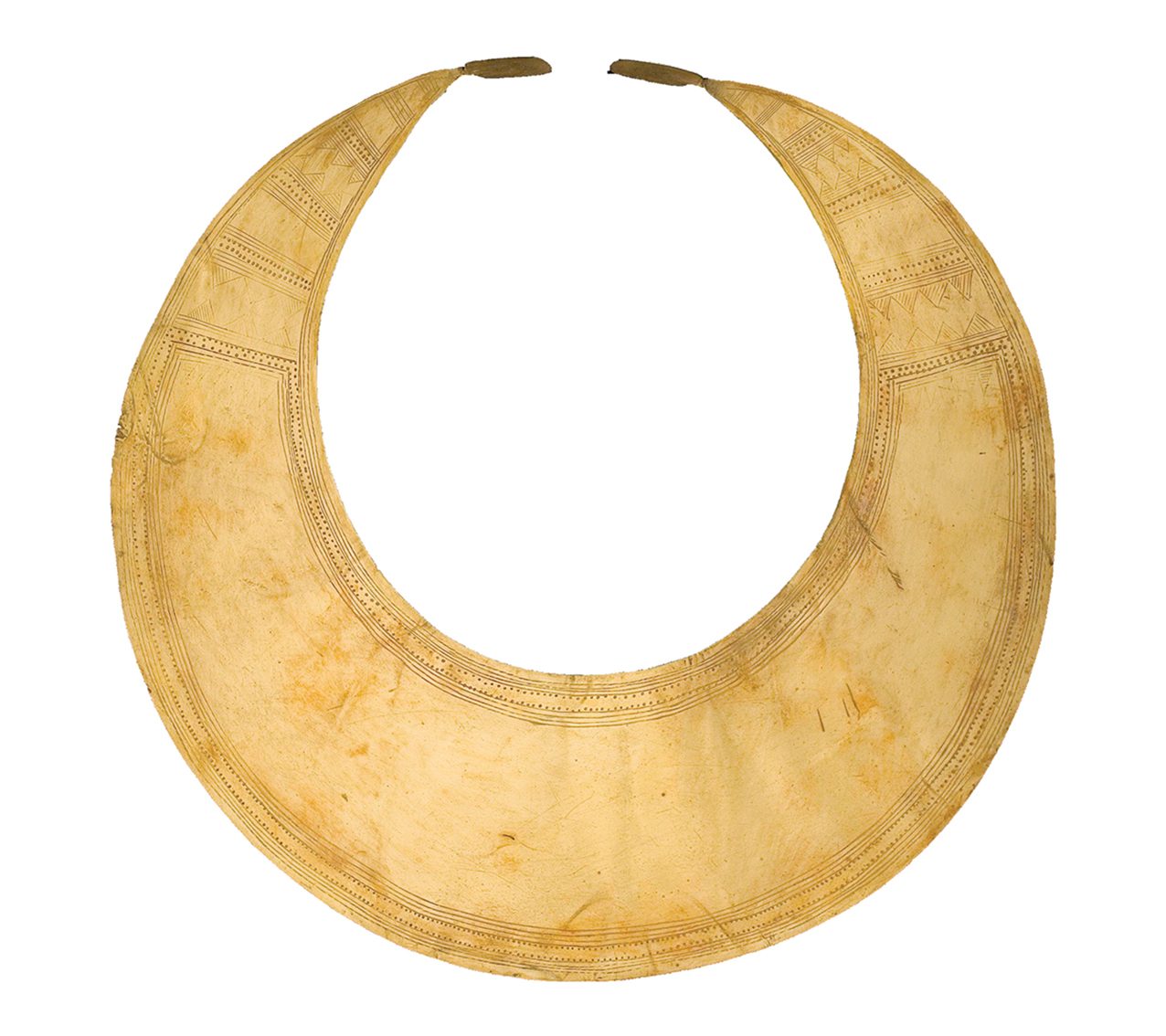
Around 1869 a Gwynedd farmer saw what he thought was a yellow laurel leaf sticking out of a peat bog. It was an Early Bronze Age gold collar, more than 4,000 years old. In October 2025 it was stolen from St Fagans museum in a night-time raid.
Around 1869, a farmer at Llecheiddior-uchaf, near Bryncir in the parish of Llanllyfni, in Gwynedd, north-west Wales, noticed what looked like a yellow laurel leaf sticking out of the peat in a bog. When he came back later and dug it out, it turned out to be a crescent-shaped collar of solid gold, more than 4,000 years old. The British Museum bought it in 1869.
The collar is a lunula, named from the Latin for a little moon. It is 24 centimetres across and less than a millimetre thick, and weighs 185 grams. It was hammered out from a single rod of gold and decorated with fine zigzags, lines and dots, made with a sharp point and with punches of copper or bronze. The patterns are very similar to those on the decorated Beaker pottery of the same period. Lunulae were made in the Early Bronze Age, between about 2400 and 2000 BC, and most have been found in Ireland, where many may have been made from Cornish gold. The Llanllyfni lunula is of a style known as provincial, and it is one of the finest found in Britain.
Lunulae were probably worn around the neck by people of high status, perhaps on special occasions, and many seem to have been placed in bogs and other wet places deliberately, as offerings. That may be why this one was lying in the peat.
From 1979 the British Museum lent the lunula to Amgueddfa Cymru, Museum Wales, and from 2018 it was on show at St Fagans National Museum of History near Cardiff. In the early hours of 6 October 2025, thieves broke into St Fagans and stole the lunula, along with three other hoards of Bronze Age gold from Wales, from the same display. Two men from Northampton were charged with burglary in the weeks that followed and remanded in custody. In September 2026, almost a year after the raid, Amgueddfa Cymru confirmed that none of the stolen gold had been recovered and renewed its appeal for information, while legal proceedings continued.
Written for Global Finds from Amgueddfa Cymru - Museum Wales's record of the lunula, the Museums Association (October 2025), Mon FM and WalesOnline (September 2026). Photo: the gold lunula from Llanllyfni, from R. Hermann's study in Antiquity (2022), Wikimedia Commons, CC BY-SA 4.0.
Approximate location52.98, -4.27View on map
Source: Amgueddfa Cymru - Museum Wales