The Igbo-Ukwu Bronzes: masterpieces of African metalwork found while digging a water tank
Famous find About 9th to 12th century AD (date debated) · Found in 1938 See it on the timeline →
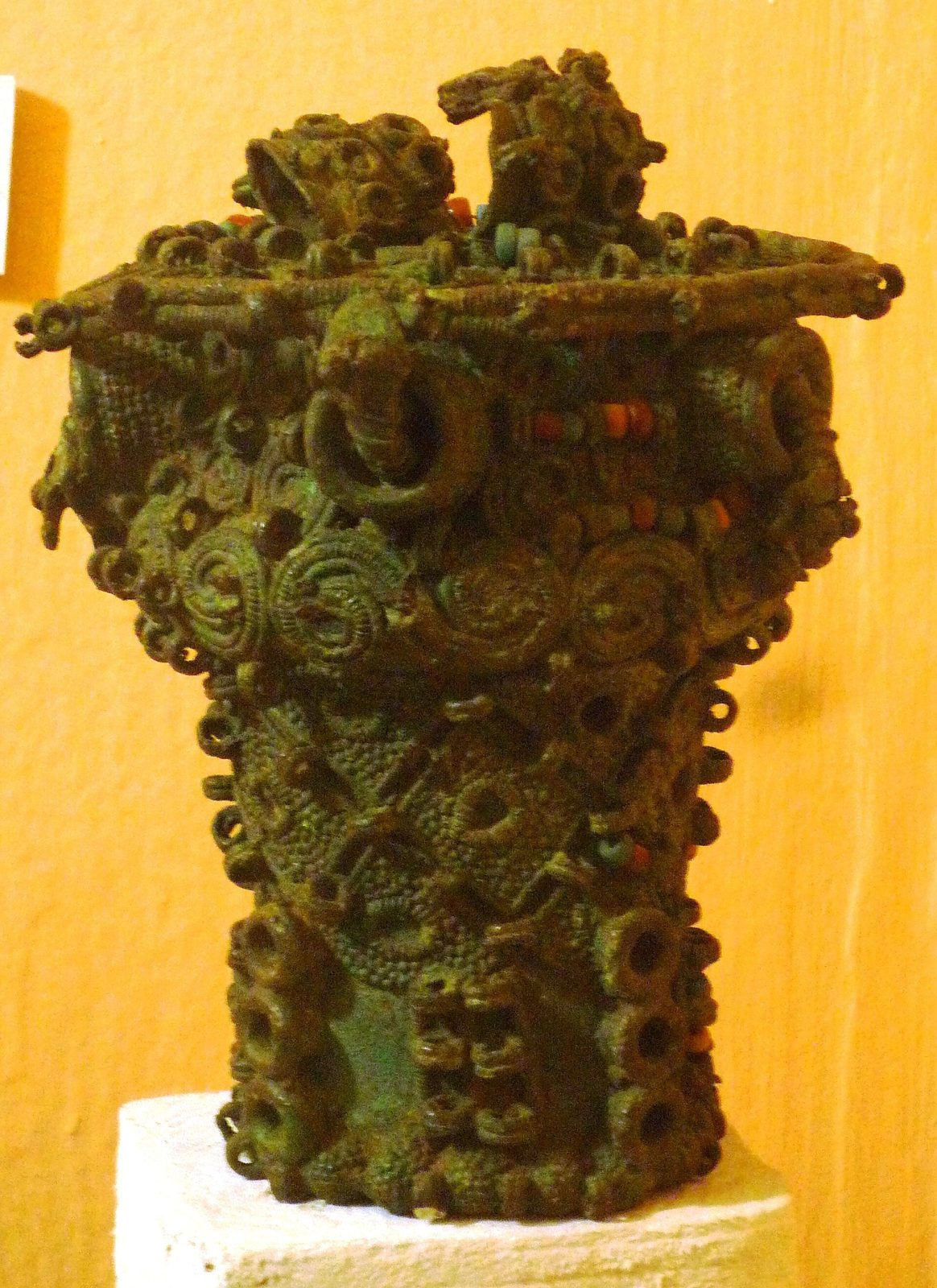
In 1938 Isaiah Anozie was digging a cistern in his compound at Igbo-Ukwu in south-eastern Nigeria when he found bronze vessels and ornaments. Excavations later revealed a shrine and the burial of a man of high status, with some of the finest bronze castings ever made.
In 1938, Isaiah Anozie was digging a cistern to store water in his compound at Igbo-Ukwu, a town in what is now Anambra State in south-eastern Nigeria, when he came across bronze vessels and ornaments. Some of the pieces were given away or scattered. A colonial officer, J. O. Field, heard about the discovery and bought several of them, and his collection later passed to Nigeria's Department of Antiquities.
Twenty years later the archaeologist Thurstan Shaw excavated on the Anozie family's land, from 1959 to 1960 and again in 1964. He investigated three sites, named after members of the family. At Igbo-Isaiah, the original findspot, the objects seem to have been kept together in a shrine or store. At Igbo-Richard he found a burial chamber in which a man had been seated upright on a wooden stool, about three and a half metres down, wearing a crown and a pectoral, with beaded wristlets and anklets: perhaps a priest-king. At Igbo-Jonah he found a pit of ritual pottery.
Altogether the sites produced about 75 kilograms of copper and bronze objects and more than 165,000 glass and stone beads. The bronzes are astonishing. Among them are a pot on a stand, enclosed in a net of cast rope, a vessel in the shape of a large snail shell, and ornaments covered in tiny insects, beads and granules, some of the metal no more than a third of a millimetre thick. They were cast by the lost-wax method, perhaps using latex from local trees rather than beeswax, and analysis shows that the metal came from ore deposits in the region, not from imported metal. This was a sophisticated local industry with no known parallel elsewhere in Africa at the time.
Shaw's radiocarbon dates pointed to the 9th century AD, which surprised many scholars, and the dating is still debated; more recent research suggests the 10th to 13th centuries for some of the material. The Igbo-Ukwu bronzes are in the National Museum in Lagos, and some pieces are in the British Museum.
Written for Global Finds from S. K. McIntosh's review of fifty years of research, Igbo-Ukwu at 50, in the African Archaeological Review (2022), and the National Museum, Lagos. Photo: a bronze ceremonial pot on a stand from Igbo-Ukwu, in the National Museum, Lagos, Ochiwar, Wikimedia Commons, CC BY-SA 3.0.
Approximate location6.02, 7.02View on map