Sanxingdui: bronze giants of a lost kingdom, dug up by brickworks labourers
Famous find Buried about 1131 to 1012 BC · Found in 1986 See it on the timeline →
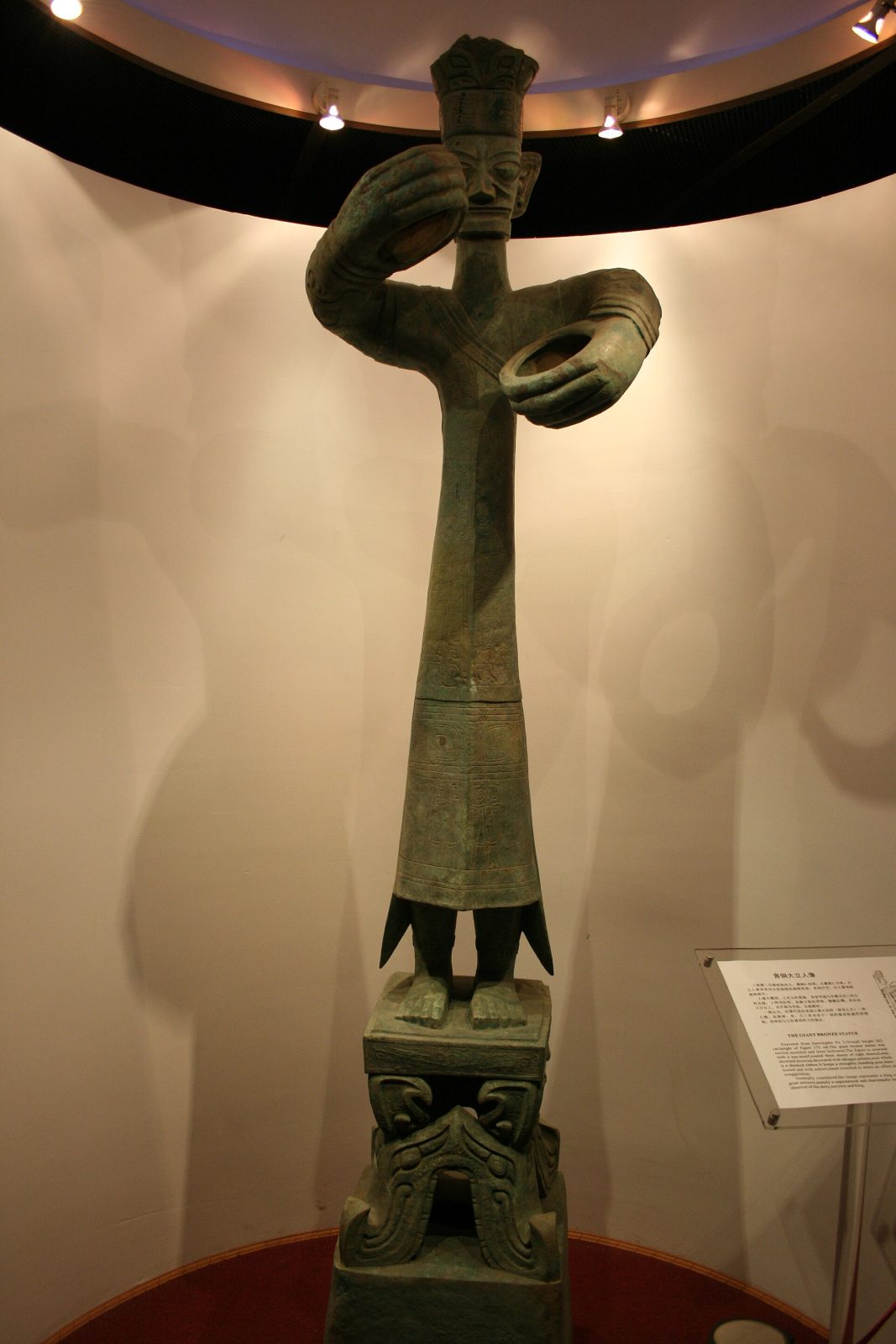
In the summer of 1986 workers digging clay for a brickworks near Guanghan in Sichuan, China, broke into two pits packed with bronzes unlike anything known from ancient China: giant masks with bulging eyes, a life-size standing figure and bronze trees nearly four metres tall.
In July 1986, workers digging clay at a local brickworks at Sanxingdui, near Guanghan in Sichuan province, south-west China, broke into a rectangular pit filled with ancient objects. A little under a month later, on 14 August, a second pit was found about 25 metres away. Archaeologists of the Sichuan provincial institute took over, and what emerged astonished the world.
The two pits held nearly a thousand bronzes, most of them deliberately broken, together with objects of gold and jade, elephant tusks and thousands of cowrie shells, all buried under a layer of burnt ash. The bronzes were unlike anything known from the rest of ancient China. There were great masks with protruding, cylindrical eyes and huge ears, the largest more than 1.3 metres wide; a bronze figure of a man standing on a pedestal, 2.6 metres tall in all, often called the oldest life-size bronze statue of a person in the world; bronze heads, some covered with gold foil; and a bronze tree nearly four metres high, with birds perched on its branches. From the first pit came a staff, about 1.4 metres long, covered in gold foil.
The pits belonged to an otherwise unknown civilisation, usually linked with the ancient kingdom of Shu, which flourished in the Sichuan basin while the Shang dynasty ruled further north. In 2019 and 2020 archaeologists found six more pits nearby, and excavations since 2020 have recovered thousands more objects, including part of a gold mask that, complete, would have been one of the heaviest gold objects of its age found in China. Pieces from different pits have even been fitted together. Radiocarbon dating of material from the new pits places the burials around 1131 to 1012 BC. Why the objects were broken, burned and buried is still debated; most archaeologists think the pits were part of great sacrificial ceremonies.
The finds are displayed at the Sanxingdui Museum beside the site, which opened in 1997 and gained a large new exhibition hall in 2023. The 40th anniversary of the discovery was marked in July 2026.
Written for Global Finds from Archaeology magazine (2024), China Daily, The Past and Science and Technology Daily. Photo: the bronze standing figure from Sanxingdui in the Sanxingdui Museum, Gary Todd, Wikimedia Commons, CC0.
Approximate location30.99, 104.20View on map
Source: Archaeology magazine