The Cumwhitton Viking Graves: a detectorist's brooch that led to a Viking cemetery
Famous find Early 10th century AD · Found in 2004 See it on the timeline →
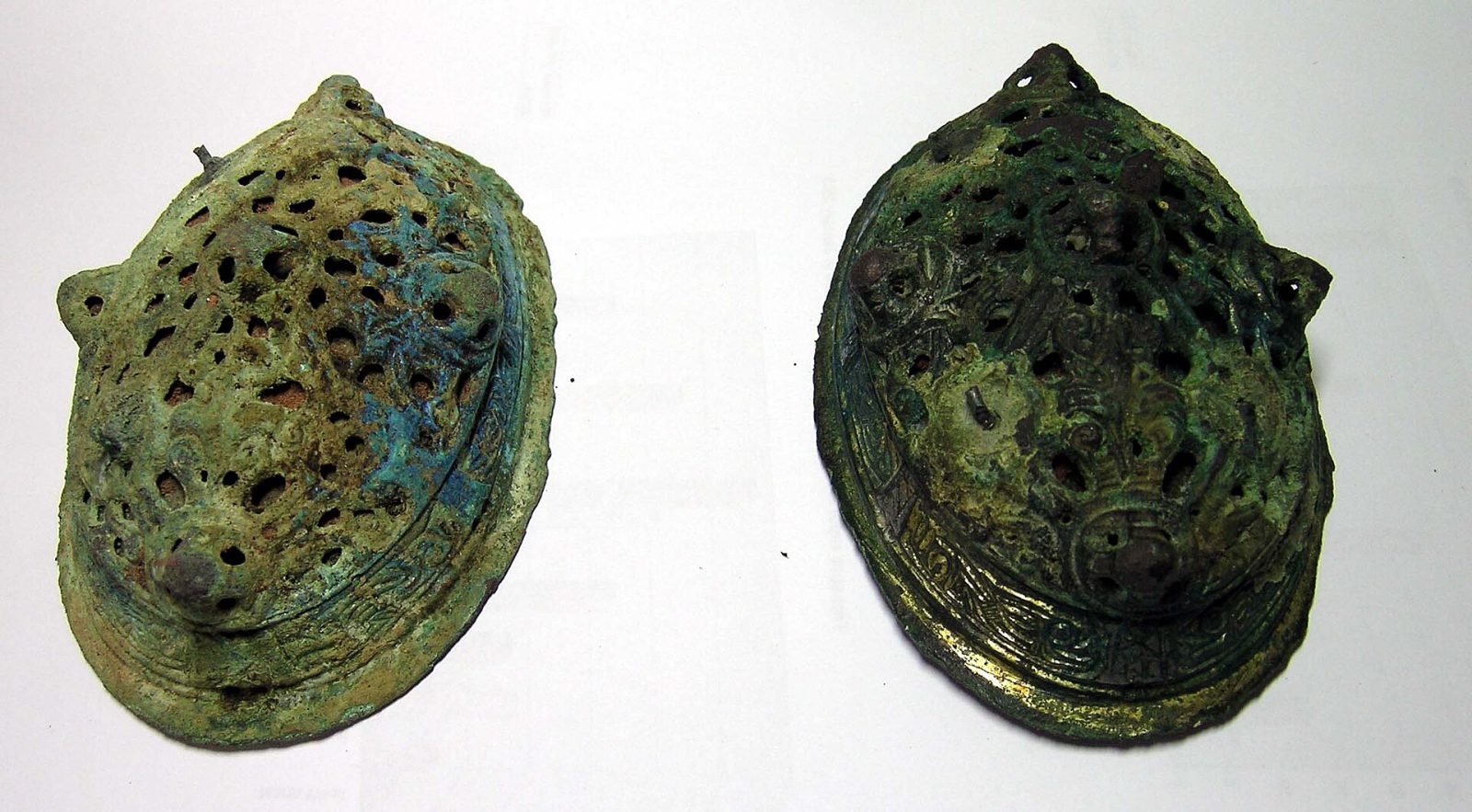
In March 2004 a detectorist found a Viking oval brooch in a ploughed field at Cumwhitton in Cumbria, and then its pair. He reported them, and archaeologists found six Viking graves with swords, spurs, drinking horns and a box of a woman's textile tools.
In March 2004, Peter Adams of the Kendal Metal Detecting Club was searching a ploughed field on the edge of the village of Cumwhitton, in the Eden valley south-east of Carlisle, when he found a gilded oval brooch, the kind worn in pairs by Viking women to fasten their dresses. He returned with his friend George Robinson and found the matching brooch. He reported both to the Portable Antiquities Scheme.
Because pairs of oval brooches usually come from burials, archaeologists suspected there was a grave. That summer, Oxford Archaeology North excavated the site with funding from English Heritage. They found the grave the brooches had come from, and about ten metres away, five more. The six graves were laid out east to west, and the grave goods suggest four men and two women.
The woman whose brooches Peter Adams had found had been buried with a bead, a silver-bound knife, a key, and a wooden box bound in iron holding her textile tools: shears, needles, a comb, a spindle whorl and a glass smoother for linen. The other graves held four swords, spears, an axe, a shield boss, spurs, drinking horns, a seax inlaid with silver, and the chain and hook from a cauldron. The soil was so acidic that almost nothing of the people themselves survived; the excavators described the bodies as no more than shadows in the sand. Fragile objects were lifted in blocks of soil and X-rayed, and traces of textile were found preserved in the corrosion.
The graves date from the early 10th century, around AD 900 to 950, the generation after Viking settlers arrived in the north-west of England. Their grave goods link them to Scandinavia, Ireland, western Scotland and the rest of northern England. Most of the objects were not Treasure, but an agreement between the landowner, the finder and the museum allowed them to be donated to Tullie House Museum in Carlisle. The full report, Shadows in the Sand, was published in 2014.
Written for Global Finds from Current Archaeology, Oxford Archaeology, Historic England's Heritage Calling blog and the Museums Association. Photo: the pair of oval brooches from Cumwhitton, Lancashire County Council (Faye Sayer), Portable Antiquities Scheme, Wikimedia Commons, CC BY-SA 2.0.
Approximate location54.86, -2.78View on map
Source: Current Archaeology