The Fenwick Treasure: a Roman family's jewellery hidden as Boudica burned Colchester
Famous find Hidden in AD 60 or 61 · Found in 2014 See it on the timeline →
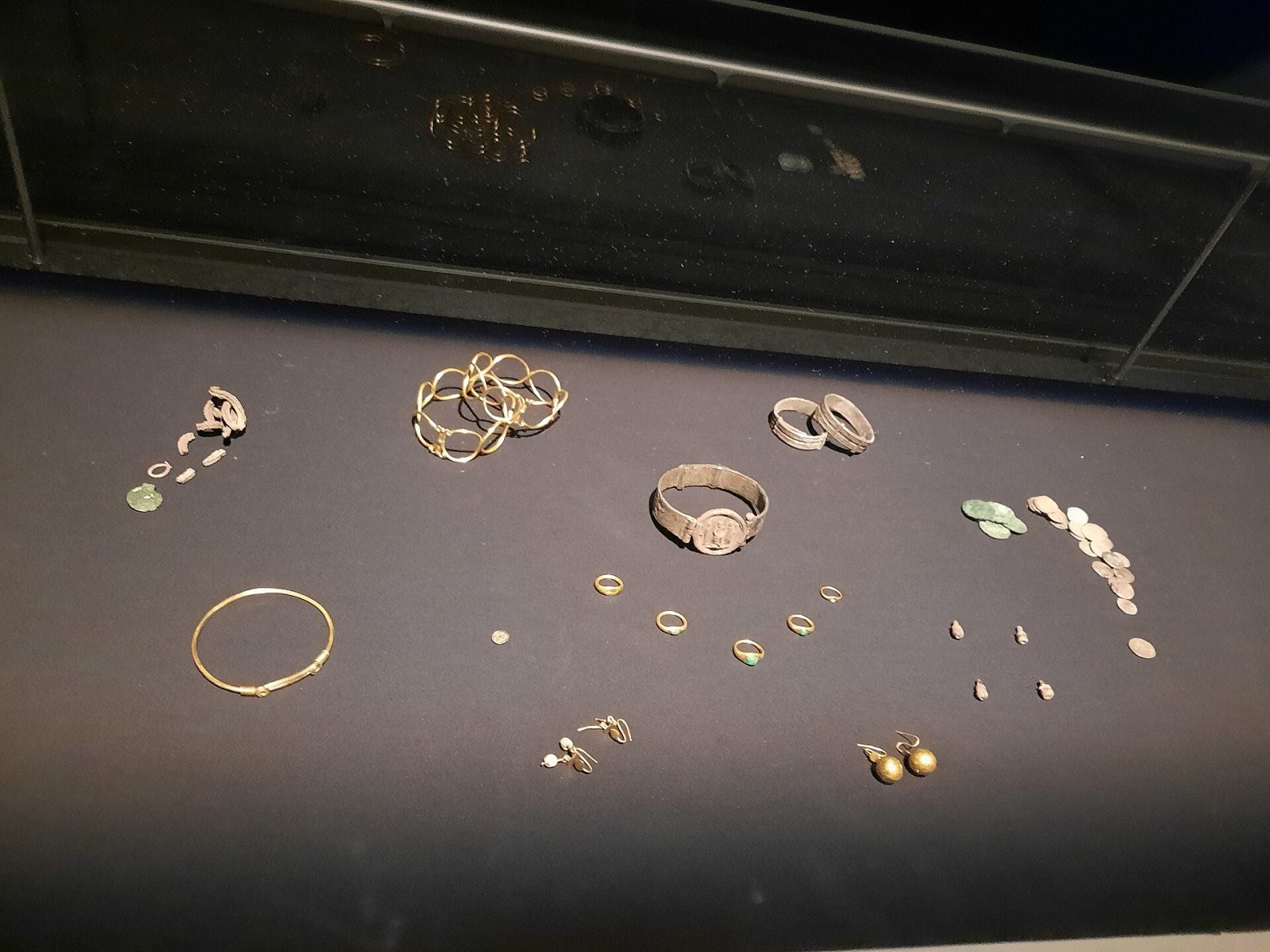
In 2014, days before a dig under a Colchester department store was due to end, archaeologists found a pit beneath a burnt Roman floor holding gold and silver jewellery and coins. It had been hidden as Boudica's army destroyed the town in AD 60 or 61.
In 2014, the Colchester Archaeological Trust was excavating ahead of the redevelopment of a department store on the High Street in Colchester, Essex, the old Williams and Griffin building owned by Fenwick. Just three days before the dig was due to end, the archaeologists found a small pit dug into the floor of a Roman house. It lay just beneath a thick layer of burnt debris, and it was full of jewellery. The team lifted it in a block of soil and excavated it in the laboratory.
Inside were gold and silver armlets and bracelets, gold rings, three of them set with emeralds and one with a dolphin, two pairs of gold earrings with pearl pendants, a silver chain, a glass gem engraved with a panther, and a bulla, a protective amulet worn by Roman boys. Some of the jewellery had been placed in a small silver-sheathed wooden box. With it were around two dozen silver coins, some going back to the Roman Republic, and a few bronze coins, including issues of the emperor Claudius. It is the first hoard of precious metal ever found in Colchester.
The burnt layer above it tells the story. Colchester, Roman Camulodunum, was the first capital of Roman Britain and a colony of retired soldiers. In AD 60 or 61, the Iceni queen Boudica led a revolt against Roman rule and destroyed the town, burning it to the ground. The excavators found charred dates, figs, wheat and peas from the same house, and the remains of people killed in the attack. Whoever buried the jewellery, perhaps a woman of the house, never came back for it. The two silver armlets may be military decorations, which suggests the family belonged to a veteran of the Roman conquest of AD 43.
Fenwick, as landowner, gave up any claim to a reward and donated the hoard to Colchester and Ipswich Museums. It is on display at Colchester Castle Museum.
Written for Global Finds from Current Archaeology (via The Past), Colchester Heritage, Archaeology magazine (September 2014) and The History Blog. Photo: the Fenwick Treasure at Colchester Castle Museum, Jamie Heath, Wikimedia Commons, CC BY-SA 2.0.
Approximate location51.89, 0.90View on map
Source: Current Archaeology (The Past)