The Gokstad Ship: a Viking chieftain's warship, dug out of the King's Mound by a farmer's sons
Famous find Buried about AD 900 in a ship built about 890 · Found in 1880 See it on the timeline →
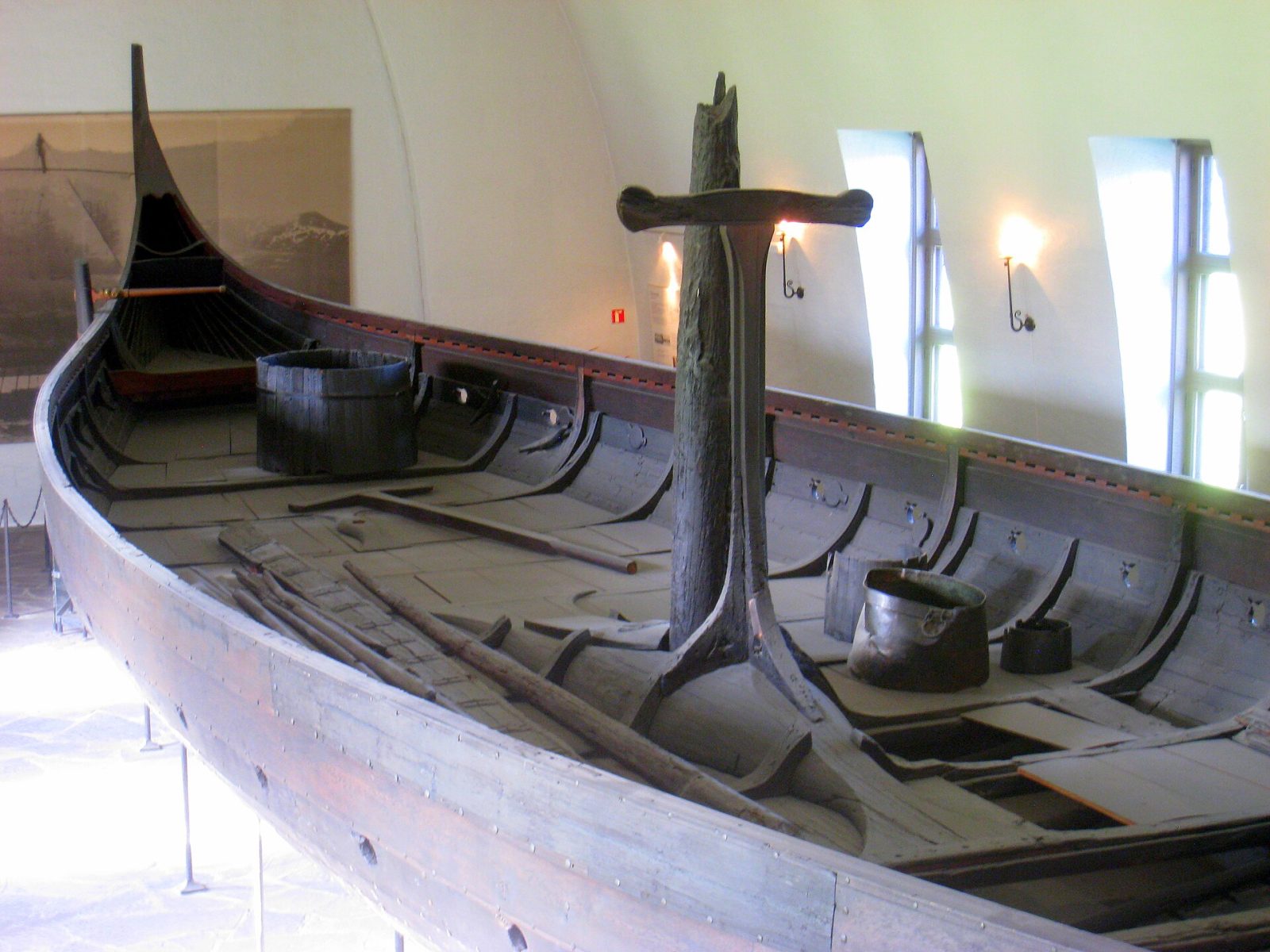
In 1879 or 1880 the two teenage sons of the farmer at Gokstad, near Sandefjord in Norway, began digging into the great mound on the farm. Inside was a 23-metre Viking ship holding a chieftain killed in battle around AD 900, with horses, dogs, peacocks and 64 shields.
In 1879 or early 1880, sources differ, the two teenage sons of the farmer at Gokstad, near Sandefjord in Vestfold in south-east Norway, began digging into the great mound on the farm, known as Kongshaugen, the King's Mound, perhaps hoping for treasure. Word reached the antiquarian Nicolay Nicolaysen of the Society for the Preservation of Ancient Norwegian Monuments, who stopped them and in the spring of 1880 excavated the mound properly, cutting in from the side rather than down from the top. The mound, built of clay and turf, was about five metres high and 45 metres across.
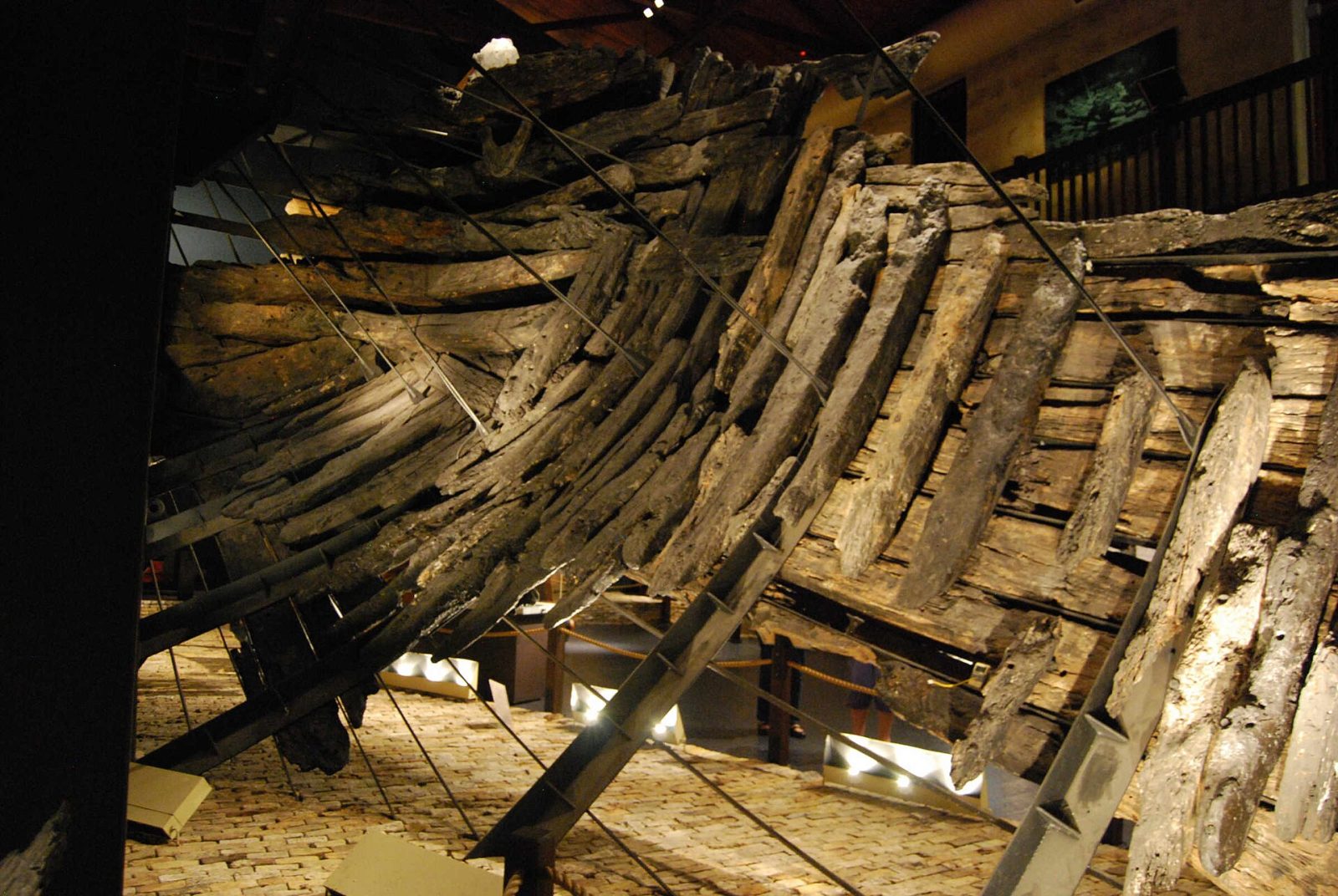
Inside lay a Viking ship 23 metres long and five metres wide, with an oak hull, a pine deck, a keel cut from a single oak and sixteen oar holes on each side. It was built around 890. Along its sides were 64 shields, painted alternately yellow and black, and there were scraps of a white woollen sail with red stripes sewn on. Behind the mast stood a wooden burial chamber, where a man lay in a bed.
With him were twelve horses, eight dogs, two goshawks and two peacocks, birds that point to contacts reaching far beyond Scandinavia, as well as three small boats, a sledge, a tent, beds, a gaming board and silk woven with gold thread. His weapons and jewellery were missing, taken by robbers who broke into the mound around 950 to 1000. He was about 1.82 metres tall, and cut wounds to both legs show that he died in battle. He was once identified as King Olav Geirstad-Alv, but scholars now reject that; he was a king or chieftain whose name is unknown. Tree-ring dating places the burial between about 895 and 905.
The ship and finds belong to the University of Oslo. The Viking Ship Museum at Bygdøy closed in 2021, the ship was moved into the museum's new building in 2025, and it is due to go on show again when the Museum of the Viking Age opens in 2027.
Written for Global Finds from the Museum of the Viking Age (University of Oslo), Archaeology magazine (2014) and N. Bonde and A. Christensen in Antiquity (1993). Photo: the Gokstad ship in the Viking Ship Museum, Oslo, Daderot, Wikimedia Commons, public domain.
Approximate location59.14, 10.25View on map