The Oxus Treasure: Persian gold rescued from bandits on the road to India
Famous find 5th to 4th century BC · Found in 1877 See it on the timeline →
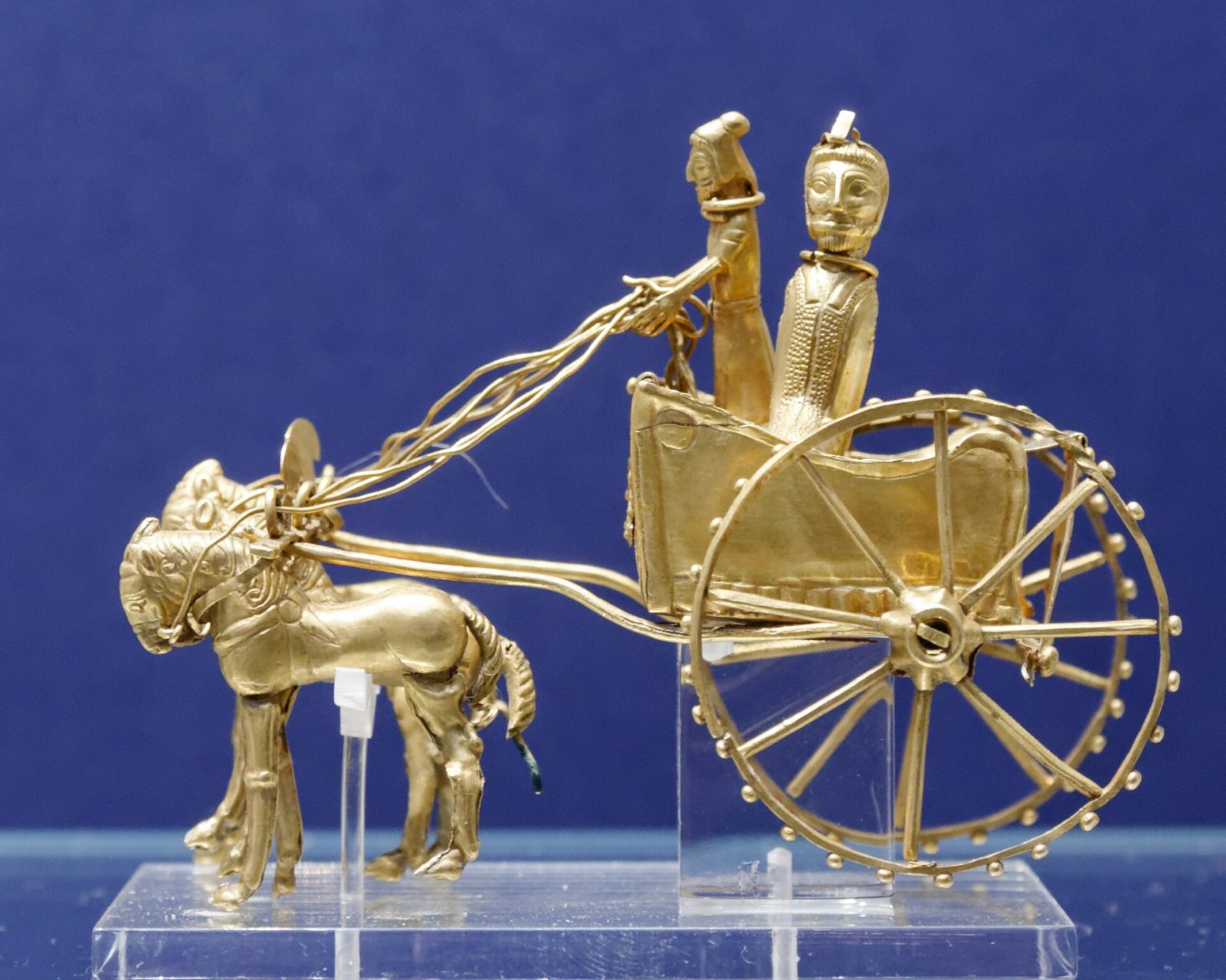
Around 1877 a hoard of Persian gold and silver was found on the banks of the Oxus river in Central Asia. In 1880 the merchants carrying it to India were robbed by bandits, and a British officer rescued most of it in the night. It is now in the British Museum.
Around 1877, a hoard of gold and silver was found on the north bank of the Oxus river, the Amu Darya, in what is now southern Tajikistan, probably near the ancient fortified site of Takht-i Kuwad. Nobody knows exactly who found it or where. Local people dug the objects up and sold them to merchants.
In 1880 three merchants from Bukhara were carrying a large part of the hoard to India to sell when they were robbed on the road between Kabul and Peshawar. Their servant escaped and reached Captain F. C. Burton, a British political officer, who set out with a few men that night. He found the robbers quarrelling over the loot and recovered most of it. In gratitude, the merchants allowed Burton to buy one of the treasure's gold armlets, which he later sold to the South Kensington Museum, now the Victoria and Albert Museum, for £1,000. The rest was sold in Rawalpindi, and much of it was bought by the collector Augustus Wollaston Franks, who left it to the British Museum on his death in 1897.
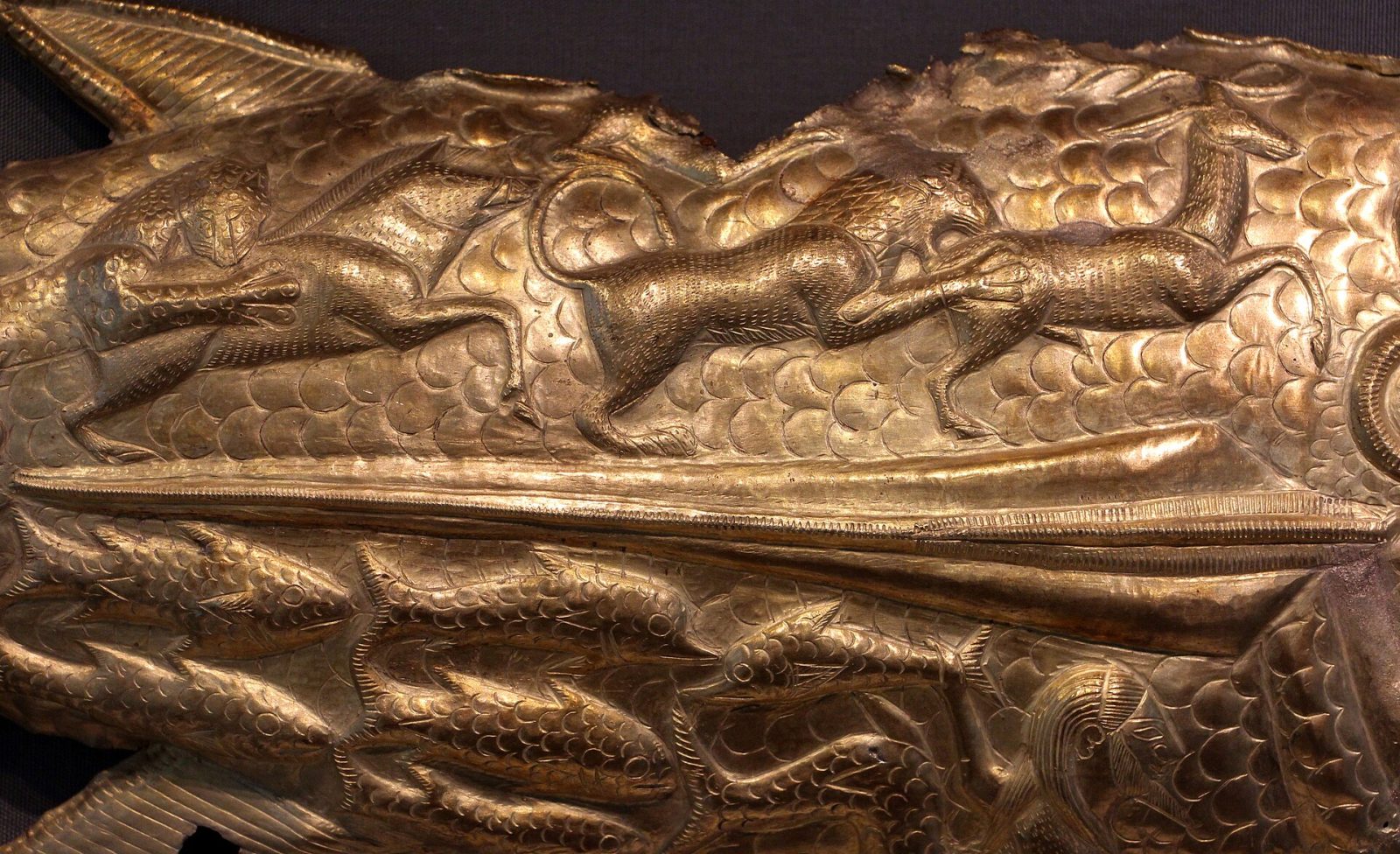
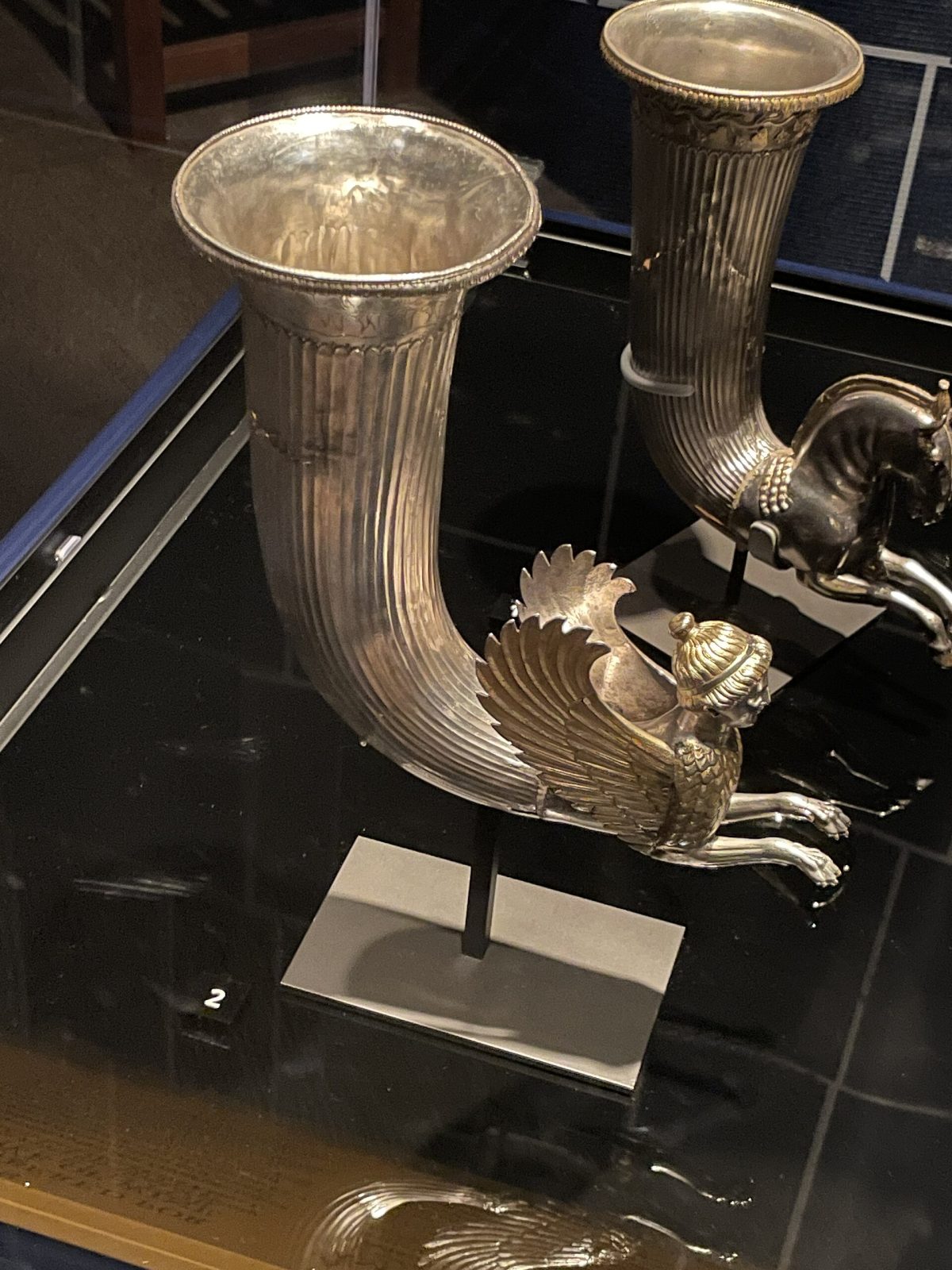
The Oxus Treasure contains about 180 objects of gold and silver and some 200 coins. It is the most important surviving collection of goldwork from the Achaemenid Persian Empire, which ruled from Greece to India in the 6th to 4th centuries BC. The best known piece is a small gold model of a chariot, 18.8 centimetres long, drawn by four horses and carrying a driver and a seated passenger. There are two great gold armlets ending in winged griffins, once inlaid with coloured stones or glass, 51 thin gold plaques showing worshippers, which may have been offerings at a temple, a gold fish-shaped vessel and a silver statuette of a young man.
Even at the time, dealers in Rawalpindi were making copies of the objects to sell, and some scholars have questioned a few of the pieces. Most of the treasure is accepted as genuine, and it is dated mainly to the 5th and 4th centuries BC. The Oxus Treasure is on display in the British Museum in London; the Victoria and Albert Museum's armlet is usually lent to the British Museum so that the pair can be shown together.
Written for Global Finds from the Victoria and Albert Museum's record of the armlet and World History Encyclopedia. Photo: the gold chariot model from the Oxus Treasure in the British Museum, Marie-Lan Nguyen, Wikimedia Commons, public domain.
Approximate location37.05, 68.28View on map
Source: Victoria and Albert Museum