The Breckenbrough Hoard: Civil War coins buried with receipts for cheese
Famous find Buried in 1644 · Found in 1985 See it on the timeline →
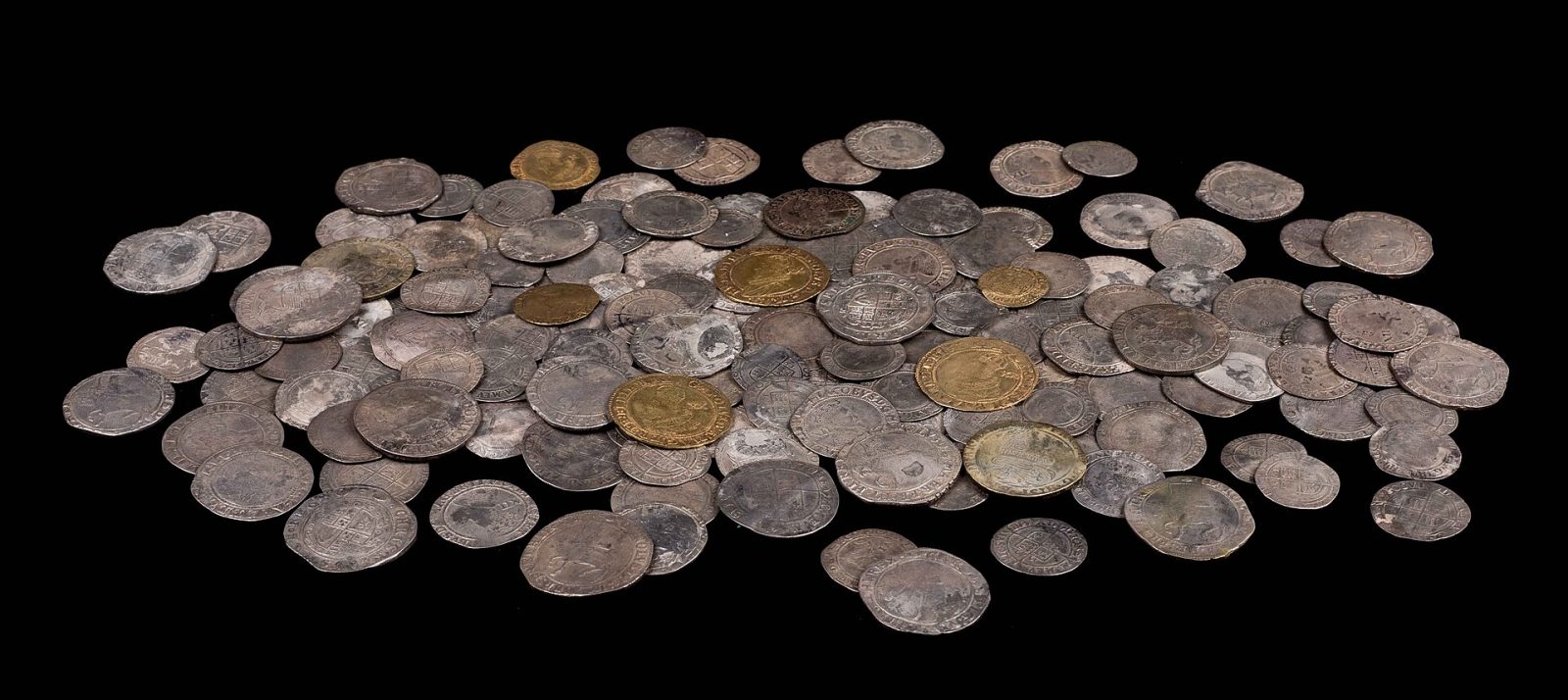
In June 1985 a farmer levelling a stockyard at Breckenbrough in North Yorkshire found a pot holding more than 1,500 silver and gold coins. Buried with them in 1644, during the English Civil War, were two paper receipts for cheese, still legible.
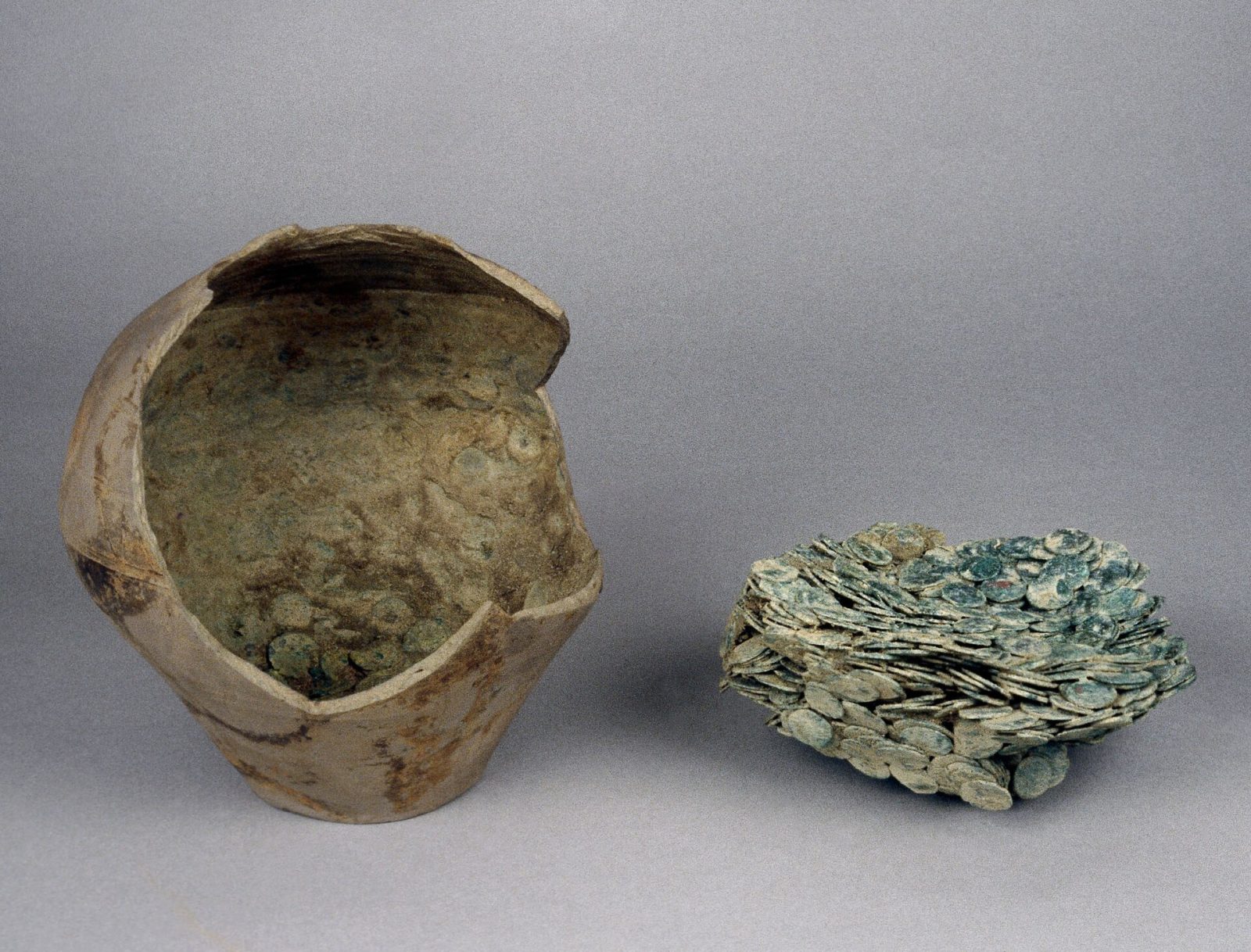
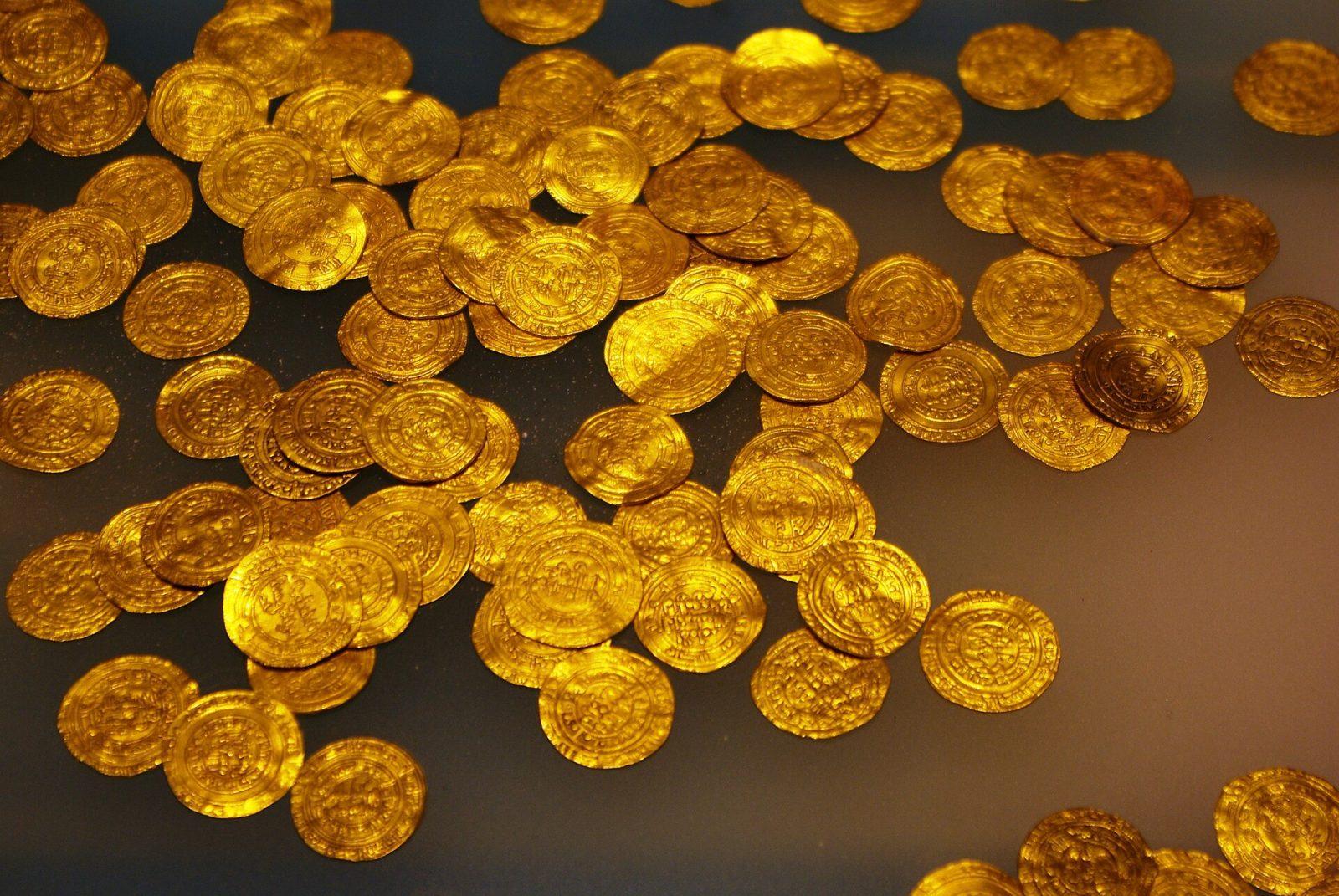
In June 1985, Mr C. Greensit was levelling the ground of a covered stockyard on his farm at Breckenbrough, near Kirby Wiske, about five miles west of Thirsk in North Yorkshire, when he uncovered a pottery jar. It had been capped with a tile, and a stone had been placed to mark the spot. Inside were coins: 30 of gold and 1,552 of silver.
The coins were English, with some from Scotland, Ireland and Spain. Their face value was £93 5s, a large sum in the 17th century. But what makes the Breckenbrough Hoard unique was found with them: two paper receipts for cheese, dated 17 January 1644 and signed by John Guy, deputy provider general of the Royalist garrison at York. After more than 340 years in the ground, they could still be read.
The receipts date the hoard to the English Civil War. In 1644 Yorkshire was fought over by the Royalists, a Scottish Covenanter army and Parliament's forces, and that summer the King's side lost control of the north after its defeat at Marston Moor. The Yorkshire Museum describes the coins as deposited in the spring of 1644 and buried when the Royalists lost control of the area. Whose money it was is less certain. It may have belonged to someone supplying food to the Royalist army, who kept the receipts as proof of payment. If the King won, they showed loyalty; if Parliament's soldiers found them, they were evidence against him. Either way, whoever buried the pot never came back for it.
A coroner's inquest declared the hoard treasure trove in September 1985. It was studied at the British Museum and published by Edward Besly in 1987, and it was acquired by the Yorkshire Museum in York, which holds the entire hoard and counts it among the most important Civil War hoards in its collection.
Written for Global Finds from the Yorkshire Museum, York Museums Trust and E. Besly's English Civil War Coin Hoards (1987). Photo: coins from the Breckenbrough Hoard in the Yorkshire Museum, York Museums Trust Staff, Wikimedia Commons, CC BY-SA 3.0.
Approximate location54.25, -1.43View on map
Source: Yorkshire Museum