The Borovo Treasure: Thracian silver drinking horns turned up by a tractor plough
Famous find 4th century BC · Found in 1974 See it on the timeline →
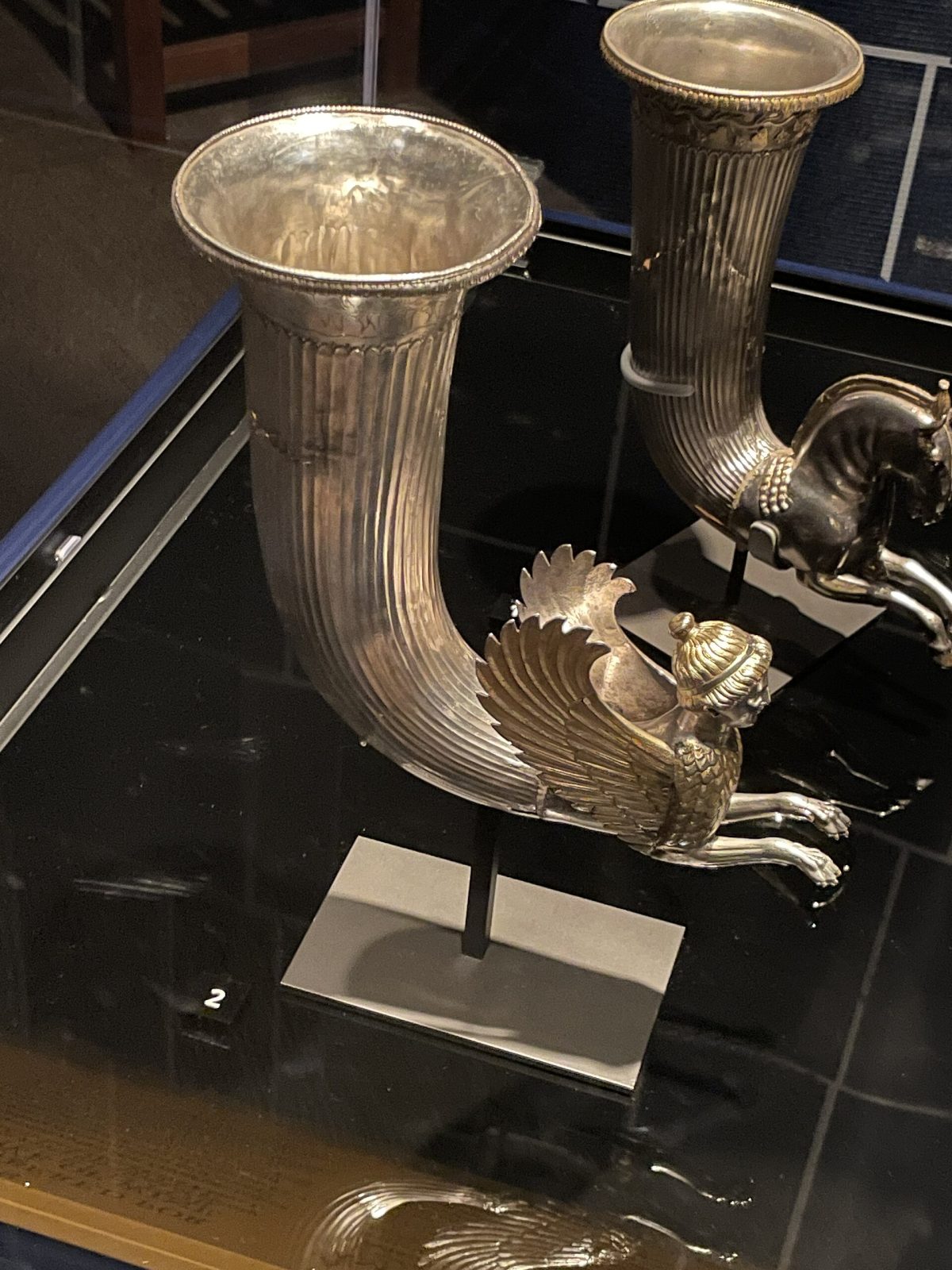
Late in 1974 a tractor driver ploughing a field near Borovo in northern Bulgaria struck a set of silver-gilt drinking vessels: three horn-shaped rhyta ending in a horse, a bull and a sphinx, a bowl and a jug, some inscribed with the name of a Thracian king.
Late in 1974, Traycho Stoev, a tractor driver, was ploughing a field at a place called Sivri Tepe, about two kilometres from the town of Borovo in Ruse Province, northern Bulgaria, when his plough struck metal and dragged up pieces of silver. Some of the objects were damaged by the plough. A local historian alerted the regional museum in Ruse, and its archaeologist Dimitar Ivanov is said to have carried the fragments back to the city on the train, in an ordinary bag. After careful restoration they turned out to be one of the finest Thracian treasures ever found.
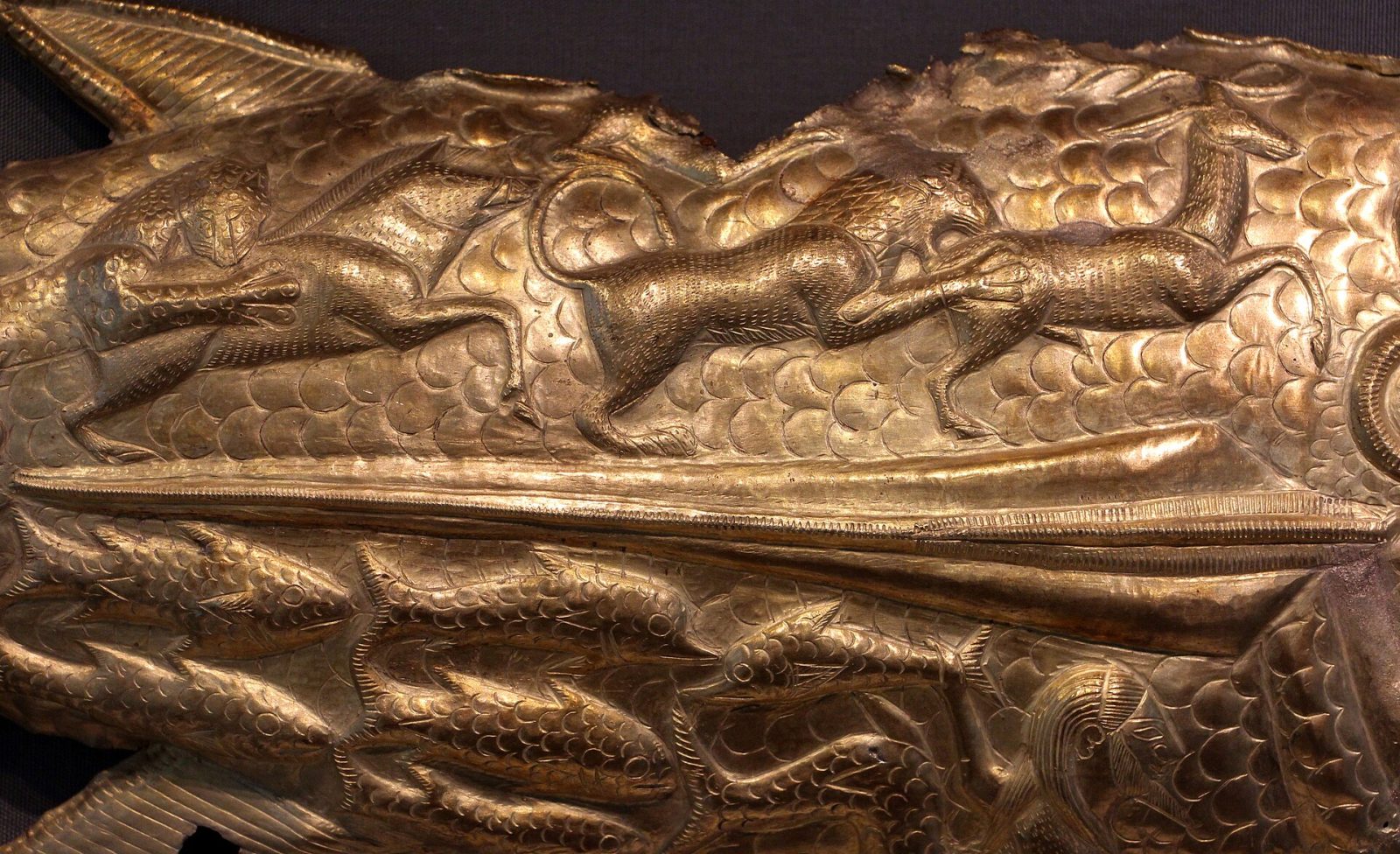
The Borovo Treasure is a drinking service of five silver-gilt vessels. Three are rhyta, drinking horns, each ending in the front part of an animal: one a horse, one a bull and one a sphinx. With them are a large two-handled bowl, nearly 30 centimetres across, and a jug decorated with scenes of a feast in honour of Dionysus, the god of wine. Short Greek inscriptions on some of the vessels name Kotys I, king of the Odrysian Thracians, who ruled from about 383 to 359 BC. Like the Rogozen Treasure, also on this site, the set is linked to the Odrysian royal court.
The treasure dates from the 4th century BC. Drinking vessels like these were used at feasts that bound a ruler and his warriors together, and they were also offered to the gods. Why this set was buried in a field, and by whom, is not known.
The Borovo Treasure belongs to the Regional Museum of History in Ruse, which has lent it to exhibitions abroad, including in New York in 2015 and Chicago in 2023. Recent reports say the originals are displayed at the National Museum of History in Sofia, with replicas shown in Ruse and in Borovo itself.
Written for Global Finds from the Institute for the Study of the Ancient World, New York University, the Municipality of Borovo and Dunavmost. Photo: the silver-gilt sphinx rhyton from the Borovo Treasure, Regional Museum of History, Ruse, CryolophosaurusEllioti, Wikimedia Commons, CC BY 4.0.
Approximate location43.43, 25.81View on map