The Coleraine Hoard: Roman silver dug up by a labourer, and the newspaper got it all wrong
Famous find Buried in the early 5th century AD · Found in 1854 See it on the timeline →
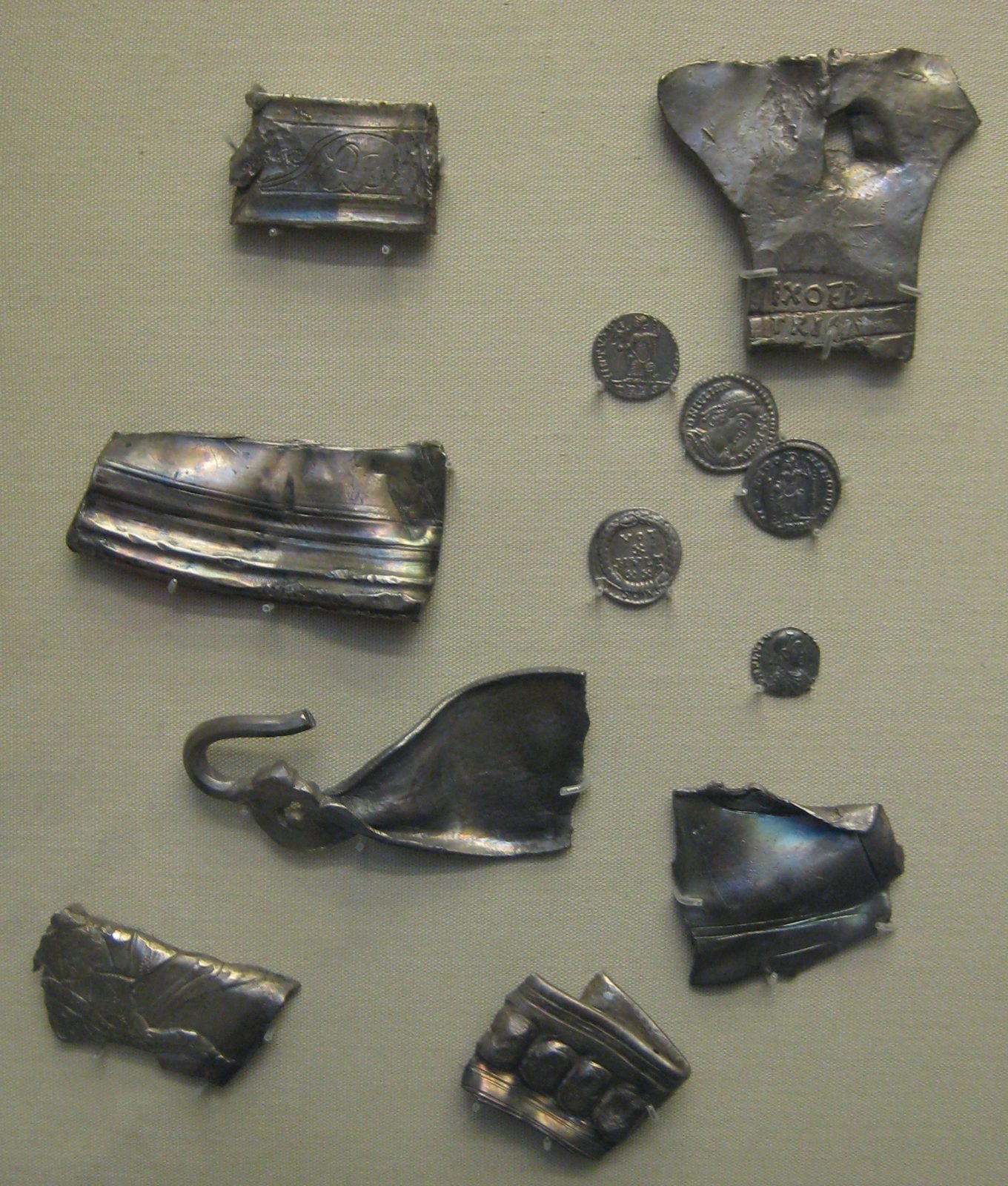
In 1854 a labourer digging at Ballinrees, west of Coleraine in what is now Northern Ireland, found more than 1,500 late Roman silver coins with silver ingots and chopped-up silver plate. It is one of the most important Roman finds ever made in Ireland, now in the British Museum.
Early in 1854, a labouring man digging at Ballinrees, a townland about three and a half miles west of Coleraine in County Londonderry, struck a mass of silver lying deep in peaty soil. The pieces were packed tightly together, as if they had been buried in a bag or box that had long since rotted away. In April the local newspaper reported the discovery of an urn full of coins, battle-axes and horse armour. Almost none of that was true.
What the labourer had actually found was described properly a few months later by the Belfast scholar J. Scott Porter, in the Ulster Journal of Archaeology. There were more than 1,500 silver coins, siliquae of the late Roman Empire, many of them clipped around the edges. With them were about 6 kilograms of other silver: cast ingots, hammered lumps, and pieces of cups and dishes, some gilded, that had been deliberately cut and bent. Silver treated like this, valued only for its weight, is known as hacksilver. One ingot is stamped EX OF(F) PATRICII, from the workshop of Patricius.
The latest coin in the hoard was struck at Lyon for the usurper Constantine III in AD 407 or 408, so the hoard was buried in the early 5th century, as Roman rule in Britain was coming to an end. How so much Roman silver reached the north coast of Ireland is still debated. In 1915 Arthur Evans linked it to the Irish raids of Niall of the Nine Hostages, perhaps even the raid that carried off the young St Patrick, but modern scholars reject any link to a particular raid. It may have been loot, a payment to Irish allies or soldiers, or bullion traded across the sea.
The hoard was put on show in a Coleraine watchmaker's shop, and Porter urged that it be saved before it went to the melting pot. The British Museum acquired it in 1855, and part of it is displayed in Room 41, the gallery of early medieval Europe.
Written for Global Finds from P. Walton and S. Moorhead in Internet Archaeology 41 (2016), J. S. Porter in the Ulster Journal of Archaeology (1854), K. Painter in the Antiquaries Journal (2012) and the University of Kent's hoards project. Photo: part of the Coleraine Hoard in the British Museum, BabelStone (Andrew West), Wikimedia Commons, CC0.
Approximate location55.11, -6.76View on map
Source: Internet Archaeology