The Patching Hoard: the last Roman coin hoard in Britain, found by two detectorists
Famous find Buried after AD 461, perhaps around AD 500 · Found in 1997 See it on the timeline →
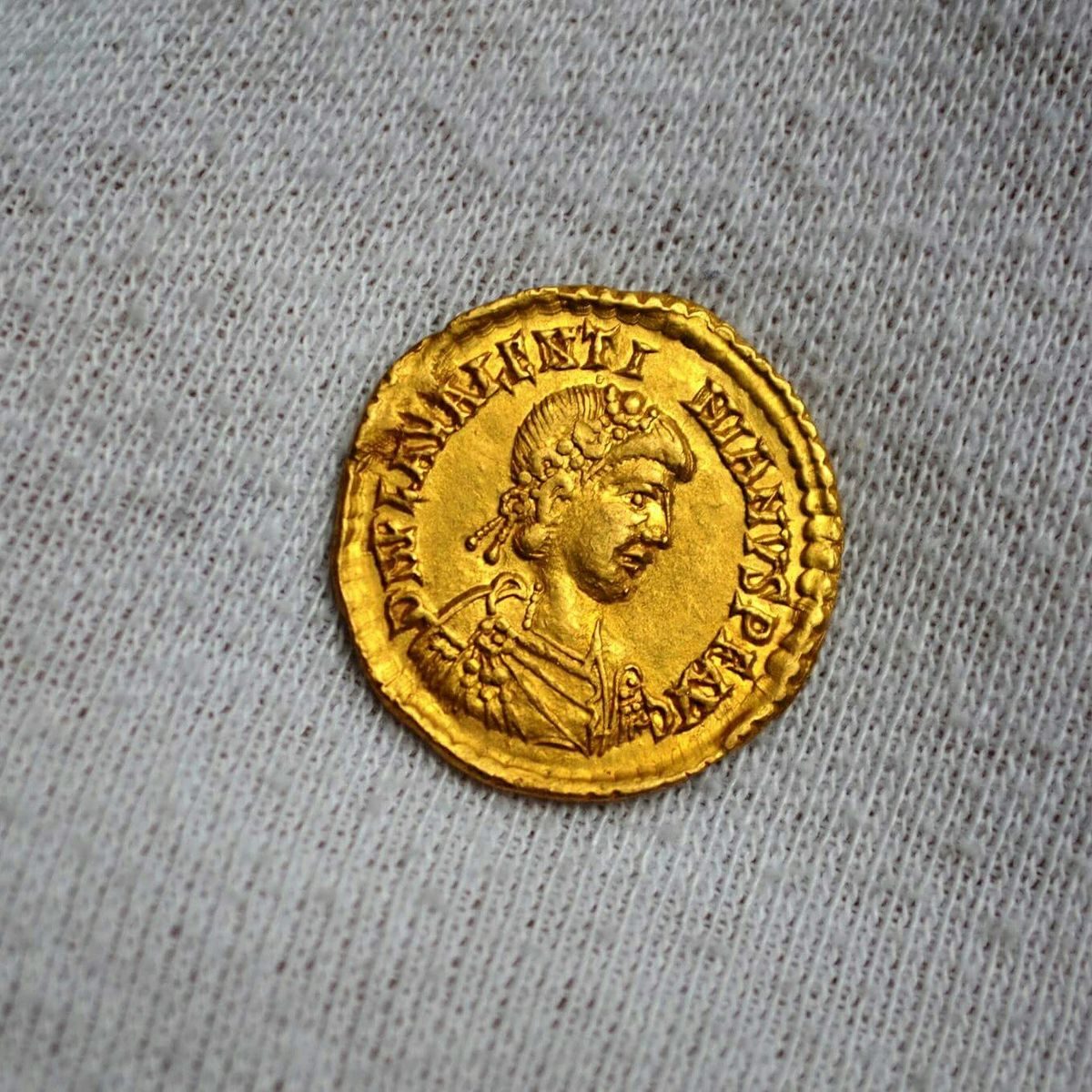
In the spring of 1997 two metal detectorists found gold and silver coins, gold rings and chopped-up silver in a field at Patching, West Sussex. Buried decades after Roman rule ended, it is the latest Roman coin hoard known from Britain.
In April 1997, two local metal detectorists searching a ploughed field south-west of the village of Patching, near Worthing in West Sussex, began finding late Roman coins of gold and silver. They reported them to the coroner's officer in Worthing, who showed them to Worthing Museum. Archaeologists from the Sussex Archaeological Society then carried out a small excavation with the finders, and by the middle of May more coins and pieces had been recovered. No pit was found; the hoard may already have been disturbed when a land drain was laid in the field long before.
The hoard contains about 50 coins: gold solidi, silver miliarenses and siliquae, and one much older silver denarius from the Roman Republic. With them were two heavy gold finger rings and about a Roman pound, roughly 329 grams, of hacksilver, silver that had been cut into pieces and was valued by weight. None of the coins was minted in Britain. They came from mints across the late empire, including Ravenna, Arles, Trier and Constantinople, and about a third of the gold coins are copies struck by the Visigoths in Gaul.
The coins date from the reign of Constantius II, in the AD 330s, to that of Libius Severus, emperor from 461 to 465. That is what makes the Patching Hoard so important. Roman rule in Britain ended around AD 410, and by the middle of the century coins were no longer in everyday use. These coins arrived from the continent decades later, and the hoard is the latest Roman coin hoard ever found in Britain. Recent study of the hacksilver suggests it may have been buried around AD 500 or a little later.
The hoard was declared treasure trove at an inquest in Chichester, one of the last cases under the old law before the Treasure Act came into force. The British Museum waived its claim so that Worthing Museum could acquire it. It is displayed at Worthing Museum and Art Gallery, which reopened in March 2026.
Written for Global Finds from the Coin Hoards of the Roman Empire database (University of Oxford), Worthing Theatres and Museum, Current Archaeology (via The Past) and the University of Kent's hoards project. Photo: a gold solidus of Valentinian III at Worthing Museum, described by its photographer as from the Patching Hoard, SpeakingArch, Wikimedia Commons, CC BY-SA 4.0.
Approximate location50.83, -0.47View on map
Source: Coin Hoards of the Roman Empire (University of Oxford)