Illerup Ådal: a defeated army's weapons, sacrificed in a Danish lake and found by drainage workers
Famous find Main deposit about AD 205 · Found in 1950 See it on the timeline →
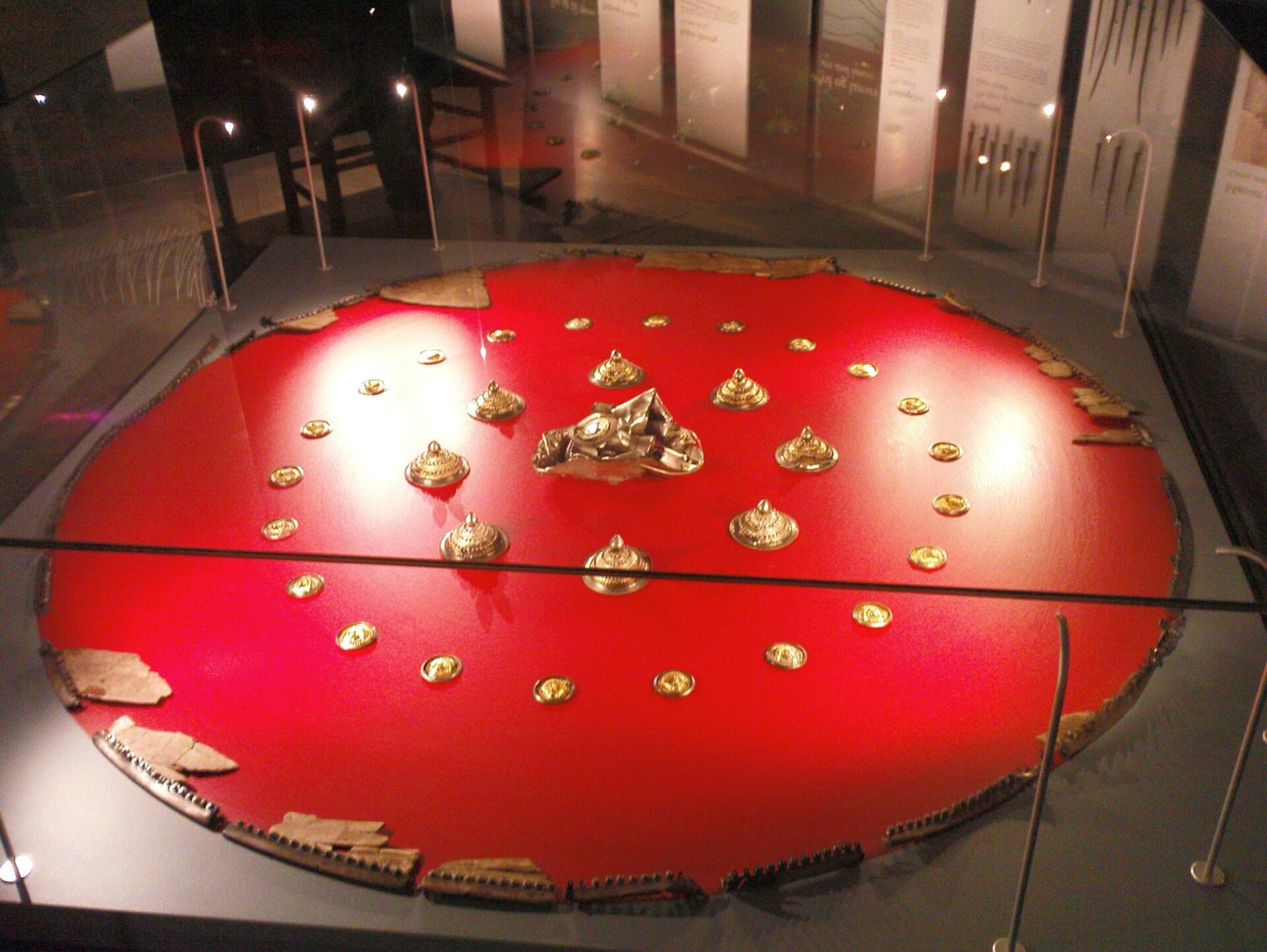
In May 1950 workers digging drainage ditches in a peat bog near Skanderborg in Denmark struck ancient weapons. Excavations recovered about 15,000 objects, the equipment of an invading army defeated around AD 205 and thrown into a lake as an offering.
In May 1950, workers digging drainage ditches in the peat of the Illerup river valley, near Skanderborg in central Jutland, Denmark, began turning up iron weapons. The archaeologist Harald Andersen excavated the site from 1950 to 1956, and a second, larger campaign by Aarhus University and Moesgaard Museum followed from 1975 to 1985.
Together they recovered about 15,000 objects from what had once been a lake of around ten hectares. There were swords, about 200 of them, many made in Roman workshops and still bearing their makers' stamps. There were spearheads and lances, shields with their metal bosses and fittings, belts, horse harness, and the personal kit of soldiers: combs, tweezers, beads and brooches. Several objects carry short inscriptions in early runes. Two lance heads are stamped wagnijo, probably the name of the smith who made them.
The objects came from four separate deposits made between about AD 200 and 500, but the first was by far the largest, with about 12,000 objects. Tree-ring dating, Roman silver coins and the style of the objects date it to around AD 205. Archaeologists interpret it as the equipment of an army that invaded Jutland from the Scandinavian peninsula and was defeated. The victors gathered the weapons of the dead and captured, smashed and bent many of them, and threw them into the lake as an offering to their gods. The army may have numbered more than a thousand men, and its equipment seems to show a clear chain of command, from the gilded shield fittings of the leaders to the plain spears of the ordinary fighters.
Only about 40 per cent of the site has been excavated. In 1996 the Danish state bought the land, stopped the drainage and raised the water table, so that the rest of the finds stay wet and preserved. The finds are displayed at Moesgaard Museum near Aarhus, in its Iron Age exhibition.
Written for Global Finds from The Past (Current World Archaeology), Moesgaard Museum, Lex.dk and the journal Kuml. Photo: gilded shield fittings from Illerup Ådal at Moesgaard Museum, RhinoMind, Wikimedia Commons, CC BY-SA 3.0.
Approximate location56.05, 9.93View on map