The Hjortspring Boat: a war canoe and an army's weapons, sunk in a Danish bog around 350 BC
Famous find Sacrificed about 350 BC · Found in 1921 See it on the timeline →
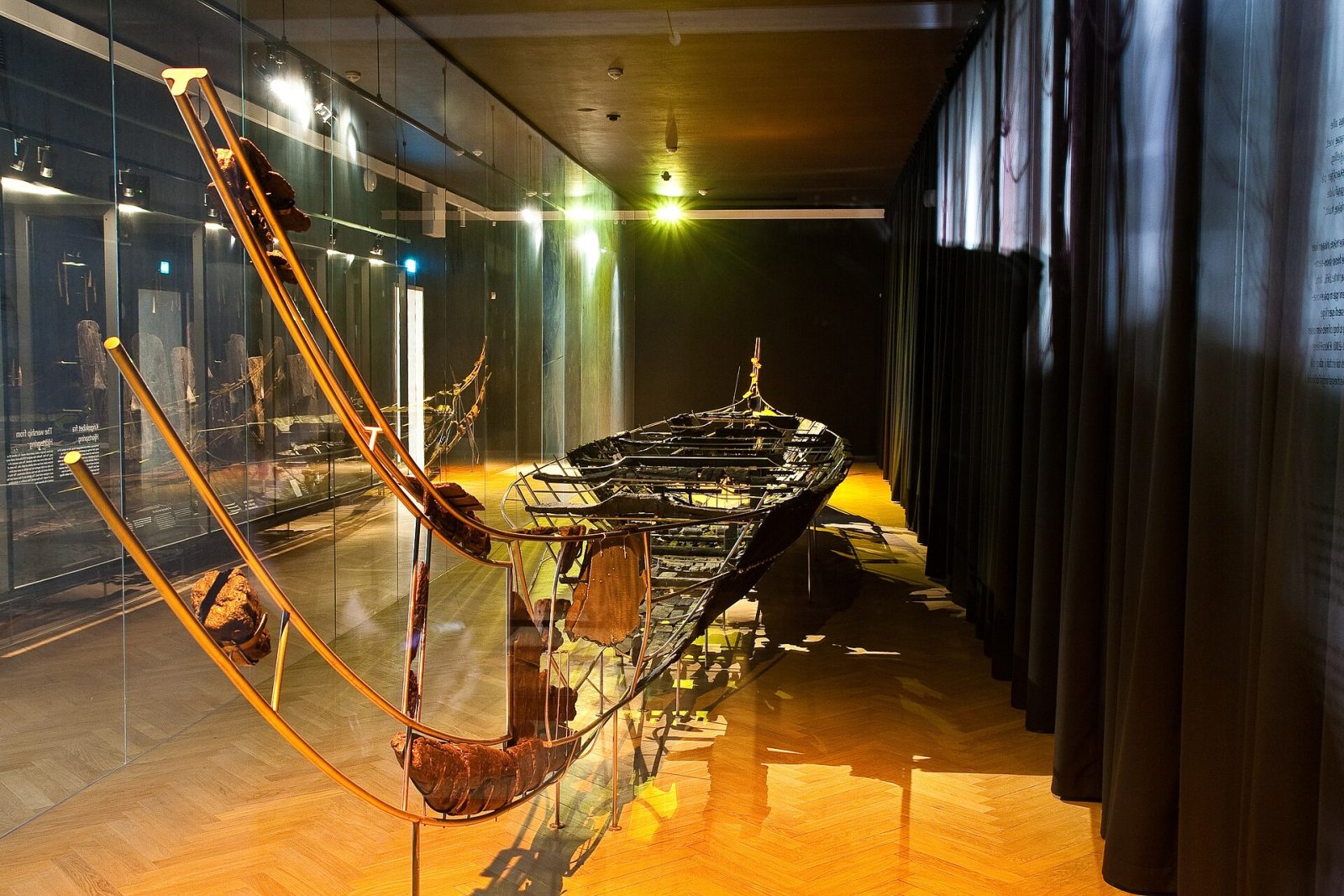
In the 1880s peat cutters on the Danish island of Als dug up old weapons and timbers but told no one. Excavated in 1921 and 1922, the Hjortspring bog gave up Northern Europe's oldest plank-built boat and the weapons of a defeated war band, sacrificed around 350 BC.
In the 1880s, peat cutters working a small bog at Hjortspring, on the island of Als in southern Denmark, dug up old weapons and pieces of boat timber. Nobody reported them, digging there stopped in 1889, and some of the "sharp iron" was reportedly thrown into a nearby fence. In 1915 a local man, Jørgen Petersen, told the historian Jens Raben about the finds, and after South Jutland was reunited with Denmark in 1920 Raben contacted the National Museum. Its conservator Gustav Rosenberg excavated the bog, recovering the weapons in 1921 and the boat in 1922.
The boat is made of planks of lime wood sewn together with cord and sealed with a caulking of pine pitch and tallow. It was about 19 metres long and two metres wide, light enough for its crew of about twenty paddlers to carry, and roughly 40 per cent of it survives. It is the oldest plank-built boat known from Northern Europe.
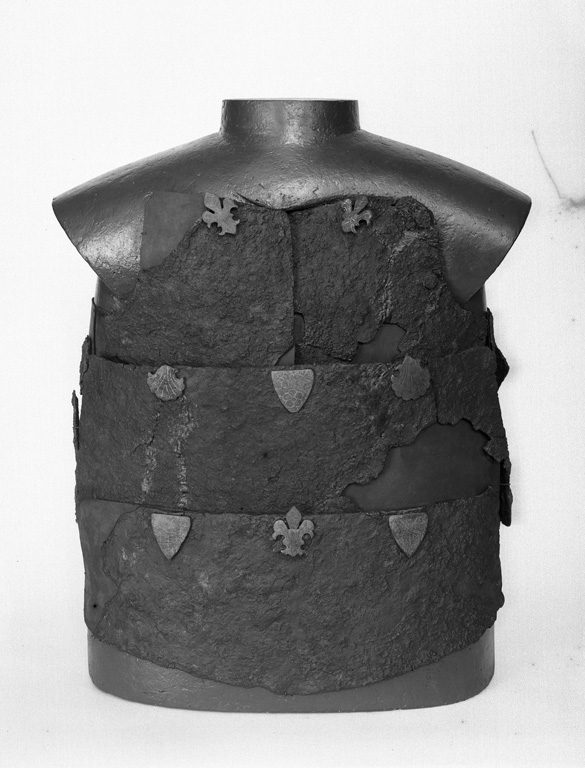
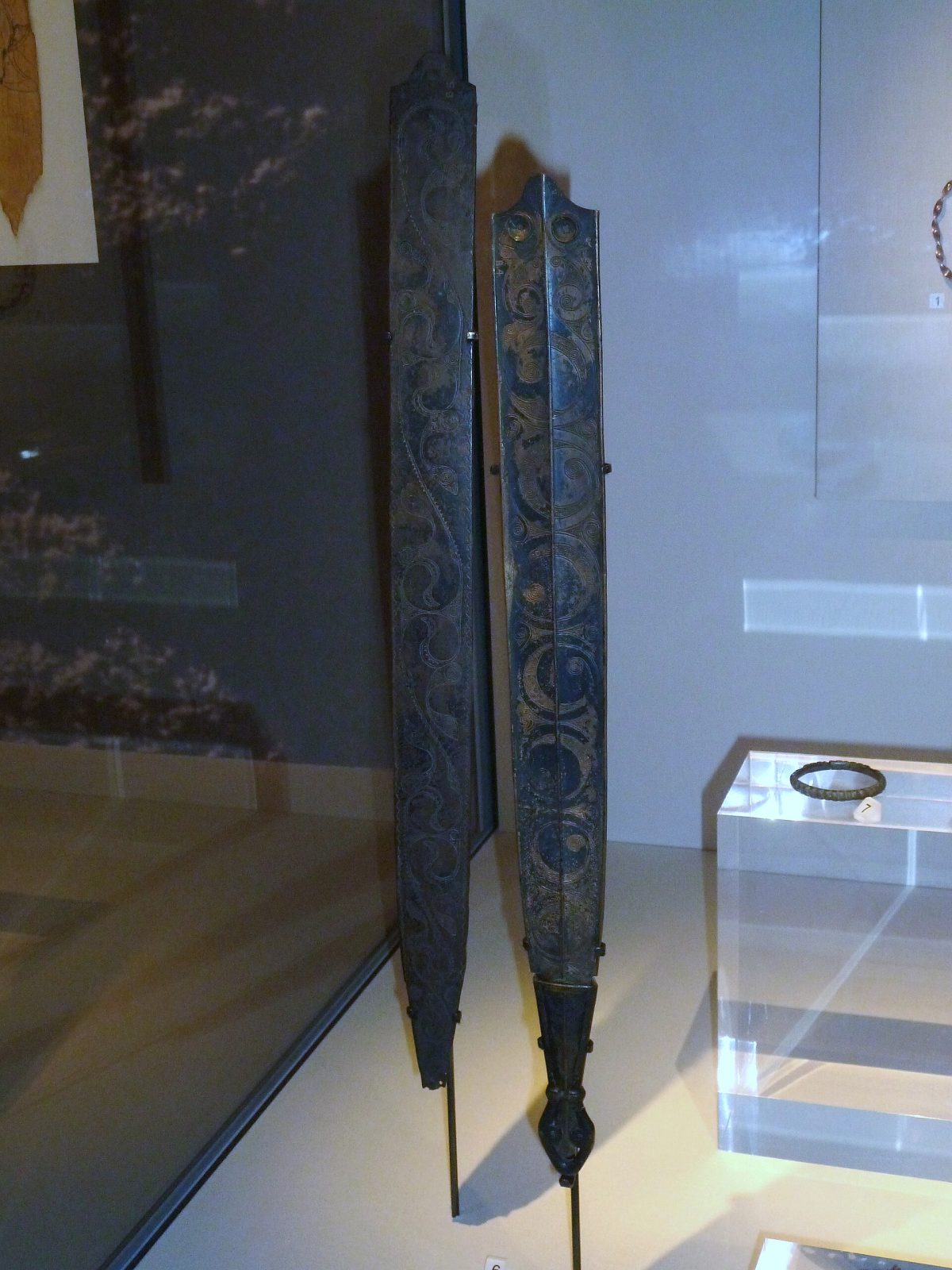
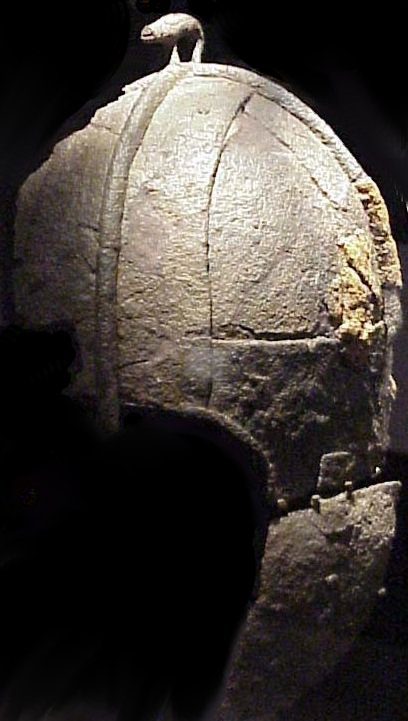
With it lay the weapons of a small army: eleven single-edged iron swords, two of them deliberately bent, about 169 spearheads of iron, bone and antler, many wooden shields and possibly fragments of mail. The National Museum reckons the equipment would have armed about 80 spearmen and 10 to 12 officers with swords. The usual interpretation is that islanders defeated a raiding party and sacrificed the raiders' boat and weapons in the bog. Radiocarbon dating of the cordage gives a date between about 381 and 161 BC, and the museum places the sacrifice around 350 BC. A study published in 2025 found part of an ancient fingerprint in the caulking and suggested that the raiders came from the Baltic region to the east, though that remains a hypothesis.
The boat and weapons are in the National Museum of Denmark in Copenhagen, where the boat has been on show since 1937. A full-size replica, Tilia Alsie, was launched in 1999.
Written for Global Finds from the National Museum of Denmark, M. Fauvelle and colleagues in PLOS One (2025) and the Hjortspring Guild. Photo: the Hjortspring boat in the National Museum of Denmark, Knud Winckelmann, Wikimedia Commons, CC BY-SA 3.0.
Approximate location55.01, 9.85View on map
Source: National Museum of Denmark