The Kirkburn Sword: probably the finest Iron Age sword in Europe, buried with a young Yorkshire warrior
Famous find Buried about 300 to 200 BC · Found in 1987 See it on the timeline →
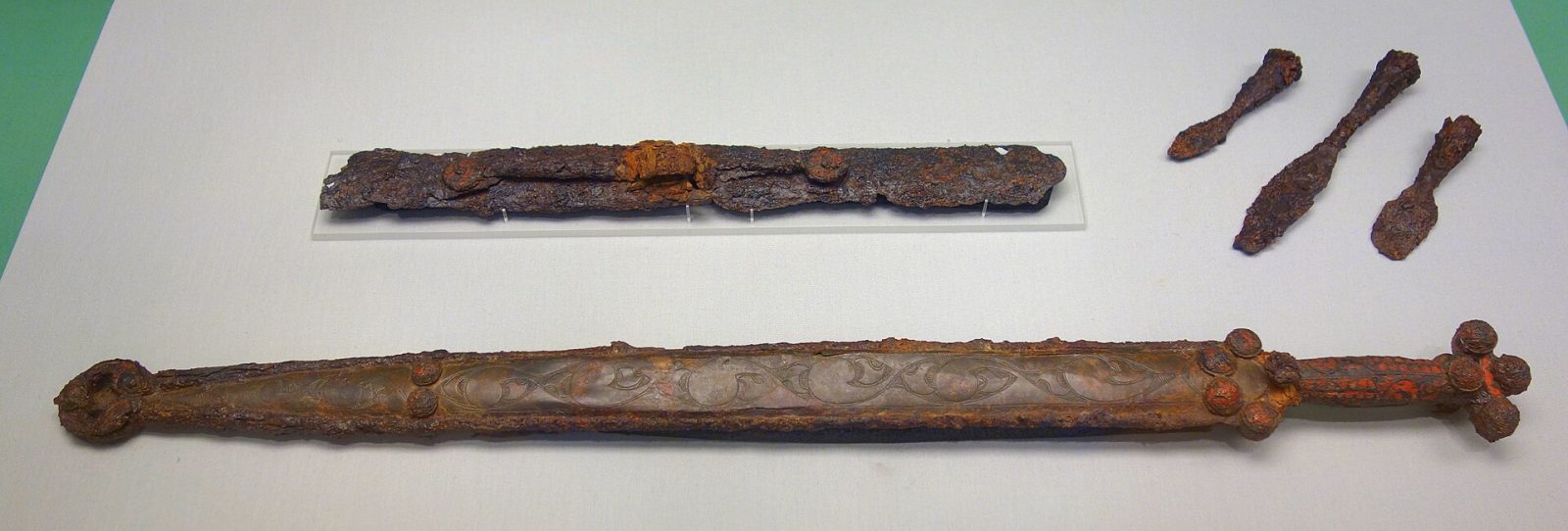
In September 1987 British Museum archaeologists excavating an Iron Age cemetery at Kirkburn in East Yorkshire found a young man buried with a sword in a decorated scabbard and three spears thrust into his grave. The sword's handle is the finest of its kind to survive.
In 1980 an aerial photograph showed the outline of an Iron Age cart burial in a field at Kirkburn, near Driffield in East Yorkshire, an area famous for the burials of the Arras culture. In September 1987 a British Museum team led by Ian Stead excavated the site. Beside the cart burial was a smaller grave, known as K3. In it lay a young man, aged perhaps 17 to 25, buried on his side with his knees drawn up. Beside him, face down, lay a sword in its scabbard. Three iron spearheads had been thrust into the grave above his chest, and parts of a pig had been placed with him.
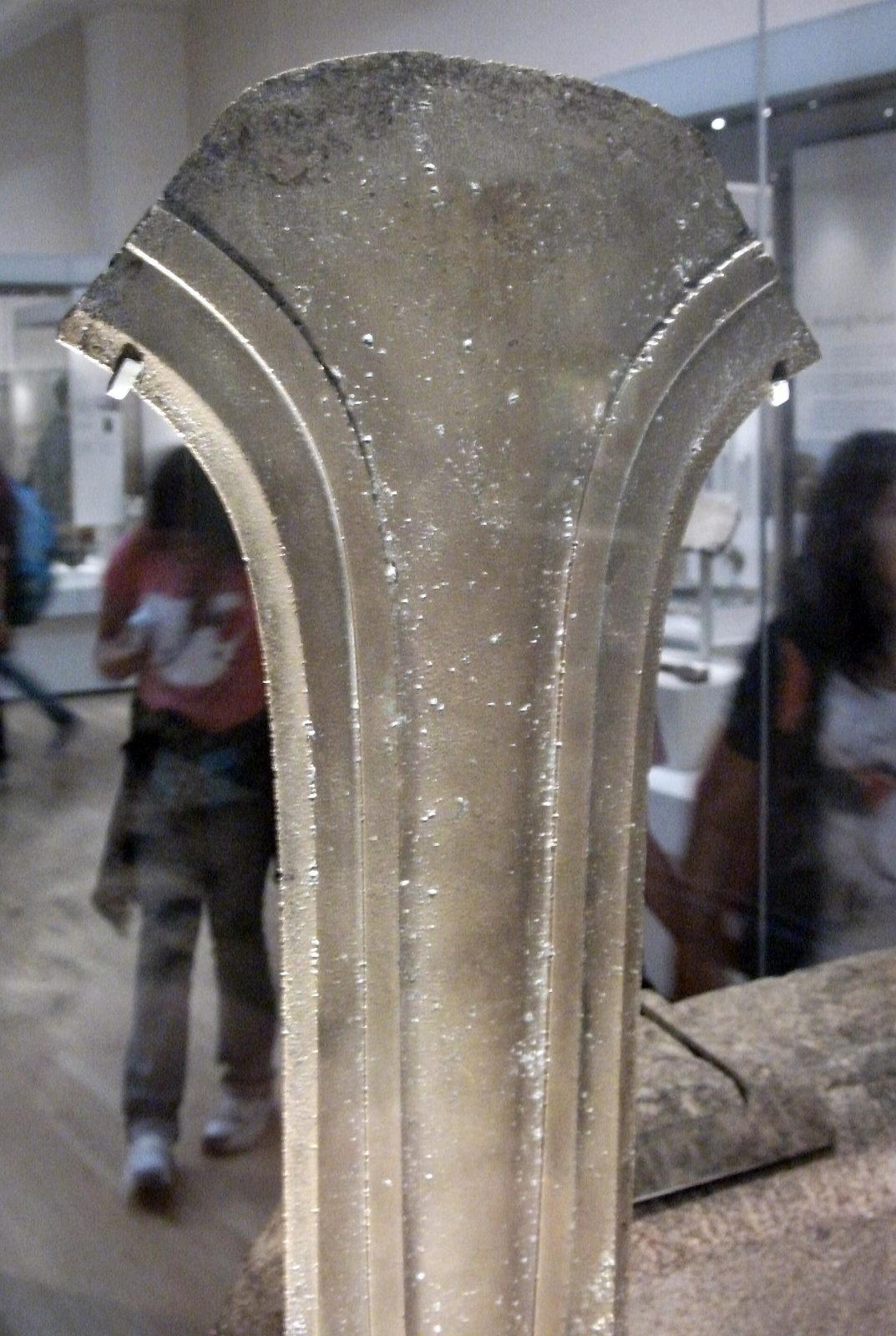
The sword is about 70 centimetres long. Its iron blade is about 56 centimetres long and 4 centimetres wide. What makes it extraordinary is the handle: a horn pommel set in an iron frame, an iron grip covered in bright red glass enamel, and a horn guard, all assembled from many separate parts. It is the best preserved and finest handle to survive on any sword of the European Iron Age, and the British Museum has described it as probably the finest Iron Age sword in Europe.
The scabbard has a front of copper alloy engraved with flowing scrolls and tendrils, and an iron back. Its tip, the chape, is filled with red enamel, so that the decoration seems to drip from the end. The scabbard had been broken and mended several times, with riveted strips holding the front plate together, so the sword was well used, and valued, long before it went into the grave. The burial dates from around 300 to 200 BC.
The Kirkburn Sword is displayed at the British Museum in London.
Written for Global Finds from I. M. Stead's Iron Age Cemeteries in East Yorkshire (English Heritage, 1991), the Yorkshire Archaeological and Historical Society and the British Museum. Photo: the Kirkburn Sword and scabbard with the spearheads from the grave, in the British Museum, Daderot, Wikimedia Commons, CC0.
Approximate location54.00, -0.50View on map