The Rudham Dirk: a giant Bronze Age blade that spent ten years propping open a farm office door
Famous find Middle Bronze Age, about 1500 to 1350 BC · Found in 2002 See it on the timeline →
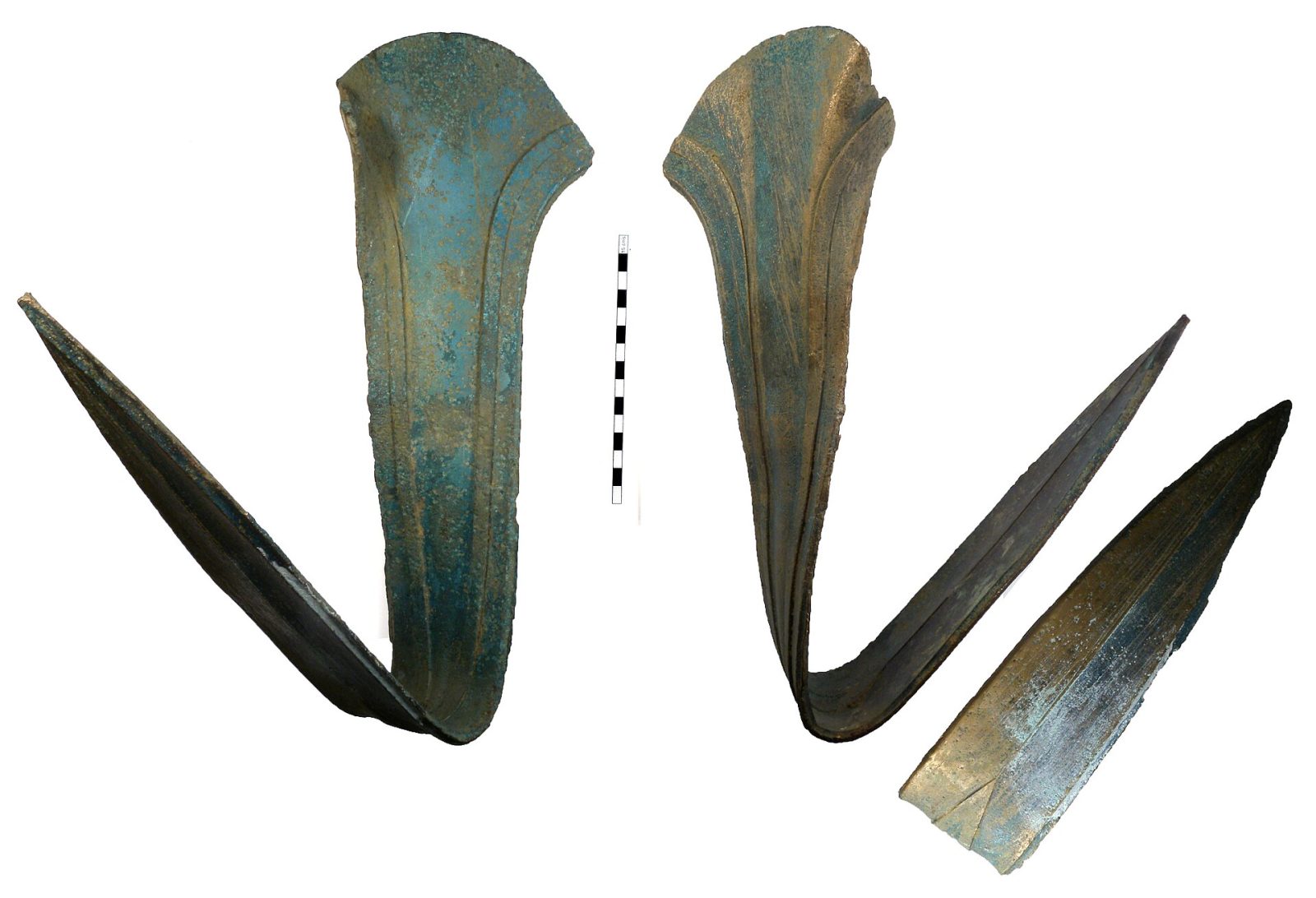
Around 2002 a Norfolk farmer ploughed up a large, bent piece of old metal at East Rudham and kept it in the farm office, where it was sometimes used as a doorstop. A decade later it was identified as one of only six giant ceremonial dirks known from Bronze Age Europe.
Around 2002 or 2003, a farmer ploughing land at East Rudham, in north-west Norfolk, turned up a large, bent piece of corroded metal. It was taken back to the farm office and left there, and for about ten years it lay around the office, sometimes used to prop the door open. In 2013 someone suggested it might be old, and it was taken to the Norfolk Identification and Recording Service at Gressenhall, where it caused more than a little surprise.
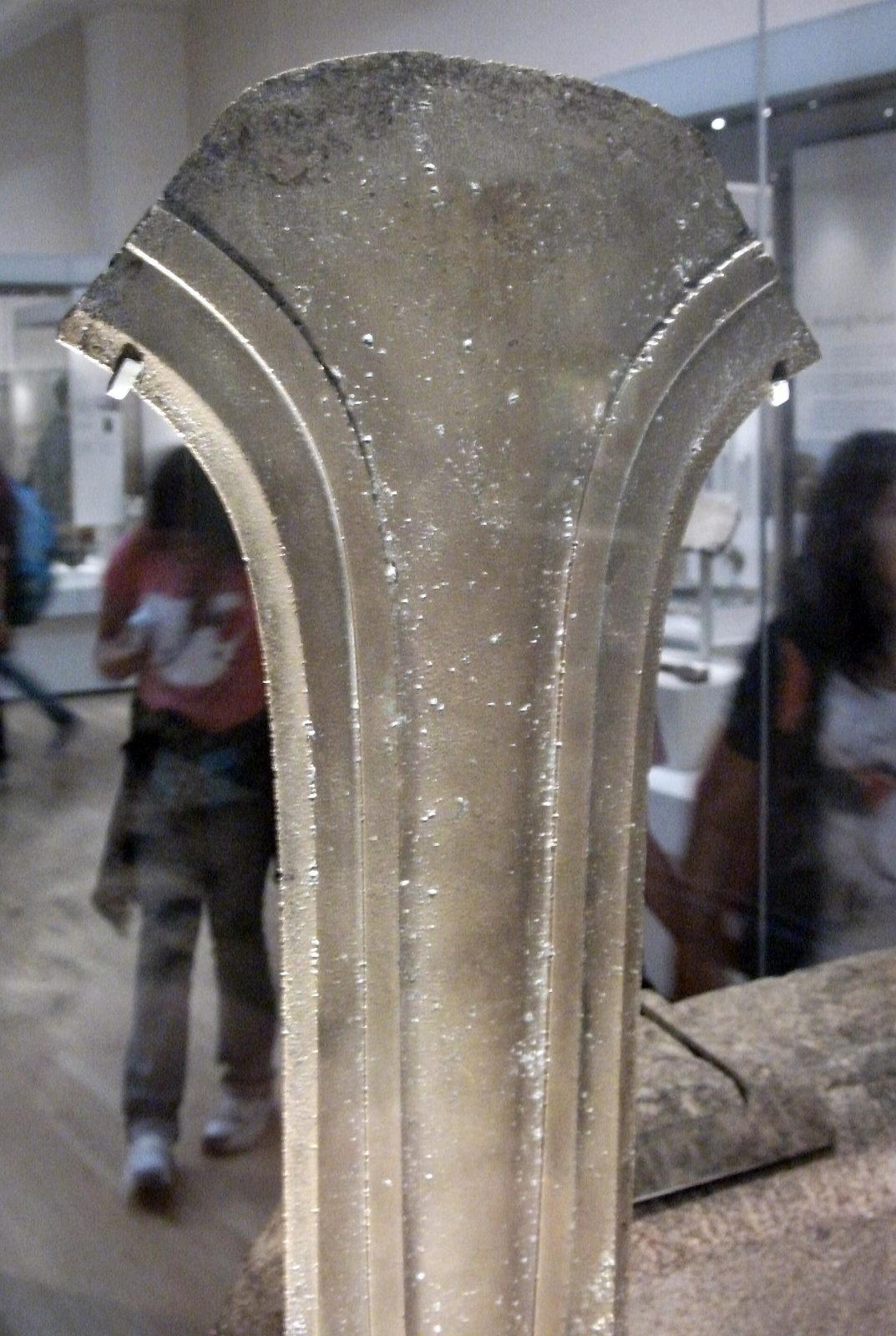
It was a dirk, a kind of short sword, cast in bronze in the Middle Bronze Age, around 1500 to 1350 BC. It is about 68 centimetres long and weighs nearly two kilograms, about three times the size of a normal dirk. Its edges were never sharpened, and its broad butt has no rivet holes for fixing a handle, so it could never have been used as a weapon. It was a ceremonial object, made for display or for offering.
The Rudham Dirk is one of only six giant dirks of its kind known from all of Europe, called the Plougrescant-Ommerschans type. The others come from Oxborough, also in Norfolk and found in 1988, from Plougrescant and Beaune in France, and from Ommerschans and Jutphaas in the Netherlands. They are so alike that they may all have come from the same workshop. The Rudham blade is bent in several places. The National Heritage Memorial Fund described the bends as a deliberate ritual destruction before burial, but the Finds Liaison team who recorded it noticed bare metal in the cracks, suggesting the bending may be much more recent, perhaps the work of the plough. The question is still debated.
As a single bronze object, the dirk did not fall under the Treasure Act. In 2014 the landowner sold it to Norfolk Museums Service for £40,970, with almost £39,000 from the National Heritage Memorial Fund. It was acquired for Norwich Castle Museum. In 2024 and 2025 all six giant dirks were brought together for the first time in an exhibition at the National Museum of Antiquities in Leiden, the Netherlands.
Written for Global Finds from the National Heritage Memorial Fund (2014), the Norfolk Historic Environment Record, the Portable Antiquities Scheme and S. Needham and N. Wilkin in Larger than Life (2024). Photo: the Rudham Dirk, Norfolk County Council (Garry Crace), Portable Antiquities Scheme, Wikimedia Commons, CC BY-SA 2.0.
Approximate location52.82, 0.70View on map
Source: National Heritage Memorial Fund