The Berkasovo Helmets: Roman gilded helmets a Serbian farmer feared were bombs
Famous find Early 4th century AD · Found in 1955 See it on the timeline →
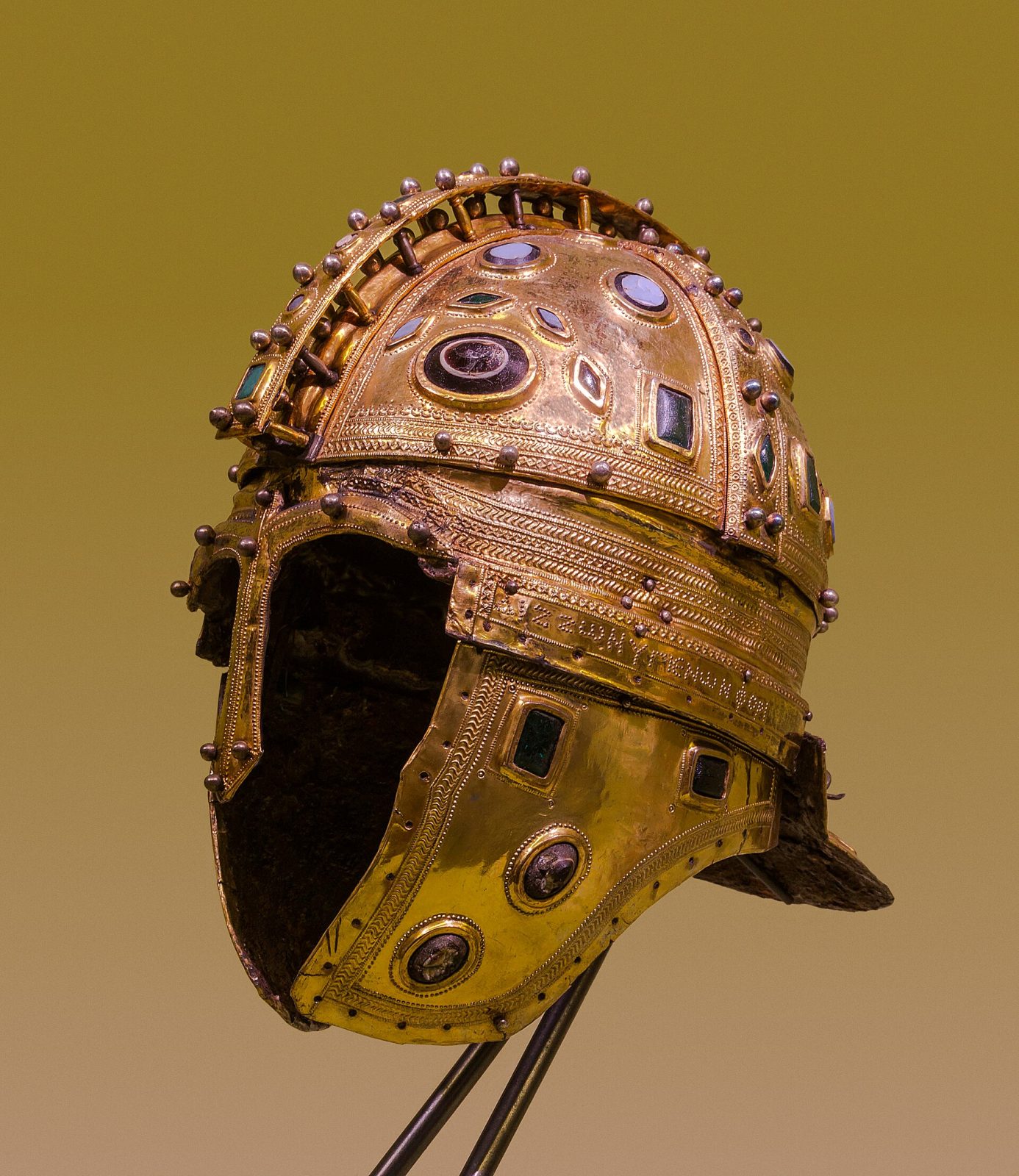
A woman working her field at Berkasovo in Serbia saw strange metal objects in the ploughed soil and, fearing wartime bombs, left them alone for years. In 1955 she dug them up. They were two late Roman helmets covered in gilded silver, one set with imitation emeralds.
After the Second World War, the farmland of Srem, in Vojvodina in northern Serbia, was full of unexploded bombs. So when Angelina Vrkatić, a villager from Berkasovo, near the town of Šid and the border with Croatia, saw strange metal objects come up in the ploughed soil of her field, she left that part of the field alone for several years. When she finally dug them out, in 1955, she hit one with her hoe. She tried to sell them, but a jeweller in Novi Sad told her they were only thinly gilded and would be worth more to a museum, and that is how the Museum of Vojvodina heard about them.
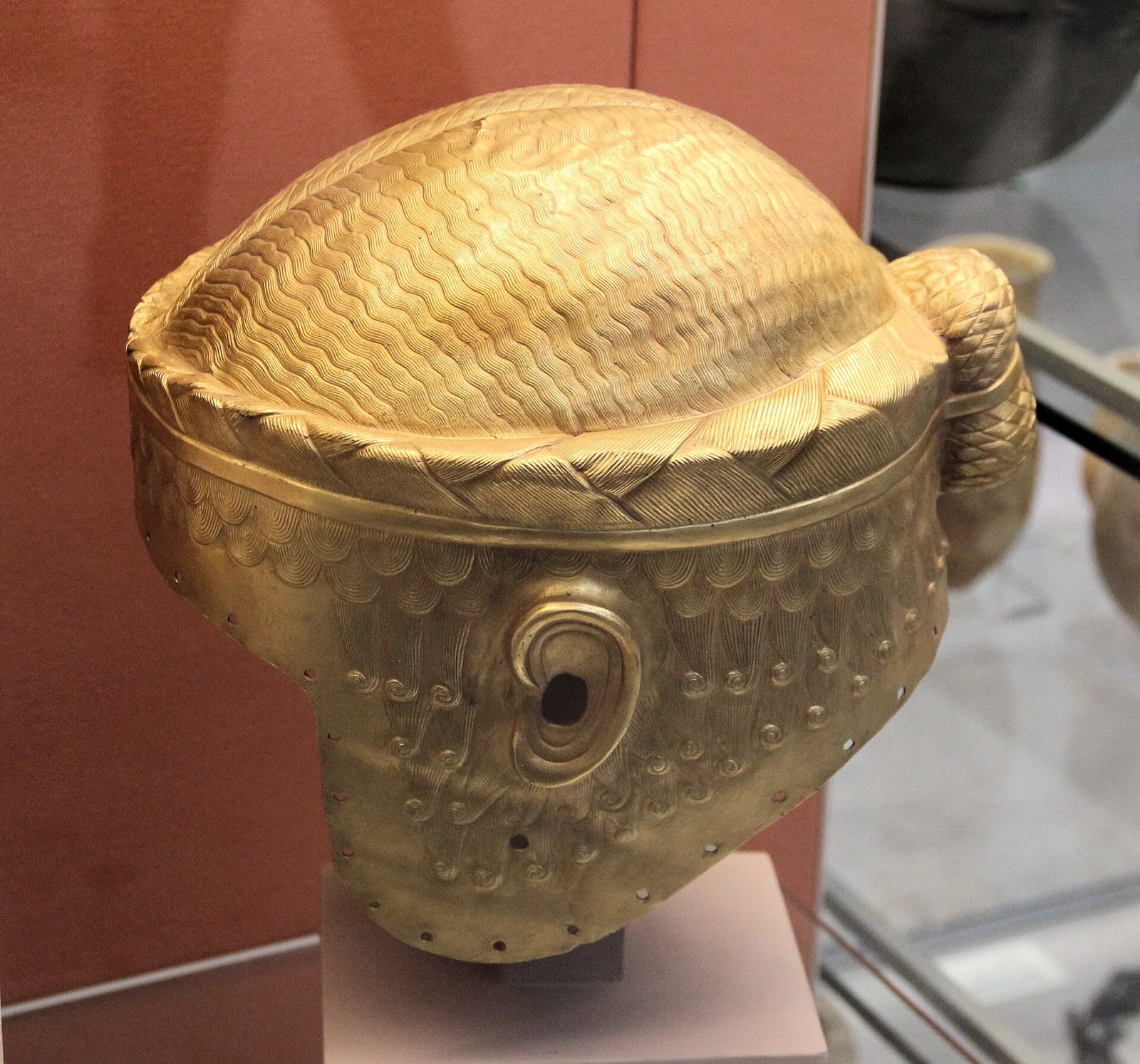
They were two late Roman helmets. Each has an iron cap made in four parts with a ridge along the top, a brow band, a nose guard, cheek pieces and a neck guard, all covered in sheets of gilded silver embossed with stars, crescents and circles, with silver studs along the crest. The finer of the two is set with green glass imitating emeralds, and with onyx and chalcedony. It carries a Greek inscription that names both its owner and its maker: Dizon, wear it in health, the work of Avitus. The second helmet is inscribed with a reference to the army of the emperor Licinius.
Museum archaeologists then excavated the findspot and found horse bits, silver belt fittings and a buckle: the helmets had been buried as a hoard. They date from the early 4th century AD, when the emperors Constantine and Licinius fought for control of the Roman world, and one theory is that they were hidden by Licinius's soldiers after their defeat at the battle of Cibalae, at Vinkovci in today's Croatia, in 314 or 316. A whole class of late Roman helmets, of which only about fifteen are known, is now called the Berkasovo type.
The helmets are displayed in the Museum of Vojvodina in Novi Sad, together with a third helmet found at Jarak in 2006, and they have been lent to exhibitions in Germany and Italy.
Written for Global Finds from the Museum of Vojvodina (T. Stanković Pešterac, Roman Gilded Helmets of the Museum of Vojvodina, 2019) and the Serbian Criminal Code. Photo: the gilded helmet from Berkasovo on loan to an exhibition at the Colosseum, Rome, Jebulon, Wikimedia Commons, CC0.
Approximate location45.16, 19.26View on map
Source: Museum of Vojvodina