The Belitung Shipwreck: a 9th-century Arab ship full of Chinese treasure, found by sea-cucumber divers
Famous find Sank about AD 826 to 850 · Found in 1998 See it on the timeline →
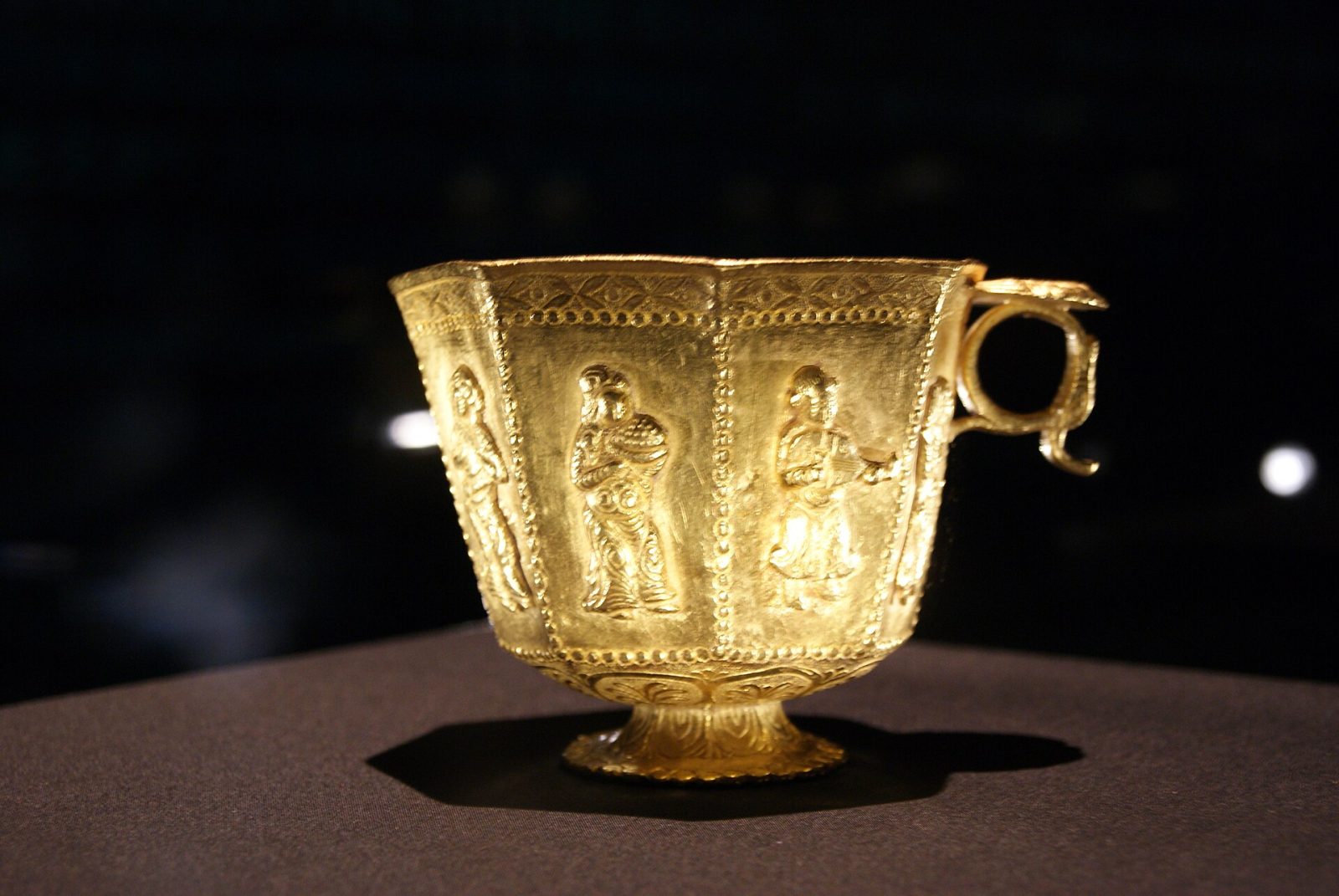
In 1998 fishermen diving for sea cucumbers off Belitung Island in Indonesia found an ancient wreck. It was an Arab-style ship lost in the 9th century with some 60,000 Chinese ceramics and gold and silver, the earliest Arab ship found in South-East Asian waters.
In 1998, local fishermen diving for sea cucumbers near a reef called Batu Hitam, the black rock, a few kilometres off Belitung Island in the Java Sea, Indonesia, came across a mound of pottery on the seabed, about 17 metres down. It was the cargo of a ship that had sunk more than 1,100 years earlier.
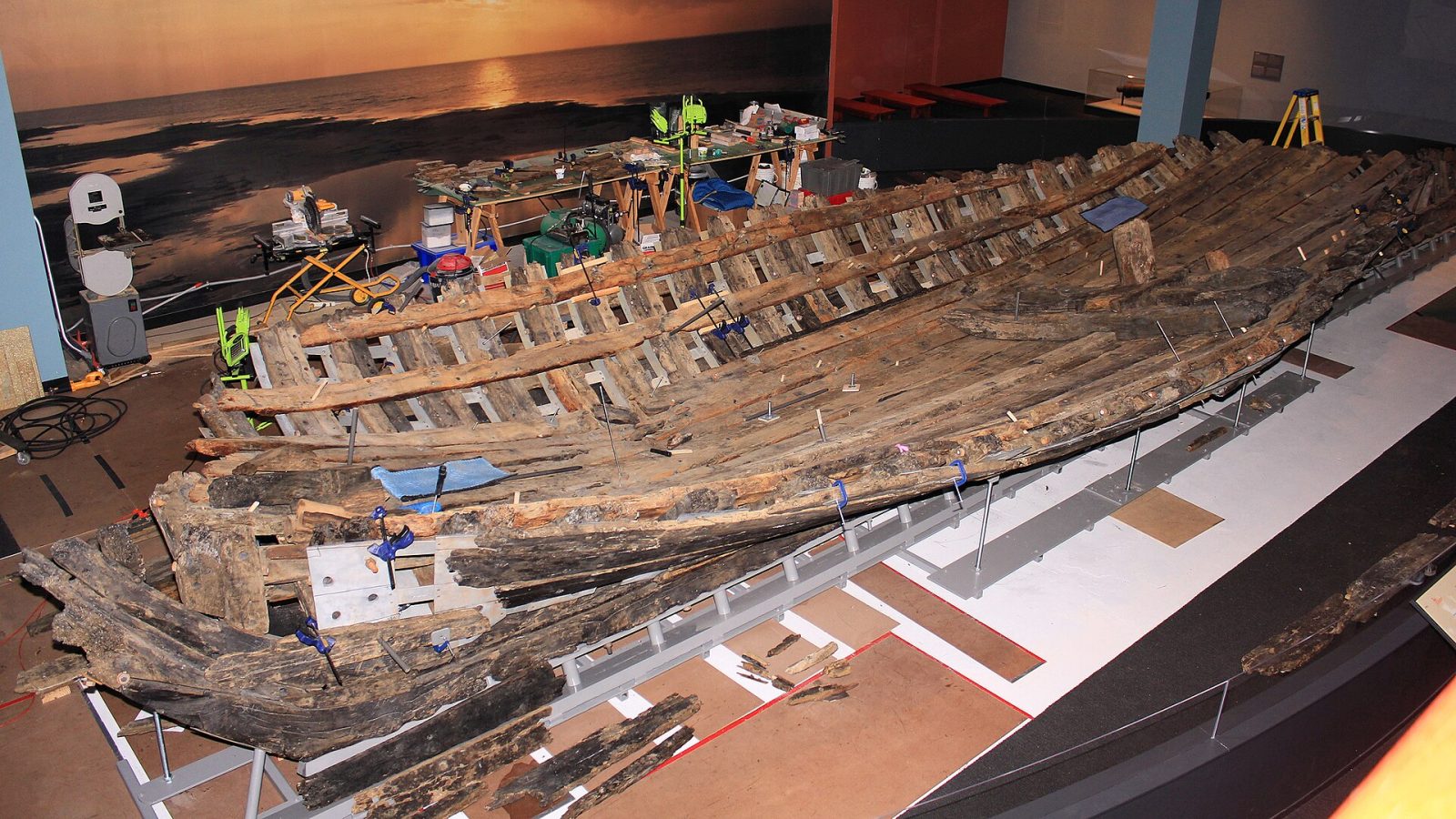
The ship was about 18 metres long and built in the Arab or western Indian Ocean tradition. Its planks were sewn together with plant-fibre cord rather than nailed, and some of its timbers came from African trees. It is the earliest Arab-style ship ever found in South-East Asian waters, and strong evidence that ships sailed directly between the Persian Gulf and China in the 9th century.
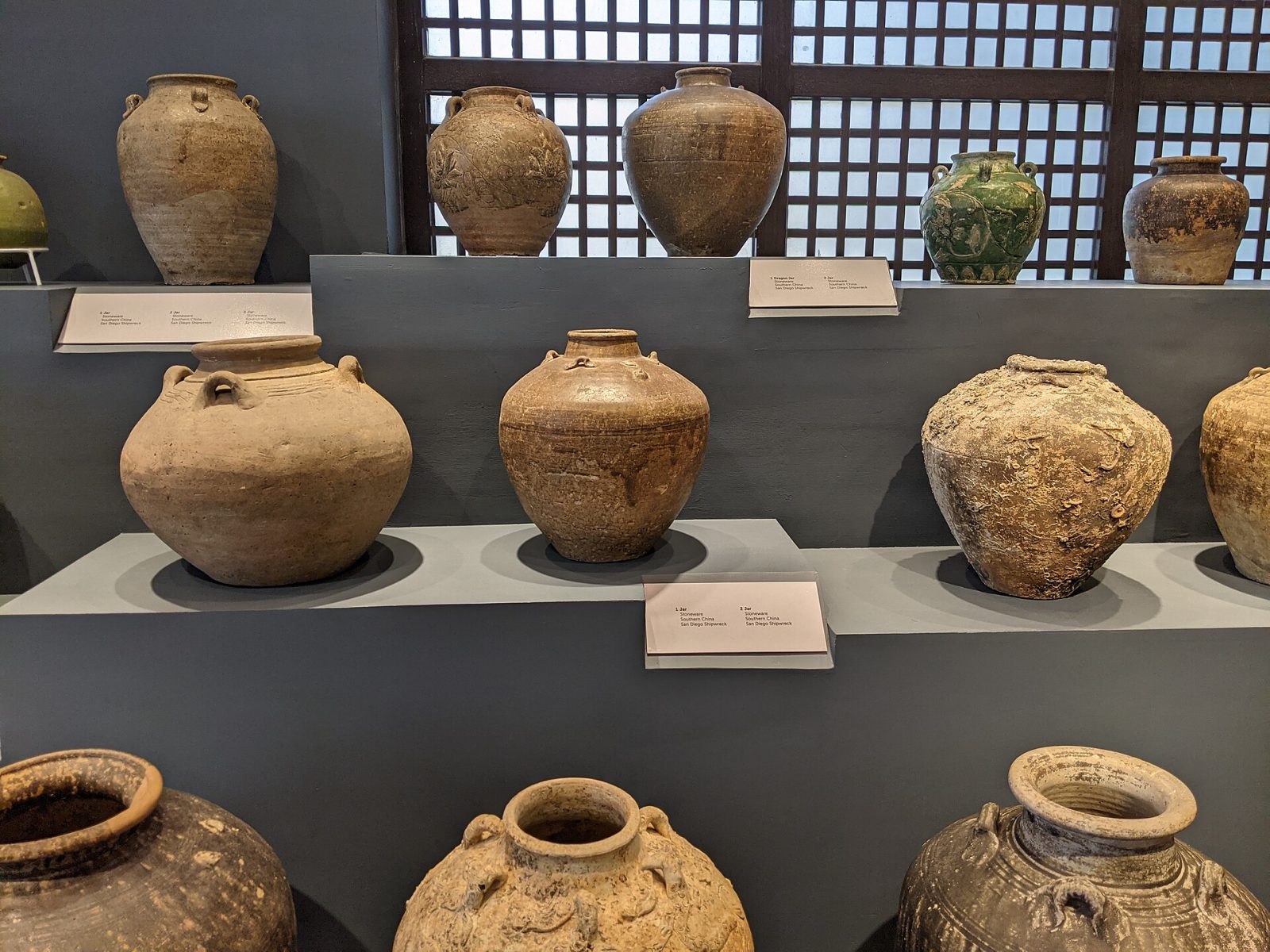
Its cargo was huge: around 60,000 objects, most of them made in China. More than 50,000 were bowls from the kilns of Changsha, hand-painted in browns and greens, many with designs made for buyers in the Islamic world. There were three of the earliest complete Chinese blue-and-white dishes ever found, bronze mirrors, silver boxes, and gold: an octagonal gold cup decorated with Central Asian musicians and a dancer, and gold bowls and dishes. One Changsha bowl is inscribed with a date, the 16th day of the 7th month of the second year of the Baoli reign, which is the year 826. The ship must have sailed after that, probably in the second quarter of the 9th century.
The wreck was not excavated by archaeologists, but salvaged commercially in 1998 and 1999 by a private company working under a licence from the Indonesian government. In 2005 the whole collection was sold, reportedly for about 32 million US dollars, to Singapore, where it was kept together. When an exhibition was planned at the Smithsonian Institution in Washington in 2011, archaeologists objected to the commercial salvage, and the American showing was dropped.
The Belitung treasure is displayed in its own gallery, the Khoo Teck Puat Gallery, at the Asian Civilisations Museum in Singapore.
Written for Global Finds from the National Heritage Board of Singapore, the Asian Civilisations Museum, the Archaeological Institute of America (2011) and Trafficking Culture. Photo: the octagonal gold cup from the Belitung shipwreck, at the ArtScience Museum, Singapore, Jacklee, Wikimedia Commons, CC BY-SA 3.0.
Approximate location-2.75, 107.61View on map