The Great Zimbabwe Birds: sacred carvings taken in 1889, and the last one home in 2026
Famous find Carved about the 13th to 15th centuries · Found in 1889 See it on the timeline →
In 1889 a hunter cut a carved soapstone bird from its column at the ruins of Great Zimbabwe and sold it to Cecil Rhodes. Seven more were taken to South Africa and Germany. The last bird came home to Zimbabwe in April 2026.
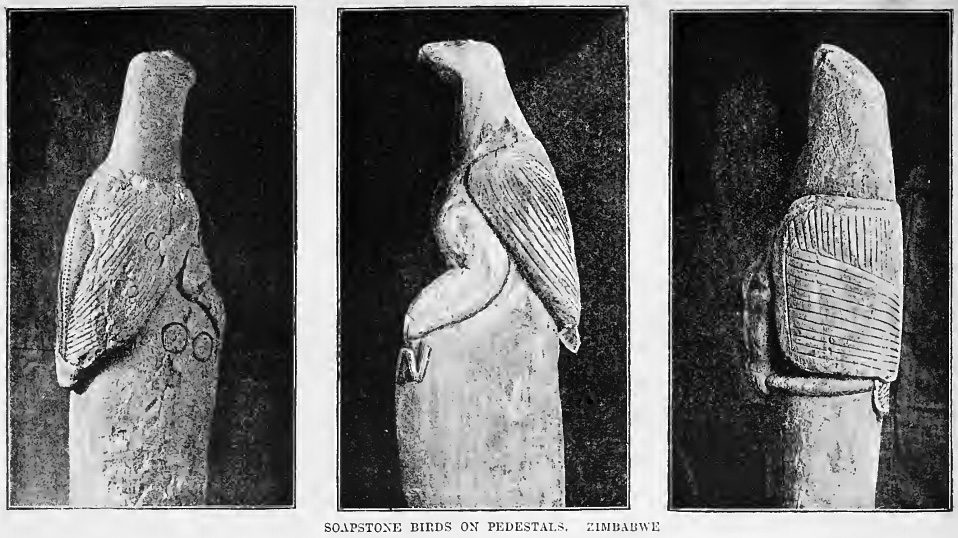
Great Zimbabwe, in the south-east of what is now Zimbabwe, was the capital of a powerful kingdom between about the 11th and 15th centuries. Its great stone walls, built without mortar, enclosed palaces and sacred places, and on columns among them stood a set of carved birds. Each is carved from soapstone, a soft greenish stone, and is between about 25 and 50 centimetres tall, standing on a column more than a metre high. They are thought to show a bird of prey, perhaps a bateleur eagle or fish eagle, revered as a messenger to the ancestors. No carvings like them are known anywhere else.
On 14 August 1889 Willi Posselt, a hunter and trader, reached the ruins. He bargained with the local custodians, cut one of the birds from its column, and later sold it to Cecil Rhodes for £80. Rhodes kept it in his study at his house, Groote Schuur, in Cape Town. In 1891 the explorer Theodore Bent dug at the ruins and recorded eight birds, and most of the others were taken to the South African Museum in Cape Town. Part of another was sold by a missionary to the Ethnological Museum in Berlin in 1907.
The bird is now Zimbabwe's national emblem, on its flag, coat of arms and currency. In 1981 South Africa returned the birds held in the Cape Town museum, in exchange for a collection of insects from Zimbabwe's natural history museum. The Berlin fragment had a stranger journey: taken from Germany by Soviet troops in 1945, it came back to Berlin after the end of the Soviet Union and was returned to Zimbabwe in May 2003, where it was rejoined with its other half. The last bird, the one Rhodes had owned, was handed back at a ceremony in Harare on 15 April 2026.
The returned birds are kept at the site museum at Great Zimbabwe, which has been a UNESCO World Heritage Site since 1986, and the last bird is to join them there.
Written for Global Finds from the Government of South Africa (2026), the BBC (2026), The Herald (Zimbabwe) and the Mail and Guardian (2003). Photo: soapstone birds on their columns at Great Zimbabwe, from J. T. Bent's The Ruined Cities of Mashonaland (1892), public domain.
Approximate location-20.27, 30.93View on map
Source: Government of South Africa