Tutankhamun's Tomb: a step under a workmen's hut, and the most famous find in archaeology
Famous find Reign of Tutankhamun, about 1332 to 1323 BC · Found in 1922 See it on the timeline →
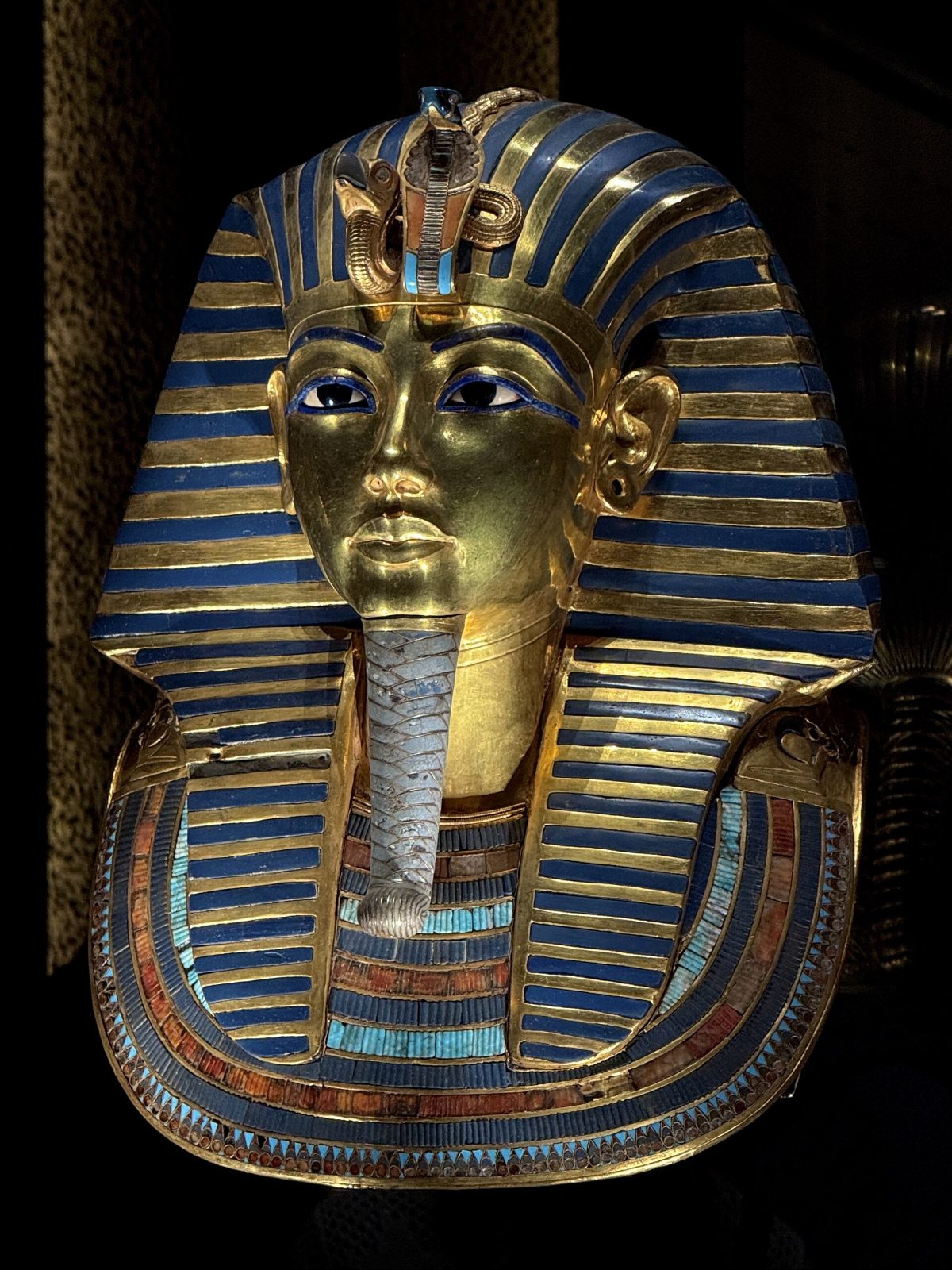
On 4 November 1922 Howard Carter's team in Egypt's Valley of the Kings uncovered a step cut into the rock beneath some ancient workmen's huts. It led to the almost untouched tomb of the boy-king Tutankhamun, packed with more than 5,000 objects and his gold mask.
By 1922 the archaeologist Howard Carter had spent several fruitless seasons searching the Valley of the Kings, near Luxor in Egypt, for the tomb of a little-known pharaoh, Tutankhamun, with money from his patron, Lord Carnarvon. In November 1922 Carter began clearing the remains of huts built by the workmen of a later royal tomb. At about ten o'clock on the morning of 4 November, beneath almost the first hut, he found a step cut into the rock. Local tradition holds that it was first spotted by a young water boy, though Carter's own journal does not say so.
The step led down a buried staircase to a sealed doorway. Carter covered it again and waited for Carnarvon to arrive from England. On 26 November 1922 he made a small hole in the second doorway and looked in by candlelight. In his journal, Carnarvon asks whether he can see anything, and Carter replies, "Yes, it is wonderful". In the published version it became the famous "wonderful things".
The tomb, now known as KV62, had been entered by robbers in ancient times but was otherwise almost intact. It took Carter and his team ten years to record and clear more than 5,000 objects: gilded shrines, chariots, beds, weapons, jewellery, clothing, food and the king's mummy in a nest of coffins, the innermost of solid gold. The sealed burial chamber was opened in February 1923, and in October 1925 the last coffin was opened to reveal the gold mask. Made from two sheets of gold, inlaid with glass and semi-precious stones, it weighs about ten kilograms. Tutankhamun reigned from about 1332 to 1323 BC and died at about nineteen.
Carnarvon's permit had promised him a share of the finds, but the Egyptian antiquities service insisted that everything should stay in Egypt, and in 1930 Egypt paid his heirs for their expenses instead. In November 2025, Tutankhamun's treasures went on show together for the first time in dedicated galleries of the new Grand Egyptian Museum at Giza, with the gold mask at their centre.
Written for Global Finds from the Griffith Institute, University of Oxford (Howard Carter's journals and records), Al-Monitor (2025) and AP (2025). Photo: the gold mask of Tutankhamun in the Grand Egyptian Museum, December 2025, Dawid Wdowczyk, Wikimedia Commons, CC BY 4.0.
Approximate location25.74, 32.60View on map