Ban Chiang: a student tripped on a tree root in a Thai village and found a lost Bronze Age culture
Famous find About 2100 BC to AD 200; start of bronze debated · Found in 1966 See it on the timeline →
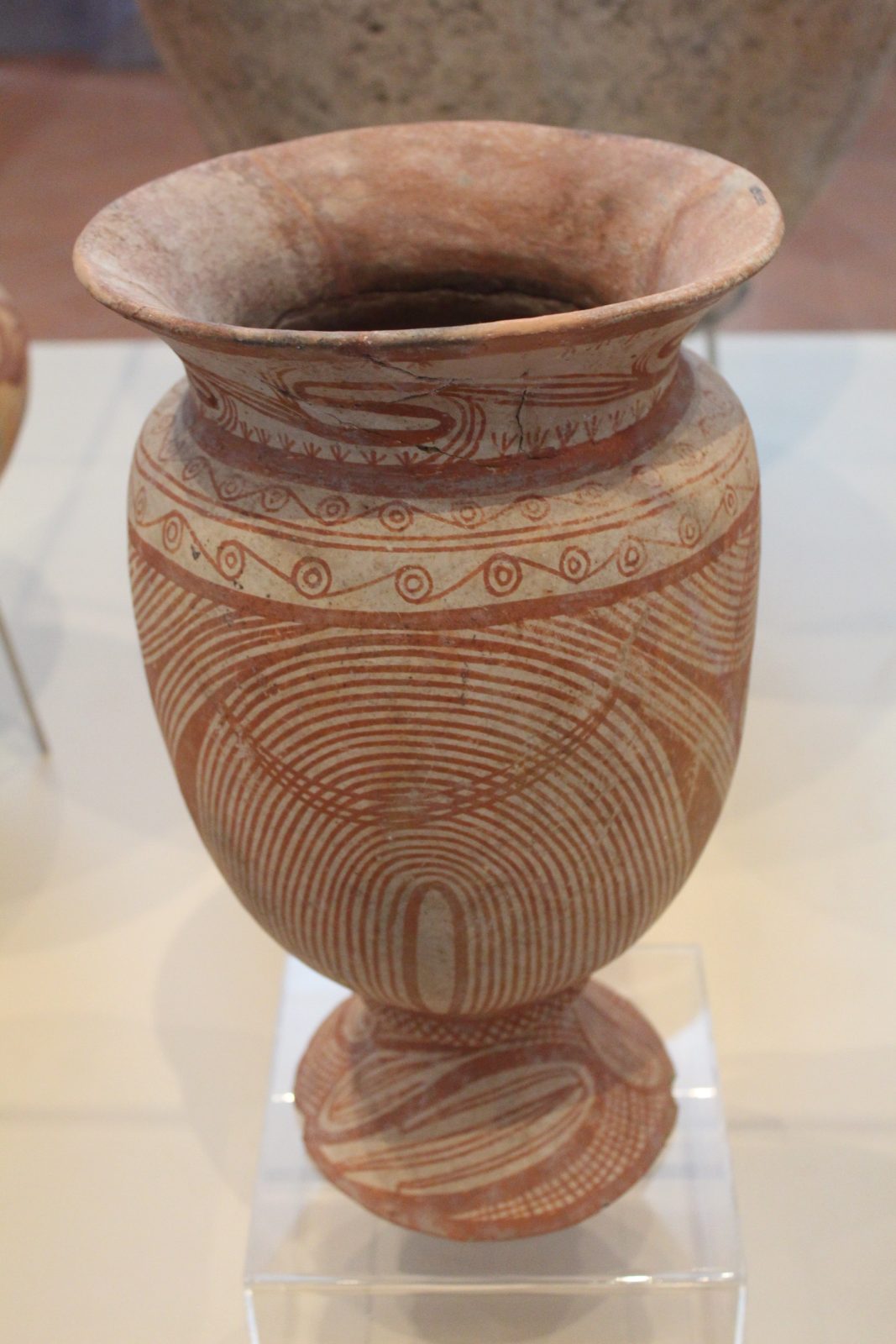
In 1966 an American student walking in the village of Ban Chiang in north-east Thailand found painted pots sticking out of a path. Excavations revealed one of South-East Asia's earliest bronze-making cultures, and a wave of looting that took decades to undo.
In the summer of 1966, Steve Young, an American student from Harvard living in Thailand, was walking through the village of Ban Chiang in Udon Thani province, in the north-east of the country. In the famous account of the find, he tripped over the root of a kapok tree and saw the rims of pots in the path. Another account says he collected pots from fresh road cuts. Either way, he took pottery back to Bangkok, and it was soon recognised as very old. A local official had already noticed sherds there a few years earlier.
The villagers were living on top of an ancient cemetery. In 1974 and 1975 the Thai Fine Arts Department and the University of Pennsylvania Museum, led by Pisit Charoenwongsa and Chester Gorman, excavated it and found about 126 burials, layered over more than two thousand years, with pottery, ornaments of bone and ivory, and bronze. There were bronze spearheads, bracelets and anklets, and clay crucibles that show the bronze was cast in the village itself. One spearhead had been deliberately bent before it was buried. The famous pots with swirling red designs on a buff background come from the latest phase, around 300 BC to AD 200.
How early the bronze is has been argued over for fifty years. Early tests suggested dates before 3000 BC, which caused a sensation but have since been rejected. Joyce White of the Penn Museum dates the first bronze to around 2000 BC, while others, using a large set of radiocarbon dates published in 2015, argue for around 1000 BC.
The early publicity had a heavy cost. Collectors wanted Ban Chiang pots, and the cemetery was plundered; many objects were smuggled abroad. Since then many have come home, including 554 objects returned from the United States in 2014 and more in 2024. Ban Chiang became a UNESCO World Heritage Site in 1992, and its finds are shown in the Ban Chiang National Museum beside the site, where an excavation pit has been kept open for visitors.
Written for Global Finds from the Institute for Southeast Asian Archaeology, C. Gorman and P. Charoenwongsa in Expedition (1976), PLOS ONE (2015), Voice of America (2014) and The Art Newspaper (2024). Photo: a painted pot of the late period in the Ban Chiang National Museum, Kiwiodysee, Wikimedia Commons, CC BY-SA 3.0.
Approximate location17.41, 103.24View on map