Sitio Conte: the Panama cemetery of gold chiefs, revealed when a river changed course
Famous find Cemetery used about AD 450 to 900 · Found in 1930 See it on the timeline →
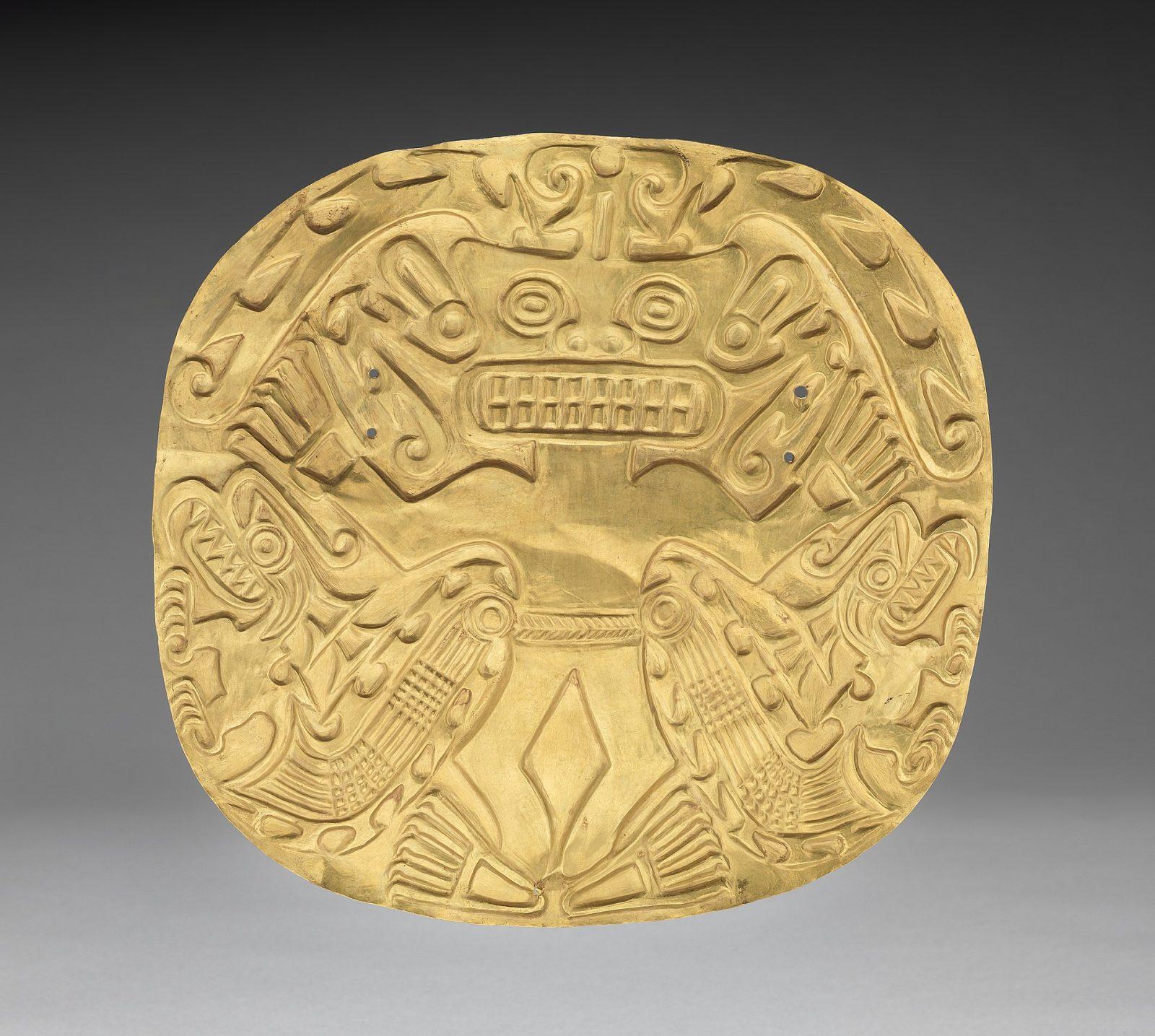
Around 1900 the Río Grande de Coclé in Panama shifted its course and cut into an ancient cemetery, washing gold out of its banks. Excavations by Harvard and Penn in the 1930s and 1940 found chiefs buried with gold plaques, cuffs and emeralds, made around AD 450 to 900.
Around the turn of the 20th century, the Río Grande de Coclé, in the Coclé province of central Panama, changed its course. The river cut into its banks on the land of the Conte family, and gold ornaments and painted pottery began to wash out and turn up for sale in Panama City. The river had found an ancient cemetery, now known as Sitio Conte, after the family who owned the land.
Archaeologists from Harvard University's Peabody Museum, with Samuel Lothrop, excavated there in the early 1930s, uncovering dozens of graves and caches of offerings. In 1940 an expedition from the University of Pennsylvania Museum, led by J. Alden Mason, returned with a small team and 35 local workmen. On 16 March 1940 they uncovered Burial 11, an exceptionally rich grave. It held 23 people, laid in three layers. The central figure, a man of high rank, wore five large gold plaques on his chest, an emerald set in gold, ear rods of gold and stone, and gold cuffs on his arms and legs. Beside him a woman wore a garment sewn with gold sequins shaped like sharks' teeth.
The goldwork of Sitio Conte is among the finest in ancient America. The plaques were hammered from sheets of tumbaga, an alloy of gold and copper, embossed with fanged creatures and reptiles, and then treated so that the copper was removed from the surface, leaving a skin of pure gold. The cemetery was used from about AD 450 to 900 by the chiefs of the Coclé culture, and then abandoned.
Under the terms of the time, the gold was divided between the expeditions and the landowner, and much of it left Panama. Objects from Sitio Conte are now in the Penn Museum in Philadelphia, Harvard's Peabody Museum and the Cleveland Museum of Art, whose gold chest plaque shown here came from the Harvard excavations. Since 2008, Panamanian archaeologists at the neighbouring site of El Caño have uncovered more gold-rich burials of the same culture, which now stay in Panama.
Written for Global Finds from the Cleveland Museum of Art, the Penn Museum Archives, Expedition magazine (2014) and Panama's Law 14 of 1982. Photo: a gold chest plaque from Sitio Conte in the Cleveland Museum of Art, Cleveland Museum of Art, Wikimedia Commons, CC0.
Approximate location8.37, -80.48View on map
Source: Cleveland Museum of Art