The La Tolita Gold: a brewer digging foundations in Ecuador found a gold and platinum hoard
Famous find La Tolita culture, about 600 BC to AD 400 · Found in 1912 See it on the timeline →
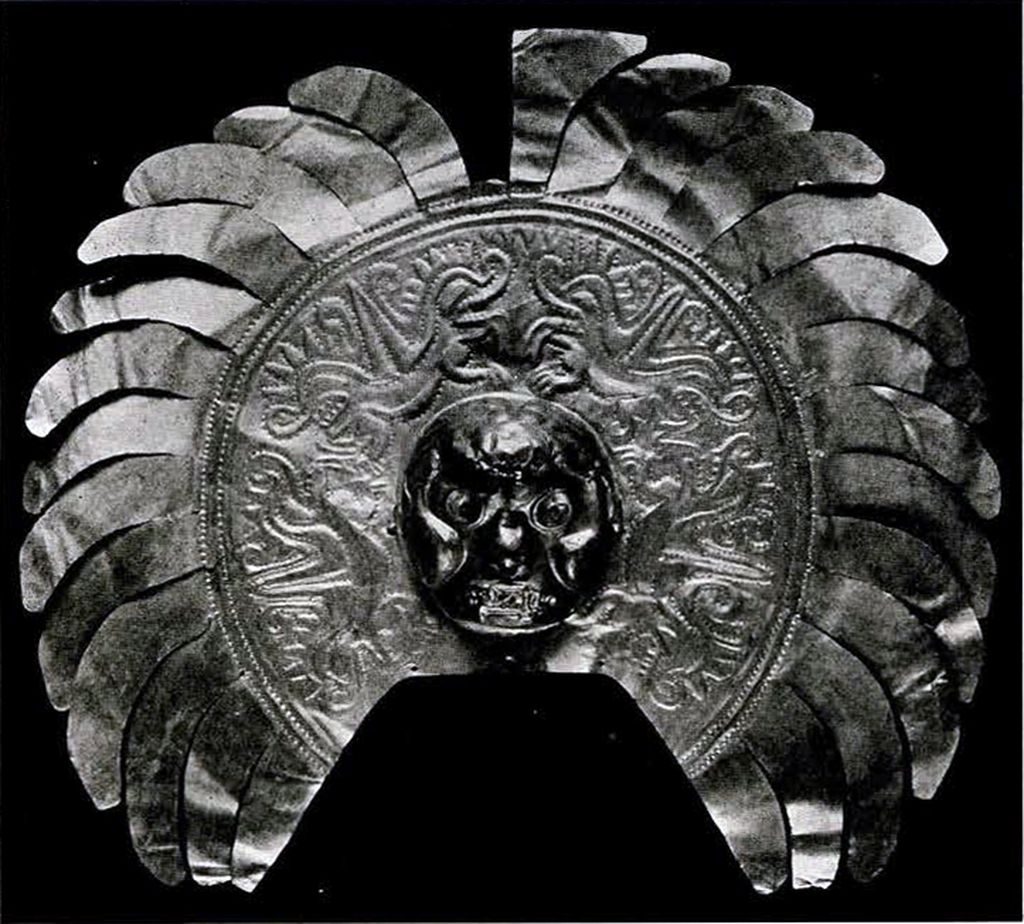
In 1912 Pablo Isaías Sánchez, digging foundations for his brewery on the island of La Tolita in Ecuador, uncovered a pottery chest full of gold: breastplates, a gold bat and about a thousand small plaques, the work of a culture that mastered platinum two thousand years ago.
In 1912, Pablo Isaías Sánchez was digging the foundations for an extension to his brewery on Tola island, at the mouth of the Santiago River in the province of Esmeraldas, north-western Ecuador. The island is dotted with about forty ancient earth mounds, some nearly eight metres high, and gold had long been panned from its sands; Sánchez called his ranch Pampa de Oro, the plain of gold. As his workmen cut into the side of a mound, they found a large pottery chest. It was a burial urn, and it held a hoard of gold.
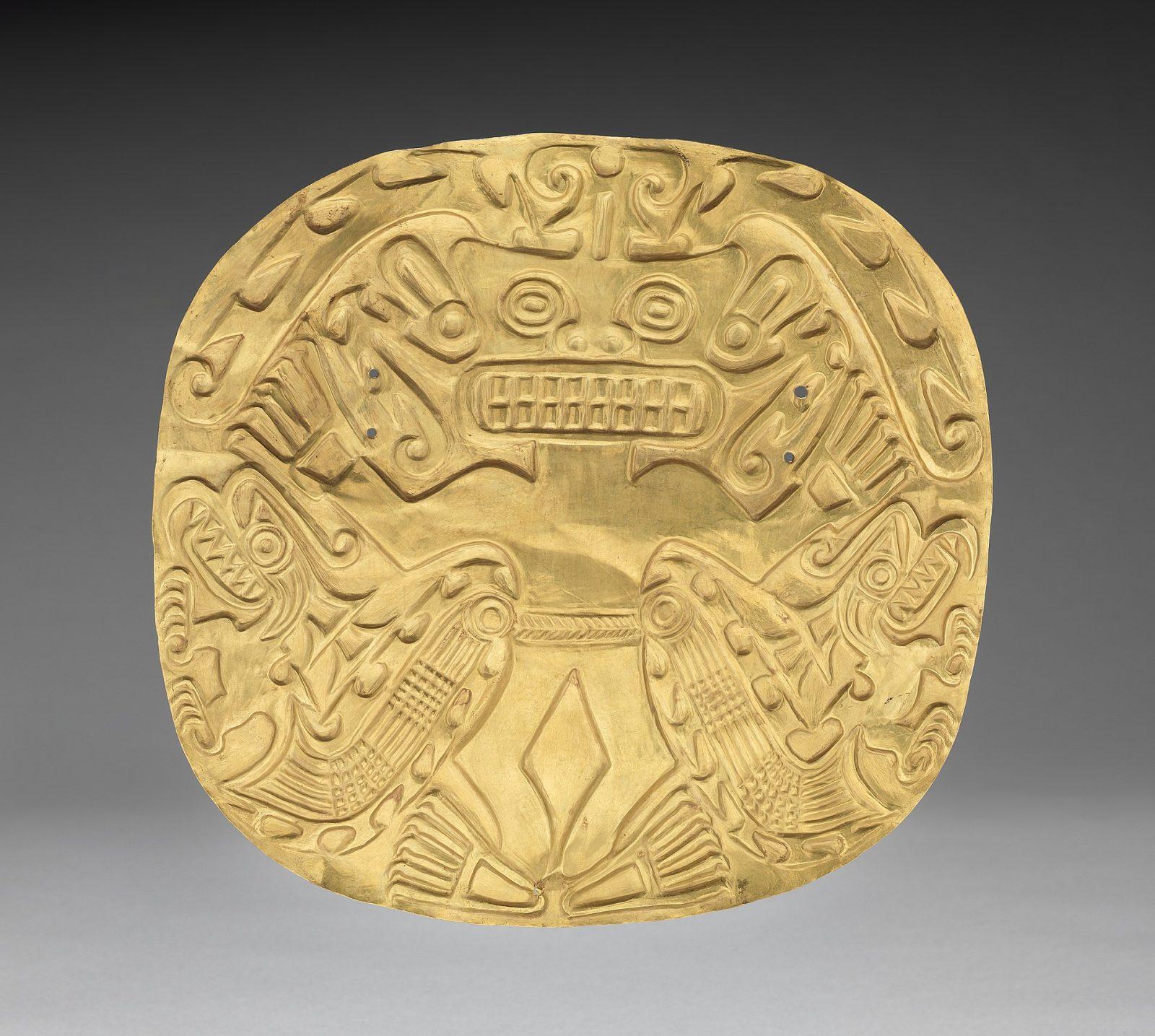
There were two large breastplates, the bigger one about 36 centimetres across, embossed with a head and four double-headed alligators. There was a gold figure of a bat with wings spreading 24 centimetres, a pair of gold cuffs, and nearly a thousand small gold plaques that had once been sewn onto a burial shroud. In another mound Sánchez later found a gold egg with an uncut emerald inside.
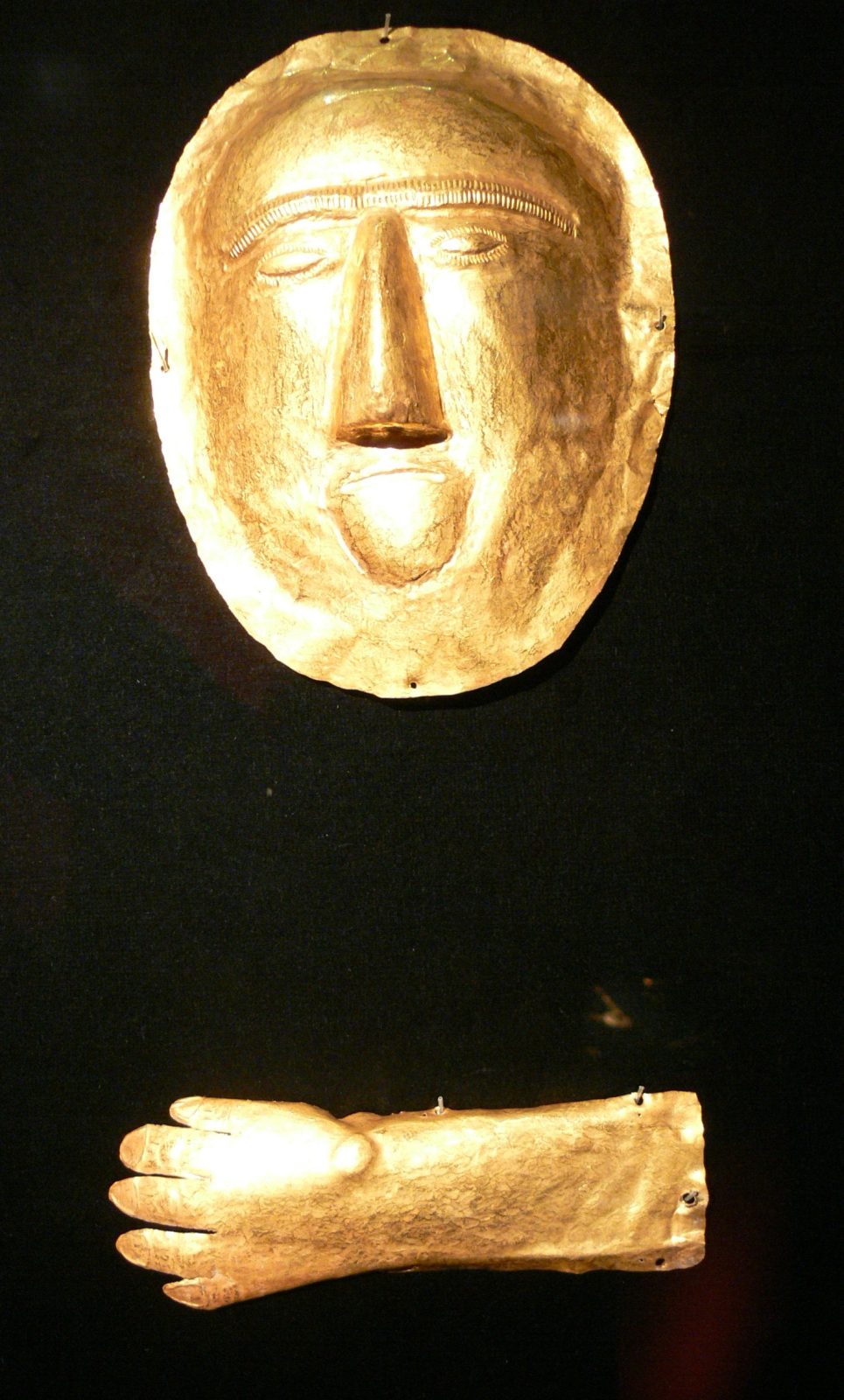
The objects were made by the people of the La Tolita-Tumaco culture, which flourished on the Pacific coast of what are now Ecuador and Colombia from around 600 BC to AD 400. La Tolita was a ceremonial centre, and its goldsmiths were among the most skilled in the ancient world. They worked platinum, a metal so hard to melt that European scientists only learned to work it in the 18th century, by mixing tiny grains of platinum with gold and heating them until they fused.
The 1912 hoard was acquired by the University of Pennsylvania Museum in Philadelphia, whose curator William Farabee published it in 1921, and it remains in the museum's collection. Other La Tolita gold, including masks with platinum eyes and the famous Sun of Gold, belongs to Ecuador's national museum in Quito.
Written for Global Finds from W. C. Farabee in the Museum Journal (University of Pennsylvania, 1921), D. A. Scott in Latin American Antiquity and Ecuador's Organic Law of Culture. Photo: the larger gold breastplate from the 1912 La Tolita hoard, from W. C. Farabee's 1921 article, public domain.
Approximate location1.20, -79.00View on map