The Preslav Treasure: Byzantine gold found in a Bulgarian vineyard, hidden as the capital fell
Famous find Made in the 10th century; buried about 969 to 971 · Found in 1978 See it on the timeline →
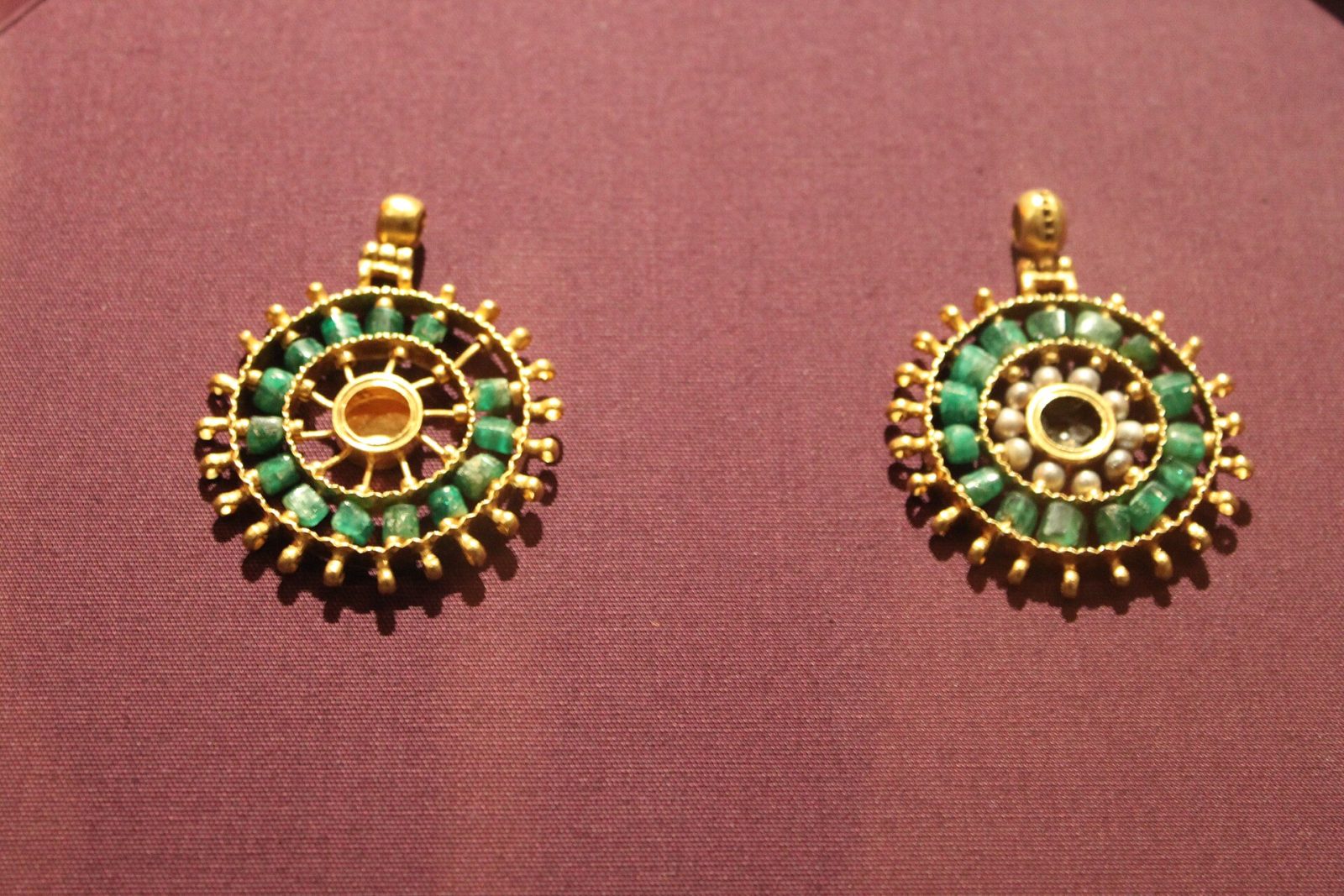
In April 1978 women working in a vineyard near Veliki Preslav, in north-east Bulgaria, found gold in the soil. It was a hoard of 10th-century Byzantine jewellery set with enamel, pearls and gems, hidden in a wooden box as the Bulgarian capital fell to its enemies.
On 11 April 1978, women working for a farm cooperative in the Castana vineyard, about three kilometres north-west of the old palace at Veliki Preslav in north-east Bulgaria, found gold objects in the soil. A plough had probably brought them up the autumn before. When archaeologists excavated the spot, they found that the treasure had been hidden in a wooden box, of which only the bronze fittings and hasp survived, inside a house with a sunken floor and an oven.
The hoard is usually counted at between 150 and 180 pieces, depending on how fragments are counted. Most are jewellery of gold and gilded silver, decorated with cloisonné enamel and set with pearls, emeralds, rubies and garnets: enamelled plaques reconstructed as a diadem, two necklaces, one of them decorated on both sides, several pairs of earrings, rings, buttons and a rock-crystal seal set in gold. With them were 15 silver coins of the Byzantine emperors Constantine VII and Romanos II, struck between 945 and 959.
In the 10th century Preslav was the capital of the First Bulgarian Empire, and most of the jewellery was made in Constantinople. The coins help to date the burial. The treasure was probably hidden during the wars of 969 to 971, when the Rus' prince Sviatoslav and then the Byzantine emperor John Tzimiskes fought over Bulgaria; Preslav fell to Tzimiskes in 971. Some writers have suggested that the jewellery belonged to the royal family, perhaps through Tsar Peter I's Byzantine bride, but that is speculation.
The treasure was shown at the Louvre in Paris in 2018. It is displayed in a specially built vault room at the Archaeological Museum in Veliki Preslav.
Written for Global Finds from the Bulgarian News Agency (BTA, 2018, 2023 and 2026) and O. Minaeva (New Bulgarian University). Photo: two enamelled pendants from the Preslav Treasure, shown at the Louvre in 2018, Faqscl, Wikimedia Commons, CC BY-SA 4.0.
Approximate location43.17, 26.78View on map
Source: Bulgarian News Agency (BTA)