The Cawood Sword: a knight's sword from the River Ouse, inscribed with a charm nobody can read
Famous find Made about 1080 to 1120 See it on the timeline →
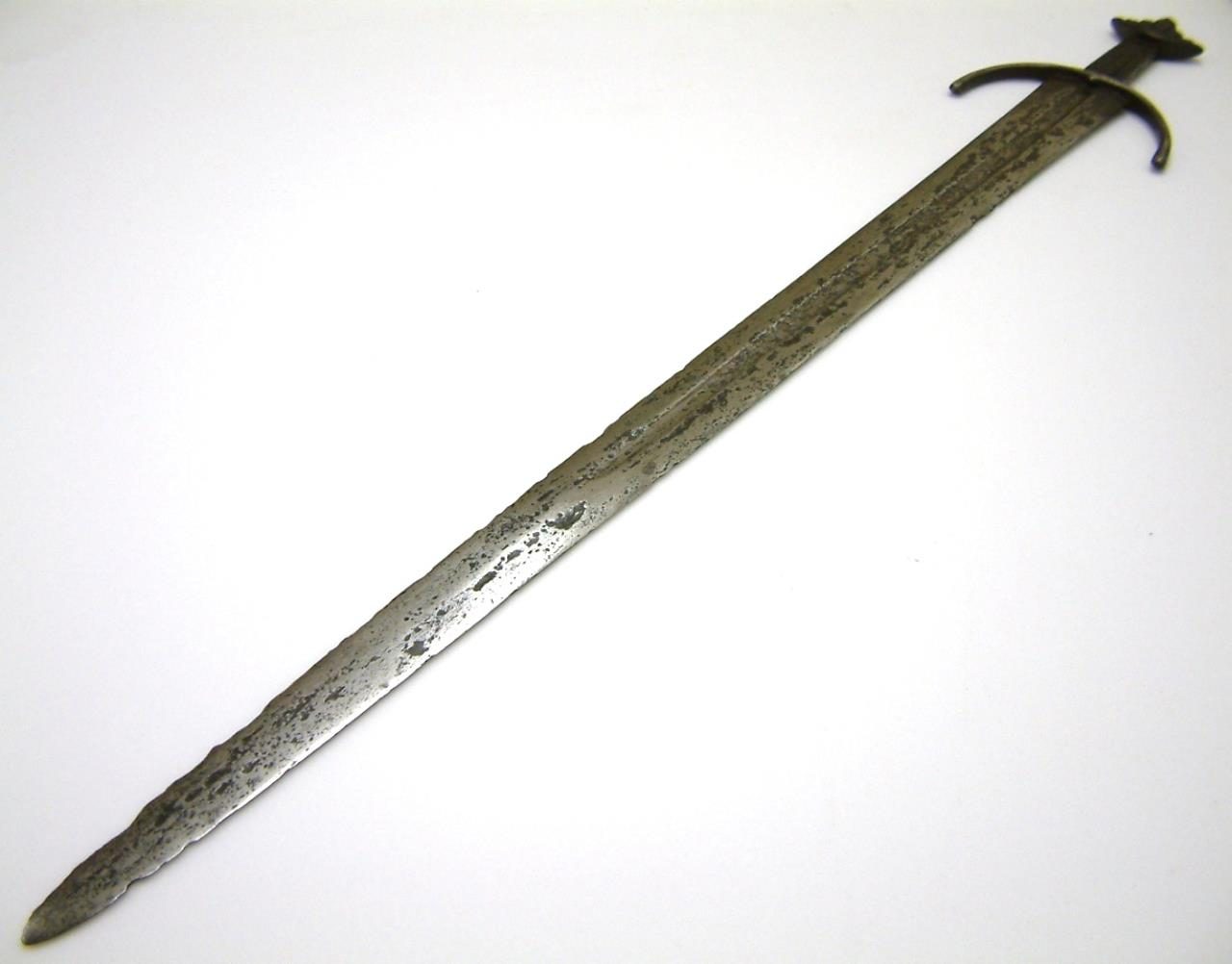
In the late 1800s a sword was pulled from the River Ouse near Cawood, south of York. Made around 1100, at the end of the Viking age, it carries mysterious inscriptions on both sides of the blade and is one of the best-preserved swords of its kind.
At some time in the late 1800s, a sword was pulled from the River Ouse near Cawood, a village south of York where the Archbishops of York had their palace at Cawood Castle. Nobody recorded who found it, or exactly when. Its history over the following century is uncertain, but in December 2007 it was acquired by the Yorkshire Museum in York.
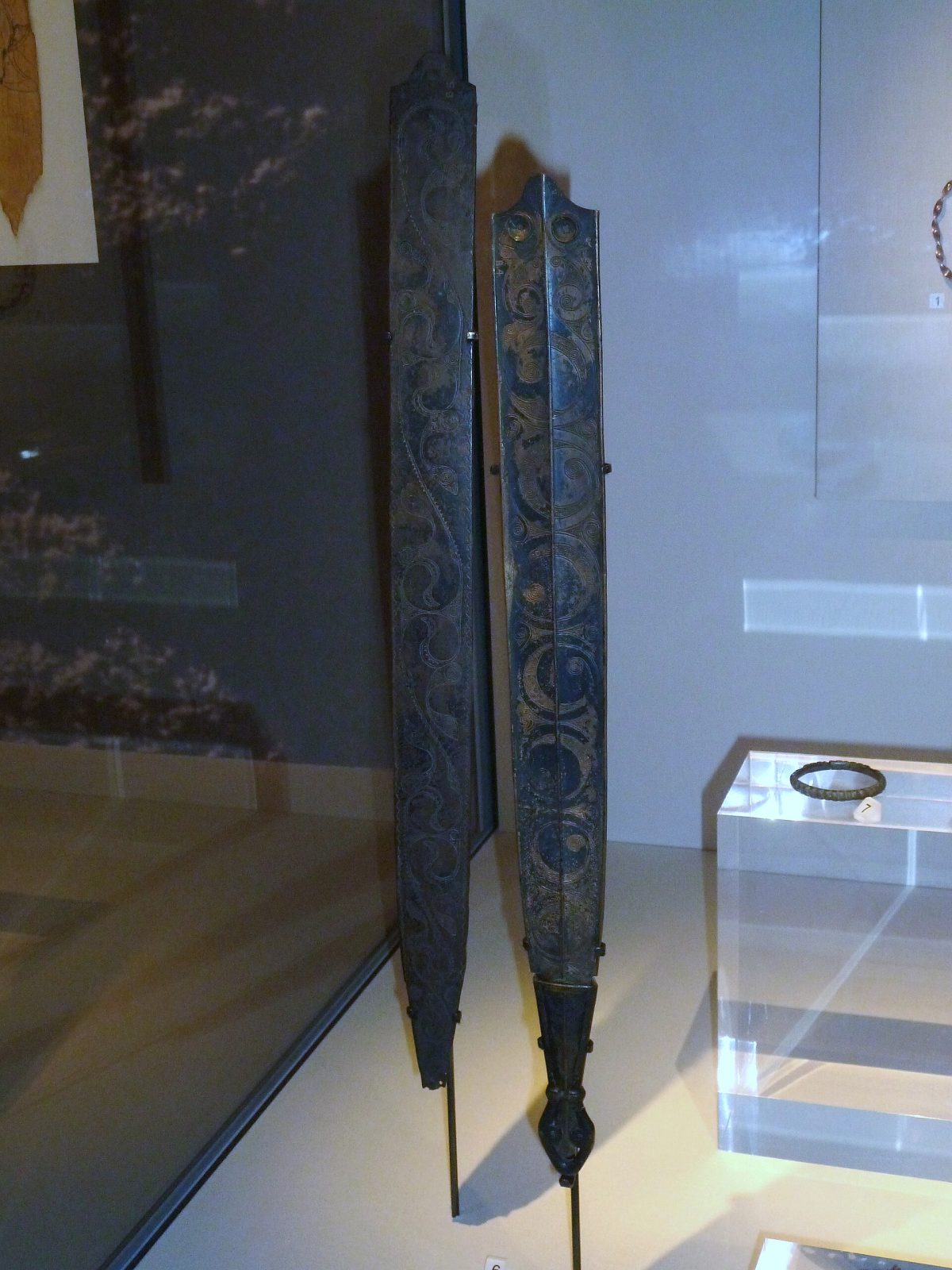
The sword is 953 millimetres long, with an iron blade 811 millimetres long and 59 millimetres wide. It has a gently curved guard 157 millimetres across and a pommel with five lobes in the old Viking style, and part of the hilt is made of pewter. The tip of the blade is damaged. Both faces of the blade are inlaid with letters: Roman capitals on one side and rounded Lombardic letters on the other. They spell no known words, and the museum thinks they form a religious phrase, a kind of charm, of the sort often found on swords of the period.
The Yorkshire Museum dates the sword to about 1080 to 1120, around 1100, at the end of the Viking age. The sword expert Ewart Oakeshott first dated it much later, to about 1240 to 1310, before revising his view in 1991 to around 1100 to 1150. A near-twin found in 1888 during railway building at Korsøygården in Norway, which has runes on its hilt, helped to date both swords. The museum describes the Cawood sword as only the fifth sword of its type known, and by far the best preserved.
The sword is in the collection of the Yorkshire Museum, where it was a centrepiece of the Medieval York displays from 2017. Visitors hoping to see it should check with the museum before travelling, as displays change.
Written for Global Finds from the Yorkshire Museum, York Museums Trust and E. Oakeshott, Records of the Medieval Sword (1991). Photo: the Cawood sword, York Museums Trust Staff, Wikimedia Commons, CC BY-SA 4.0.
Approximate location53.83, -1.13View on map
Source: Yorkshire Museum