Hoa Hakananai'a: the Easter Island statue dug out of a stone house and shipped to London in 1868
Famous find Carved about AD 1000 to 1200 · Found in 1868 See it on the timeline →
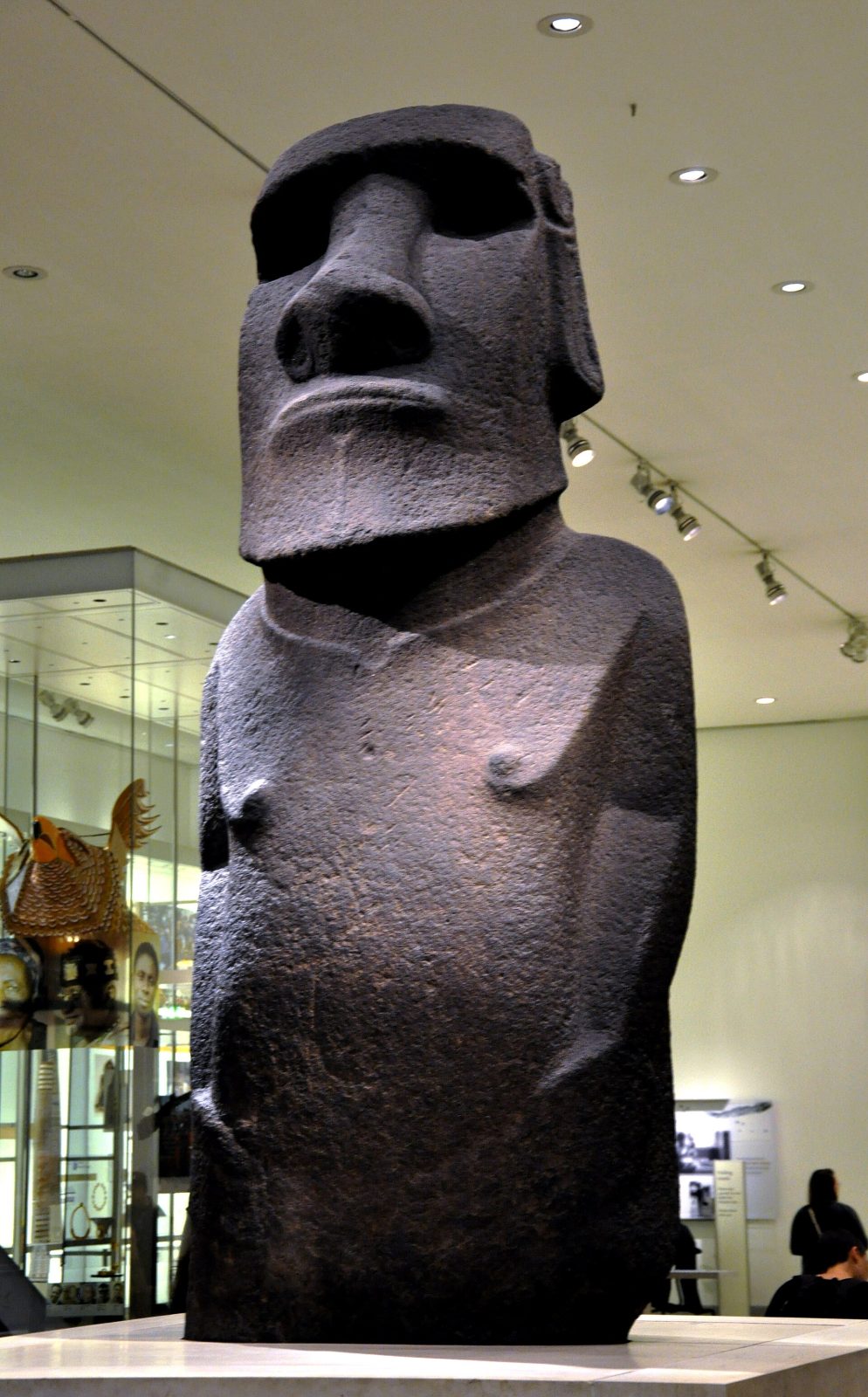
In November 1868 sailors from the Royal Navy ship HMS Topaze dug a stone statue out of a house at the ceremonial village of Orongo on Easter Island and took it to England. Hoa Hakananai'a has been in the British Museum since 1869, and Rapa Nui has asked for its return.
Rapa Nui, Easter Island, in the Pacific Ocean more than 3,500 kilometres off the coast of Chile, is famous for its moai, great stone figures carved by its Polynesian people. In November 1868 the Royal Navy frigate HMS Topaze, under Commodore Richard Powell, called at the island. One of its officers, Lieutenant W. M. Lang, found a moai half buried inside a stone house at Orongo, a ceremonial village on the rim of the Rano Kau volcanic crater. The islanders, of course, had always known it was there.
According to the ship's log, a party of forty men dug the statue out, with islanders helping. A larger party dragged it more than three miles on a sledge made from the ship's capstan bars, and it was floated out to the ship on a raft of spare masts, spars and casks. It was aboard by 7 November 1868.
The statue is 2.42 metres tall and weighs about four tonnes, carved from volcanic stone. The British Museum dates it to around AD 1000 to 1200. Its back was carved later with images of the birdman cult, which grew up on the island in later centuries: two birdmen, a sooty tern and ceremonial dance paddles. When it was found these were painted red on a white background, but much of the paint washed off on the raft.
The Topaze reached Plymouth in August 1869. The Admiralty offered the statue to Queen Victoria, who presented it to the British Museum, where it now stands in the Living and Dying gallery. In November 2018 a delegation from Rapa Nui, led by the island's governor, Tarita Alarcón Rapu, came to London to ask for its return, and British Museum staff visited the island in 2019. The museum points to the legal limits on giving up objects from its collection, and talks continue.
Written for Global Finds from M. Pitts in the Rapa Nui Journal (2014), The Guardian (2018 and 2019) and Fair Observer (2025). Photo: Hoa Hakananai'a in the British Museum, Andreas Praefcke, Wikimedia Commons, public domain.
Approximate location-27.19, -109.44View on map
Source: The Guardian