Ugarit: a farmer's plough struck a tomb in Syria and uncovered a lost city, its gold and its alphabet
Famous find Late Bronze Age, about 1400 to 1200 BC · Found in 1928 See it on the timeline →
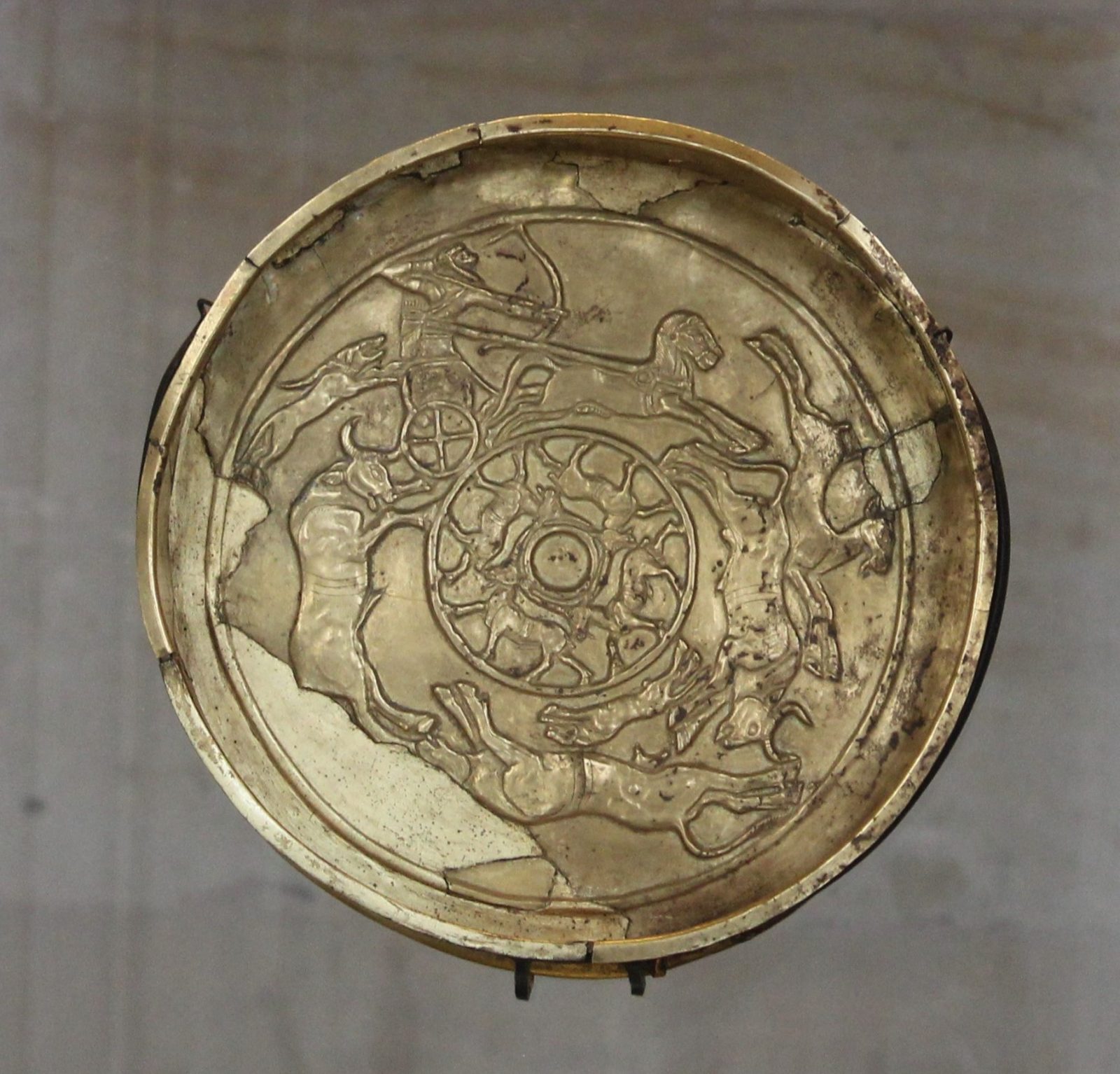
In 1928 a farmer ploughing near the bay of Minet el-Beida on the Syrian coast struck a stone slab covering an ancient tomb. It led archaeologists to Ugarit, a great Bronze Age port whose finds include gold bowls and one of the world's earliest alphabets.
In the spring of 1928, a farmer ploughing his field near the bay of Minet el-Beida, on the Mediterranean coast of Syria just north of Latakia, struck a flat stone. It was the cover of a built tomb, and it was quickly robbed. But news of the find reached the French authorities, and in April 1929 an expedition led by Claude Schaeffer of Strasbourg began to excavate the tombs. Within a month Schaeffer had moved to a large mound nearby, Ras Shamra, and on 14 May 1929 his team found the first inscribed clay tablet. They had found Ugarit, a wealthy port city and kingdom of the Late Bronze Age, lost since its destruction around 1185 BC.
Over the following decades Schaeffer's excavations uncovered Ugarit's royal palace, temples and houses, and archives of clay tablets written in several languages. Among them were texts in a script never seen before: a cuneiform alphabet of just thirty signs, pressed into clay with a stylus but working like the alphabets we use today. In 1948 the excavators found a small tablet listing all thirty letters in order, a school exercise for a trainee scribe and one of the oldest known ABCs. It is in the National Museum in Damascus.
Ugarit was also rich in metalwork. In 1933, east of the Temple of Baal and less than half a metre below the surface, the excavators found a gold bowl 18.8 centimetres across, worked in relief with a king hunting from his chariot with a bow and a dog, chasing bulls and wild goats. Made around 1400 to 1200 BC, it is now in the Louvre in Paris.
French excavations continued until 1970, and a joint French and Syrian mission worked at the site from 1999 until the war stopped fieldwork in 2011. In 2025 an Italian and Syrian team resumed excavations in the Ugarit region.
Written for Global Finds from the Musée du Louvre, Biblical Archaeology Review (via the Center for Online Judaic Studies), the Virtual Museum of Syria and Türkiye Today (2025). Photo: the gold hunting bowl from Ugarit in the Musée du Louvre, Zunkir, Wikimedia Commons, CC BY-SA 4.0.
Approximate location35.60, 35.78View on map
Source: Musée du Louvre