La Trinidad Valencera: Spanish Armada siege guns found by Derry club divers in a Donegal bay
Famous find Wrecked in September 1588; its siege guns were cast in 1556 · Found in 1971 See it on the timeline →
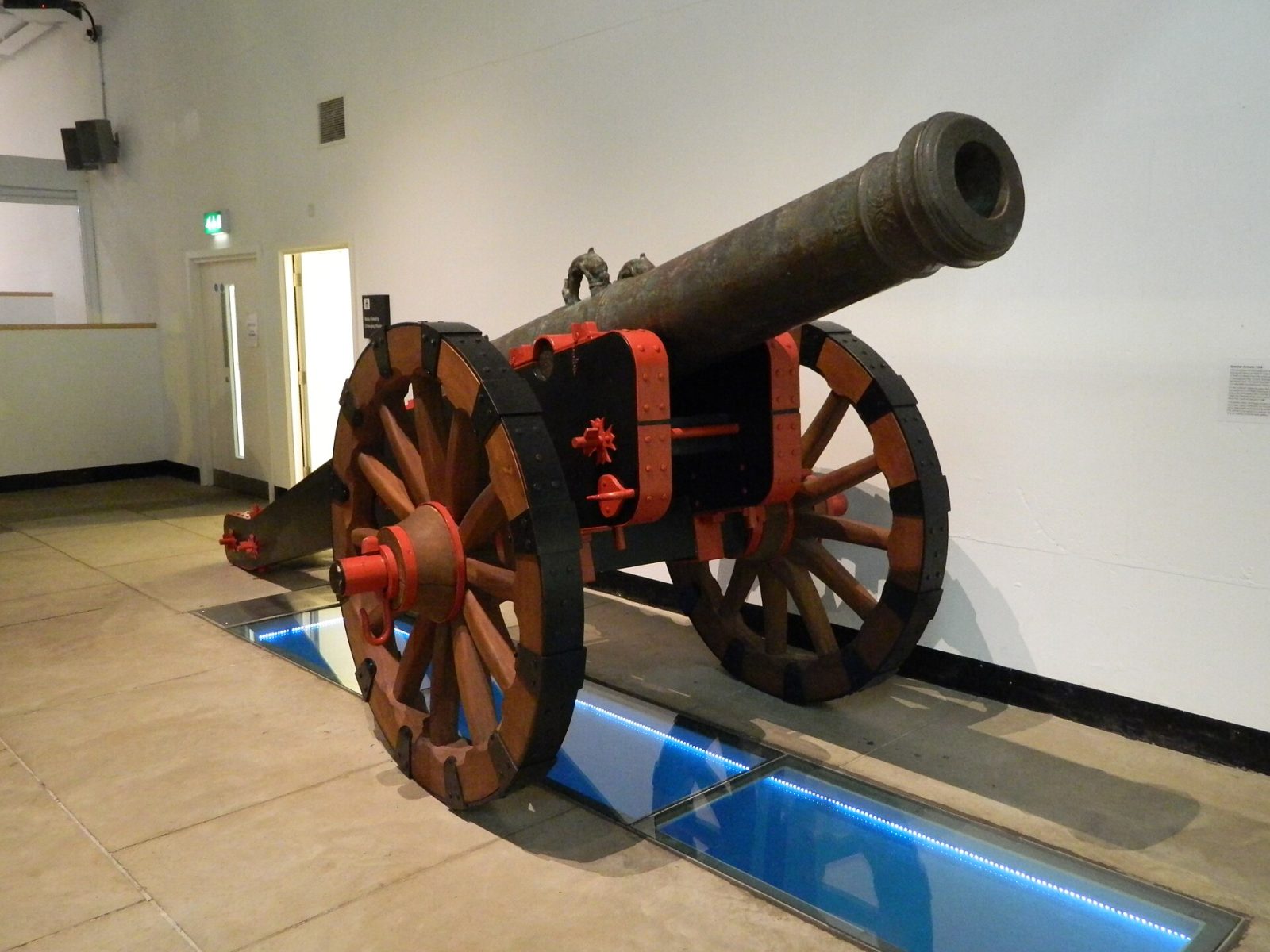
On 20 February 1971 divers from the City of Derry Sub-Aqua Club found the wreck of La Trinidad Valencera, one of the largest ships of the Spanish Armada, in Kinnagoe Bay, Co. Donegal. Among the finds were massive bronze siege guns cast for Philip II of Spain in 1556.
On 20 February 1971, divers from the City of Derry Sub-Aqua Club found the wreck of a large ship in Kinnagoe Bay, on the Inishowen peninsula in County Donegal. It was La Trinidad Valencera, one of the biggest ships of the Spanish Armada of 1588.
She had begun life as a Venetian merchant ship, seized in Sicily in 1586 and pressed into the service of King Philip II of Spain. Of about 1,000 to 1,100 tons, she was among the largest ships in the fleet. After the Armada's defeat in the Channel she sailed north around Scotland, taking on 264 men from another ship that was sinking. In a storm in September 1588 she anchored in Kinnagoe Bay and broke up, and over two days more than 560 men were ferried ashore.
The club excavated the wreck through the 1970s with the archaeologist Colin Martin of the University of St Andrews, who published it in 1979. Because the ship settled into sand, things that rarely survive were preserved: cloth, gun-carriage wheels, Chinese porcelain of the Ming dynasty and even a pine cone with its seeds eaten. The most striking finds were two massive bronze siege guns, cast in 1556 and bearing the arms of the Spanish king, meant to batter down English defences after a landing. The gun now in Dublin weighs 2.5 tonnes, fired a 41-pound iron ball and is decorated with dolphins and foliage; it carries the name of its maker, Remigy de Halut, the king's master gunfounder in the Low Countries. In 1975 movement of the seabed exposed another bronze gun, a 14-pounder probably of Italian style.
The finds are held by National Museums NI and the National Museum of Ireland, which displays a gun at Collins Barracks in Dublin. The long-running display at the Tower Museum in Derry closed in 2025 for conservation work, and the collection is due to go on show again in Derry's new DNA Museum, expected to open in 2027.
Written for Global Finds from the National Museum of Ireland, National Museums NI, C. Martin in the International Journal of Nautical Archaeology (1979), excavations.ie, History Ireland, Visit Derry (2025) and the Gibraltar Chronicle (2021). Photo: a bronze siege gun from La Trinidad Valencera on a reconstructed carriage in the Ulster Museum, Bazonka, Wikimedia Commons, CC BY-SA 3.0.
Approximate location55.25, -7.01View on map
Source: National Museum of Ireland