The Colchester Hoard: 14,000 medieval pennies found by workmen digging a lift pit behind Boots
Famous find Buried about 1256, with more added about 1268 to 1278 · Found in 1969 See it on the timeline →
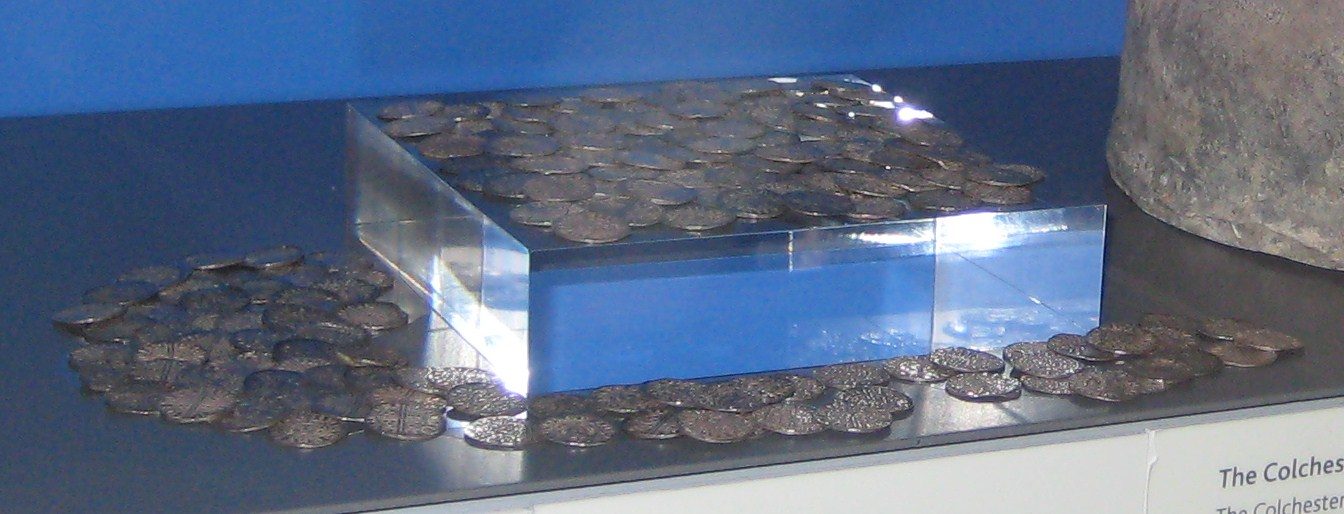
In February 1969 workmen digging a lift pit behind the new Boots store on Colchester High Street hit a lead canister holding more than 14,000 silver pennies of Henry III. It is the largest medieval hoard ever recovered intact in Britain.
On Thursday 13 February 1969, workmen from the builders Henry Everett and Son were digging by hand for a lift machinery pit behind the new Boots the Chemists building at 22 to 24 High Street, Colchester, when they struck a lidded lead canister packed with silver coins. The foreman, G. Mead, telephoned the museum that afternoon. Workmen had found another canister of coins at a bank close by in 1902, and the museum's curator, David Clarke, had predicted that a second hoard would one day turn up nearby.
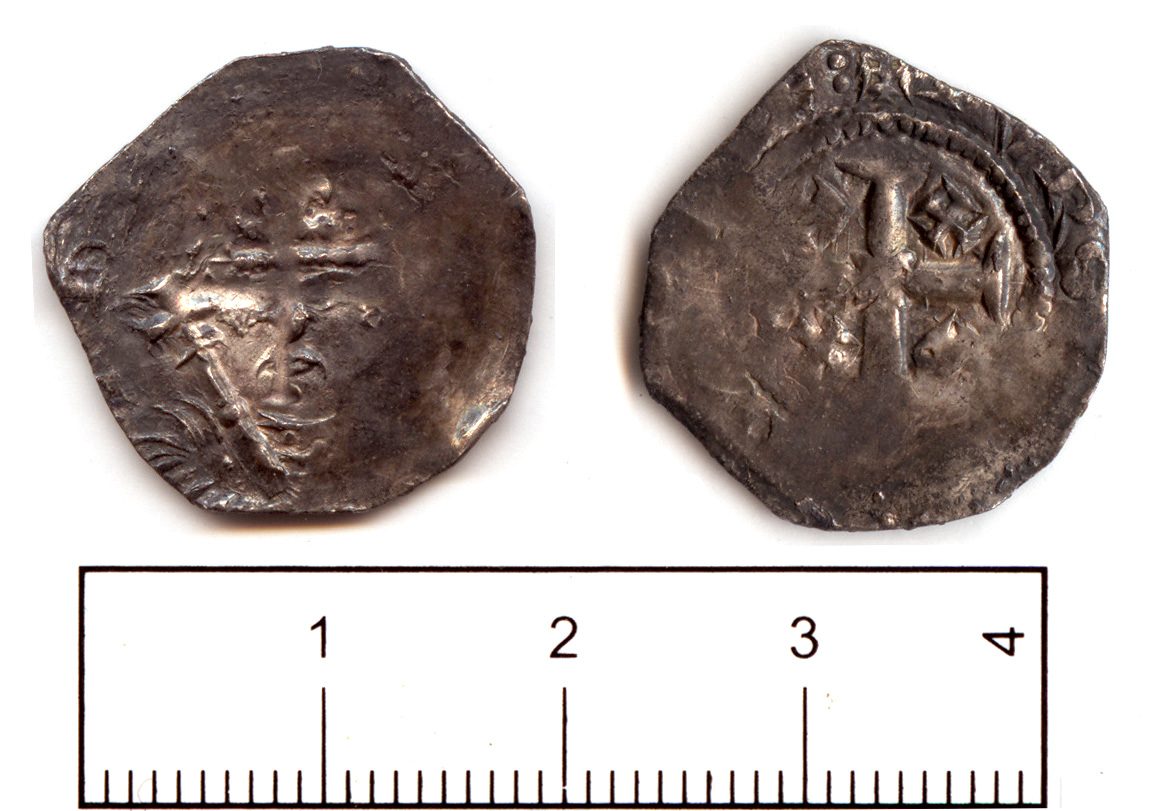
The canister, 23 centimetres high and 27 across, held 14,065 complete silver pennies and about 20 forgeries. It is described by Colchester's historic environment record as the largest medieval hoard ever recovered intact in Britain. Most of the coins are Long Cross pennies of Henry III, with others from Dublin, Scotland and the Continent. Before anyone could record the order in which they were packed, they were hastily rinsed in a sink in the police station cells, a step the curator later regretted.
The main hoard closed around 1256. About twelve or more years later, someone added a single batch of coins, all struck from one pair of dies at Bury St Edmunds between 1268 and 1278 and worth just under £8. Who owned the money is unknown. Medieval Colchester had a Jewish community, and historians have suggested that both canisters may have been the under-floor safes of Jewish moneylenders, with the second deposit perhaps linked to the Statute of the Jewry of 1275, but there is no firm evidence.
At the inquest on 12 March 1969 the hoard was declared treasure trove, and the finders were named as R. Munson and G. Purvis; the coroner even put descendants of the 1902 jurors on the jury. The British Museum acquired 1,550 coins and Colchester Museum 446, later joined by the canister. Nearly 12,000 coins were returned to the finders and sold at auction in 1971 and 1972. The coins are held by the British Museum and Colchester Museums.
Written for Global Finds from D. Clarke and M. Dolley in the British Numismatic Journal (1974), the Colchester Historic Environment Record and North Hertfordshire Museum. Photo: coins from the 1969 Colchester Hoard in the British Museum, BabelStone, Wikimedia Commons, CC0.
Approximate location51.89, 0.90View on map