The 'Ain Ghazal Statues: 9,000-year-old plaster figures found buried in a pit beside an Amman highway
Famous find Made about 9,000 years ago · Found in 1983 See it on the timeline →
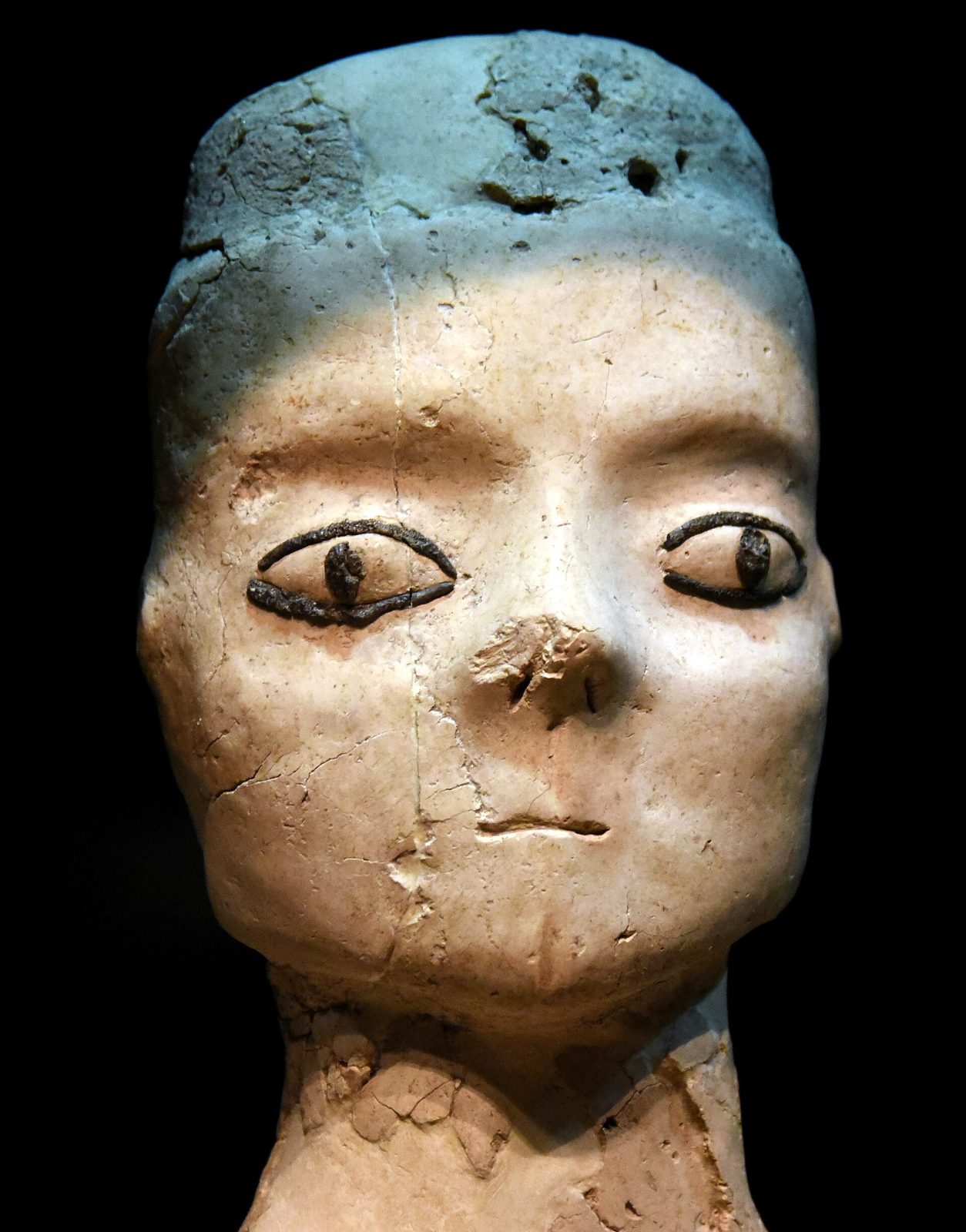
In 1983 archaeologists excavating a Neolithic village on the edge of Amman, Jordan, found a pit packed with human figures made of lime plaster, and a second cache followed. Made about 9,000 years ago, they are among the oldest large statues of people ever found.
'Ain Ghazal, the spring of the gazelle, lies on the Zarqa River on the north-eastern edge of Amman, the capital of Jordan, beside the Amman to Zarqa highway. Road building had already damaged the site when a Jordanian and American team led by Gary Rollefson, with Zeidan Kafafi and Alan Simmons, began excavating there in 1982. In 1983 they found a pit dug through the floor of a long-abandoned house, packed with figures made of plaster. A second, smaller cache was found on the last day of the 1984 season and lifted in 1985.
The figures were made by modelling lime plaster over bundles of reeds tied with twine. The reeds rotted away long ago, leaving hollow shells. The first cache held 25 pieces, 13 full figures and 12 busts, the largest about 84 centimetres tall; the second held seven, including two figures about a metre tall and three busts with two heads each. They are flat, only 5 to 10 centimetres thick, and were made to be seen from the front. Their large eyes are outlined in black bitumen, which gives them a startling stare. One detached foot has six toes.
The statues were made around 9,000 years ago, in the Neolithic period, by the people of one of the largest farming villages in the Near East, home at its height to perhaps 2,500 to 3,000 people. They are among the oldest large statues of the human form ever found. Whether they stood for ancestors, gods or other figures, and why they were so carefully buried, is not known.
Each pit was cut out as a single block, wrapped in foil and foam and sent abroad for conservation: the first cache to London, the second to the Smithsonian Institution in Washington, where some were exhibited in 1996 and 1997. All the statues belong to Jordan. Most are displayed in the Jordan Museum in Amman, others in the Jordan Archaeological Museum on the Amman Citadel, and one stands in the Louvre in Paris.
Written for Global Finds from the Smithsonian Museum Conservation Institute, the Jordan Department of Antiquities, D. Schmandt-Besserat (University of Texas) and Jordan News (2023). Photo: the head of a statue from 'Ain Ghazal in the Jordan Museum, Osama Shukir Muhammed Amin FRCP(Glasg), Wikimedia Commons, CC BY-SA 4.0.
Approximate location31.99, 35.98View on map