The Spiro Mounds: America's 'King Tut' treasure, dug out and sold off by a mining company in the 1930s
Famous find Made about AD 1200 to 1450 · Found in 1933 See it on the timeline →
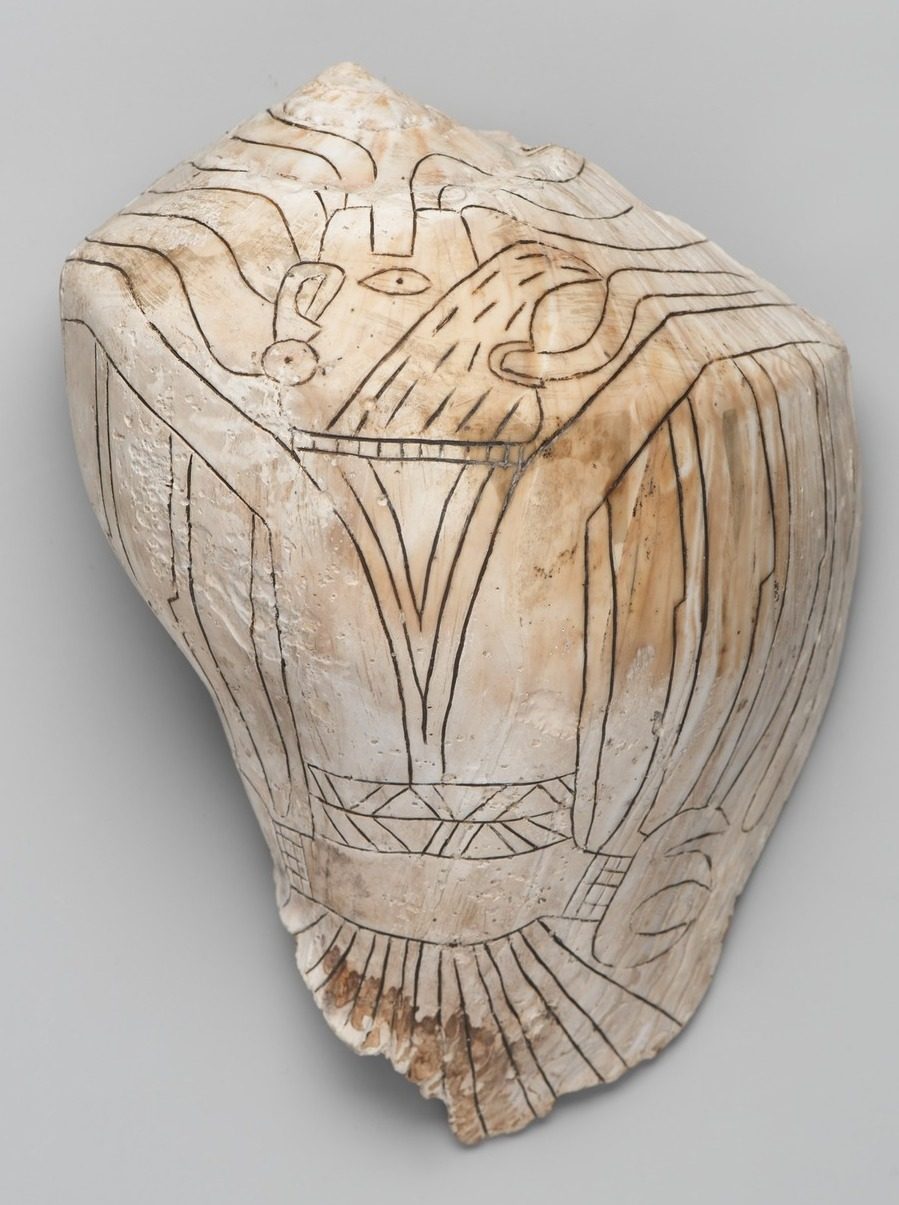
In 1933 six men paid $300 for a lease to dig Craig Mound at Spiro, Oklahoma. Over two years their 'mining company' tunnelled into one of the richest burial mounds in North America and sold thousands of engraved shells, copper plates and textiles around the world.
In 1933, six men from around Spiro, in eastern Oklahoma, paid $50 each for a two-year lease to dig into Craig Mound, the largest of twelve ancient mounds near the Arkansas River, on land belonging to the grandchildren of the Craig family. Calling themselves the Pocola Mining Company, they spent the next two years tunnelling into it, and destroyed about a third of the mound.
Craig Mound, about 33 feet high and 400 feet long, was really four mounds joined together, built over the burials of the leaders of a Mississippian community. The diggers found thousands of objects of stone, copper, shell, basketry and fabric: engraved cups made from whelk shells carried hundreds of miles from the Gulf coast, embossed copper plates, pearls and beads, feather capes, woven textiles and carvings in cedar. Some shell cups were probably used for a caffeinated "black drink" brewed from yaupon holly. Newspapers called Spiro the "King Tut of the Arkansas Valley", and the diggers sold everything they found to dealers and collectors.
Spiro was occupied from about AD 850 to 1450, and at its height it was a centre of trade and ceremony whose contacts reached from the Gulf of California to the Gulf of Mexico. The looting shocked the state. Oklahoma brought in a licence requirement for such digging, and the company was shut down in November 1935; sources differ on whether the state's first antiquities law came that year or in 1936. From June 1936 to October 1941, the University of Oklahoma, with crews from the federal Works Progress Administration, excavated what was left and recovered more than 600 burials.
The objects are now scattered across museums, among them the Sam Noble Museum at the University of Oklahoma, the Gilcrease and Woolaroc museums, the Smithsonian and the Brooklyn Museum. The site is open as the Spiro Mounds Archaeological Center, though many objects there are being returned to descendant tribes under federal law.
Written for Global Finds from D. Peterson in the Oklahoma Historical Society's Encyclopedia of Oklahoma History and Culture, D. Wyckoff and D. Peterson (University of Oklahoma), 405 Magazine and the Brooklyn Museum. Photo: an engraved shell from Spiro showing a falcon warrior, Brooklyn Museum, Wikimedia Commons, CC BY 4.0.
Approximate location35.31, -94.57View on map
Source: Oklahoma Historical Society