The Siberian Collection: Scythian gold from robbed burial mounds that moved Peter the Great to protect Russia's past
Famous find Made between the 7th and 2nd centuries BC See it on the timeline →
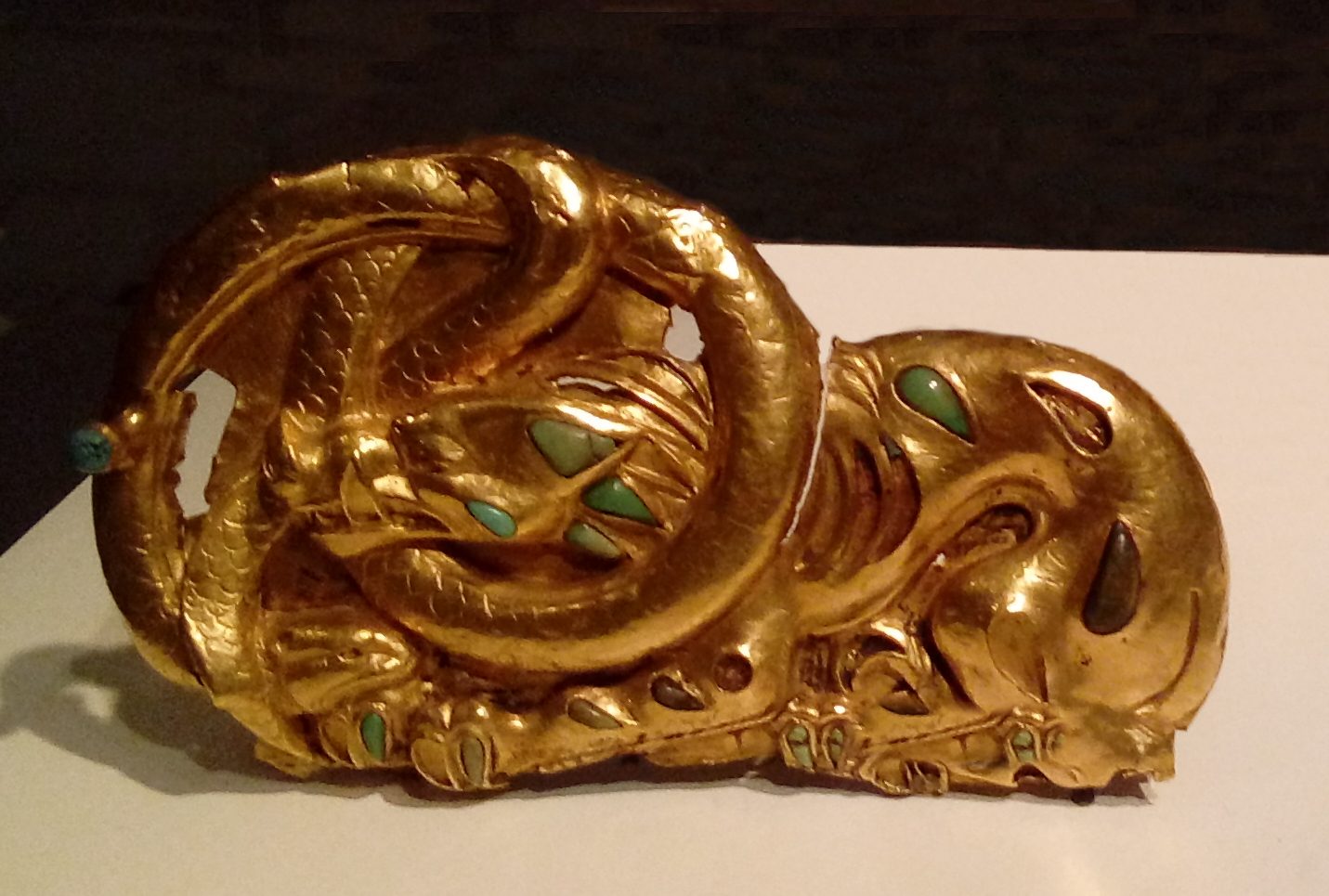
In 1715 to 1717 the governor of Siberia sent Peter the Great about 250 gold plaques and ornaments dug from ancient burial mounds by gangs of grave robbers. The tsar's response, a decree of 1718 rewarding finders, is often called Russia's first heritage law.
In the late 17th and early 18th centuries, gangs of grave robbers in western Siberia, known as bugrovshchiki, the mound-diggers, set out each season to dig into the ancient burial mounds of the steppe. Some gangs numbered two or three hundred men. Grave robbing there was officially reported as early as 1669, and by 1712 the governor of Siberia, Prince Matvei Gagarin, was having mounds dug himself. Much of the gold they found was sold off or melted down.
In 1715 Gagarin sent ten gold objects to Tsar Peter the Great in St Petersburg, and larger consignments followed in 1716 and 1717, about 250 pieces in all. They are among the finest examples of the animal style of the Scythian and Siberian nomads: openwork belt plaques of beasts locked in combat, animals gripped by snakes, and a pair showing a boar hunt, in which a horseman shoots a boar while his companion, who has climbed a tree to escape it, looks on. Many were inlaid with turquoise, coral or coloured glass, and marks of textile on the backs show that some were cast over fabric. They date from about the 7th to the 2nd century BC.
Peter, a keen collector of curiosities, wanted more than gold. On 13 February 1718 he issued a decree ordering that anything very old and extraordinary found in the ground or in water should be collected and sent to him, with rewards for the finders. Historians have described these orders as the first in Russia to protect the national heritage. Because the objects were robbed rather than excavated, nobody knows which mounds they came from; the sources speak only of the steppe between the Ob and Irtysh rivers, towards the Altai mountains. Gagarin himself was executed for corruption in 1721.
The collection went to Peter's Kunstkamera museum in 1727 and in the 19th century to the State Hermitage in St Petersburg, where it is shown in the Gold Rooms, visited by guided tour. Pieces were lent to the British Museum for its Scythians exhibition in 2017.
Written for Global Finds from E. Korolkova (State Hermitage) in Science First Hand, the State Hermitage Museum and Current Archaeology. Photo: a gold belt plaque from the Siberian Collection in the Hermitage, michael_s_pictures, Wikimedia Commons, CC BY-SA 2.0.